The decision by Taiwan to deploy U.S.-supplied HIMARS missile systems to islands sitting directly off the coast of China is one of the most dangerous escalations we have seen in the region so far. These launch systems are reportedly being positioned less than 30 miles from the Chinese mainland in an effort to create what officials are calling a defensive “dead zone.”
The HIMARS systems are capable of launching ATACMS tactical missiles with ranges approaching 300 kilometers, meaning they could strike military bases, logistics hubs, naval staging areas, and infrastructure deep along China’s southeastern coast within minutes. Some reports estimate missiles launched from islands such as Dongyin could reach PLA targets in roughly seven minutes.
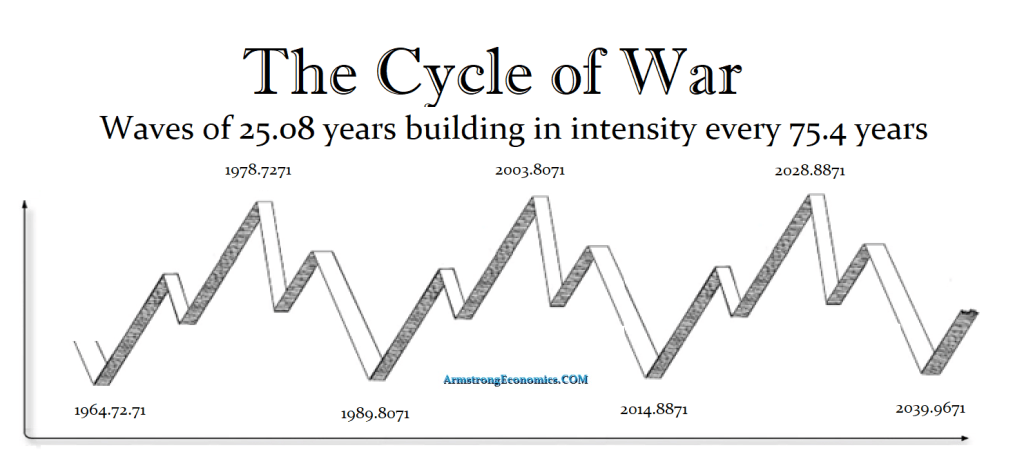
I have warned repeatedly that war with China is becoming one of the primary geopolitical concerns moving into this period ahead. The economic relationship between the United States and China has already deteriorated into technological warfare, sanctions, tariffs, and military positioning across the Pacific. Taiwan is becoming the focal point where all of those tensions converge.
The numbers alone show how rapidly this situation is escalating. Taiwan has already acquired 11 HIMARS launchers from the United States, with dozens more expected as part of broader military packages worth billions of dollars. Additional sales include hundreds of ATACMS missiles and guided rocket systems. At the same time, the U.S. continues pressuring Taiwan to increase military spending dramatically, with discussions around supplementary defense budgets exceeding 40 billion dollars.
What many fail to understand is that China views Taiwan not as a distant geopolitical issue, but as a core national sovereignty question. Every new weapons deployment near the mainland strengthens the nationalist position inside China and makes compromise politically impossible. Instead of reducing the risk of war, these deployments increase domestic pressure on Beijing to respond aggressively.
The United States believes creating heavily armed island chains throughout the Pacific will deter China militarily. But from Beijing’s perspective, this looks like encirclement. Historically, great powers do not tolerate hostile missile systems positioned directly off their coastline indefinitely. The United States itself nearly went to nuclear war during the Cuban Missile Crisis over Soviet missiles positioned near Florida. Yet Washington now appears shocked that China reacts aggressively to missile deployments near its own territory.
China has already been conducting increasingly large military exercises around Taiwan involving warships, fighter aircraft, drones, and simulated blockades. PLA aircraft now enter Taiwan’s air defense zone almost continuously, and Chinese military drills have repeatedly simulated strikes on infrastructure and energy facilities.
At the same time, China is rapidly advancing military technology specifically geared toward a Taiwan conflict, including AI-powered drone swarms, amphibious assault preparation, and missile systems designed to overwhelm island defenses.
Meanwhile, the economic consequences are barely being discussed. Taiwan sits at the center of global semiconductor production and critical shipping routes. Any military conflict in the Taiwan Strait would send shockwaves through global supply chains far beyond anything seen during previous disruptions. The world economy is already under pressure from debt, inflation, and energy instability. A Pacific conflict involving China would magnify all of those problems simultaneously.
The more the United States militarizes Taiwan, the more China will feel compelled to respond militarily itself. Once both sides lock into that trajectory, reversing course becomes extremely difficult. History shows that major conflicts are often not started intentionally. They emerge gradually through escalation, positioning, and miscalculation until neither side can politically afford to back down.