Array September 2025
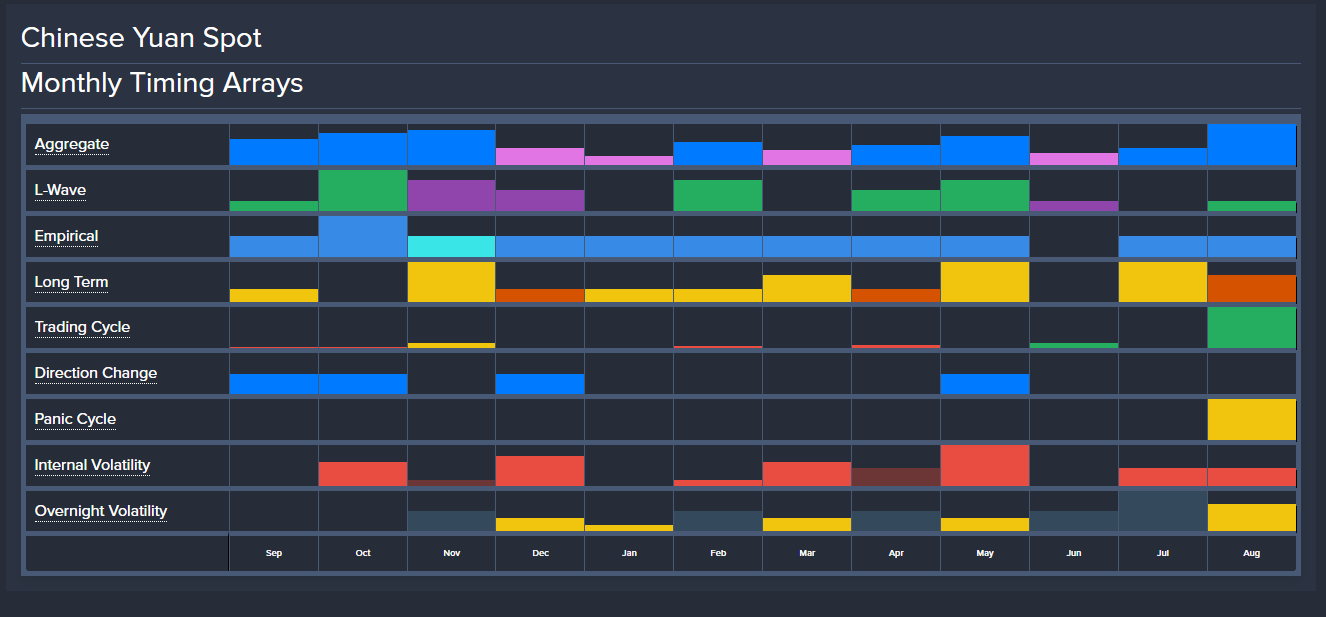
QUESTION: Marty, I confess, I have no idea how your computer projects these events so far ahead. At the WEC you were warning about May 2026. There was a Directional Change in China for May and a Panic Cycle in August. Even the stock market you said a high in Jan/Feb, a March correction, but no crash. I can see that correlating the entire world is the only way to look ahead.
What is baffling, is that Trump meets in Beijing but brings his tech boys and this seems to be ignoring the elephant in the room, Taiwan and Iran. According to what I read, Xi warned trump we are headed into war, which is exactly what you said. The neocons keep you at a distance and believe that they will always win. They do not want your forecasts because they project that they are losers.
My question is why do you think the computer can project such things like May events a year in advance? Is this going to heat up after this trip?
Doug
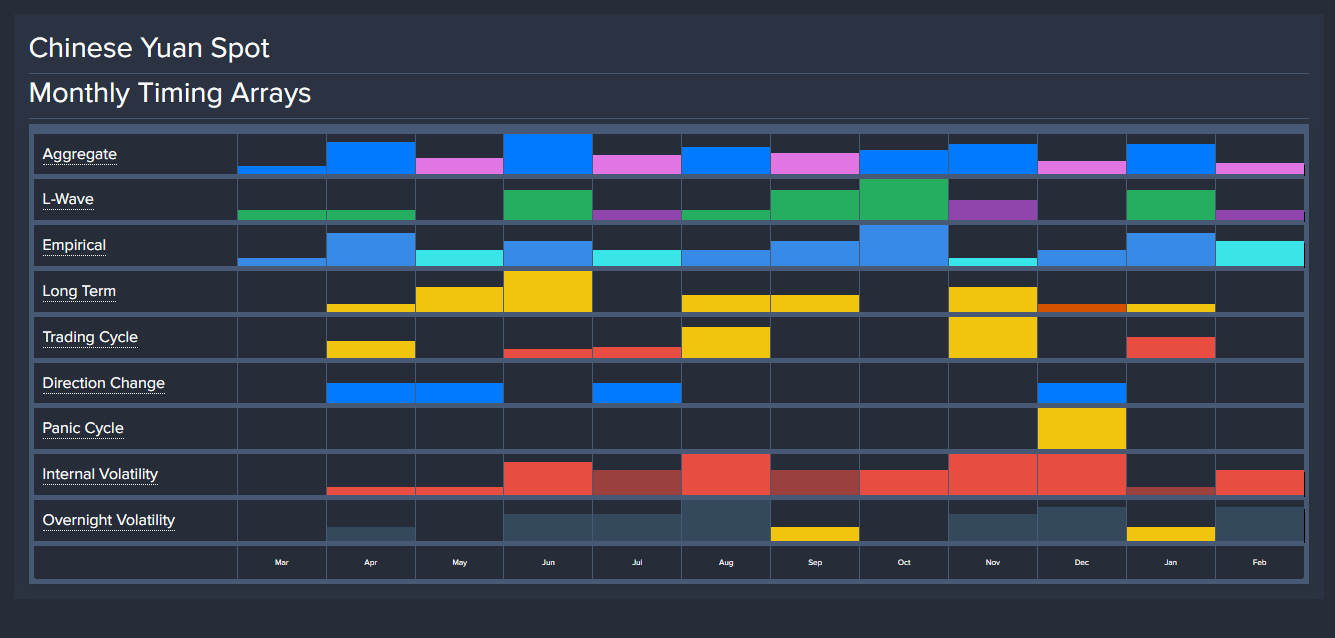
ANSWER: I have come to the conclusion that there are simply economic pressures within the system. Politicians do not act randomly for no reason out of thin air. The economic pressures cause them to respond and looking at history, that response is always similar when confronted with the similar events. The war cycle kicked in for 2026 and we had a Panic Cycle so this is not over just yet.
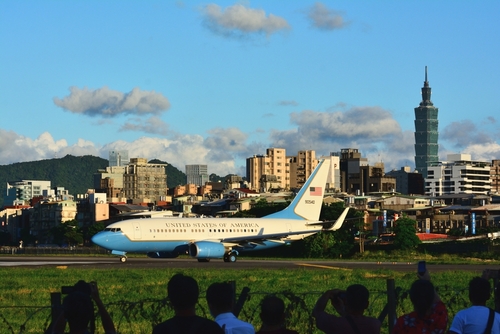
I was told directly from sources in DC that I was correct, we would not be at war with Russia, it will be China. At this meeting, Xi has made it very clear that Taiwan is a key issue that can lead to direct war between China and the USA. That was set in motion by the Biden Administration and Nancy Pelosi flying to Taiwan to tell them to resist. As long as we had the One China Policy, there was no need for an invasion. The Biden Administration and Nancy Pelosi slapped Xi in the face. Then you need to step in because it is a loss of face. Pelosi said in a statement.
I do not know if any of my warnings have been taken seriously. Rubio has said he does not seek and change in the current status. But Xi is concerned about selling arm to Taiwan.
When dealing in such negotiations, you MUST put on the glasses of your opponent and see the issue from their side of things, NOT just yours if you hope to achieve any sort of a deal.
The closest point between the island of Taiwan and mainland China is approximately 80 miles (130 kilometers) across the Taiwan Strait, from the coast of Fujian Province to Taiwan’s northwestern shore. The closest point between Cuba and the United States is about 90 miles (145 kilometers) from Key West, Florida, to the northern coast of Cuba. There was no way the US would allow Russia to set up nukes in Cuba.
This is what Xi is concerned about. Taiwan intends to station HIMARS launchers on Penghu and Dongyin, shifting from a defensive to an offensive deterrence posture. The deployment puts Chinese coastal bases, ports, and airfields within rapid strike range, potentially delaying or deterring invasion plans. The move follows major U.S. arms sales, rising PLA activity, and Taiwan’s calls for stable U.S. support ahead of the Trump–Xi summit.
Here is a lit of weapons the United States has sold or approved a very broad range of weapons and military equipment to Taiwan over the years, especially since 2019. Major categories include:
F-16 Fighting Falcon fighter jets (including 66 new F-16V variants approved in 2019)
Air Defense Systems
NASAMS medium-range air defense systems
Stinger missile MANPADS
Patriot missile system support and upgrades
Hawk and Chaparral SAM systems historically
Anti-Ship & Coastal Defense
Harpoon missile coastal defense missiles
Harpoon repair and sustainment packages
Long-Range Strike Weapons
ATACMS ballistic missiles
Guided MLRS rockets (GMLRS) for HIMARS launchers
Anti-Tank Weapons
FGM-148 Javelin missiles
BGM-71 TOW missile systems
Artillery & Ground Systems
M109A7 Paladin self-propelled artillery
Ammunition carriers and recovery vehicles
Precision-guided artillery kits
Drones & ISR
MQ-9 Reaper drones
ALTIUS-600 and ALTIUS-700 loitering munitions/drone systems
Tactical mission networking and ISR software
Helicopters & Naval Systems
AH-1W Cobra helicopter parts/support
Earlier sales included frigates, torpedoes, and naval radar systems
Missile & Aircraft Munitions
AGM-88 HARM missiles
AIM air-to-air missiles for F-16s
Maverick air-to-ground missiles historically
The overall trend has shifted toward what the Pentagon calls “asymmetric warfare” — mobile missiles, drones, air defense, and dispersed strike systems intended to make a Chinese amphibious invasion far more costly. This is what Xi has made a pointed address. The Question becomes if the economy is turning down into 2028, who has the incentive for confrontation as a political distraction? That tends to be Taiwan, which is taking the form of moving to an offense posture rather than defensive.
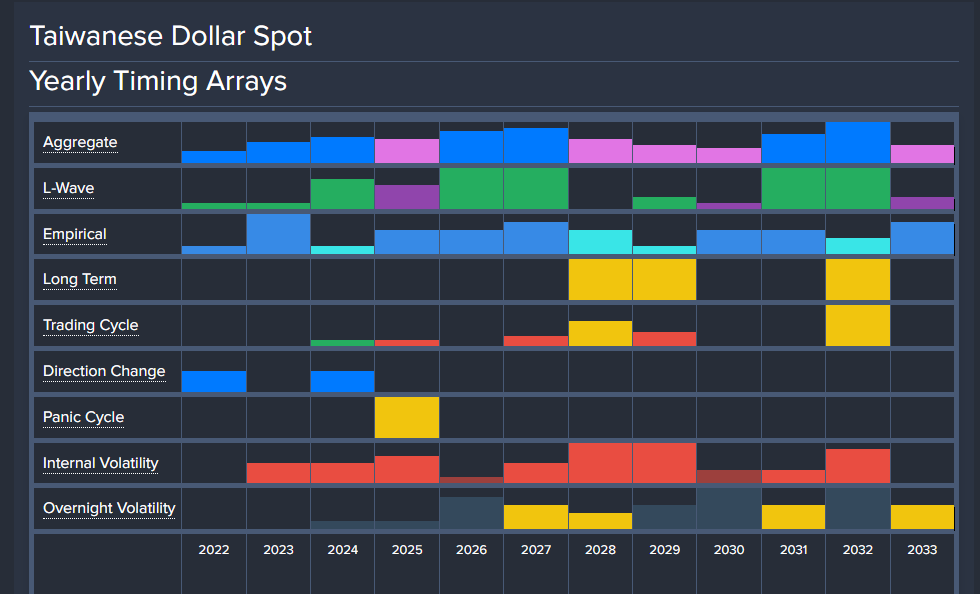
When we looked at this back in 2023, it appears that this would heat up between 2026 and 2027. The Panic Cycle the computer forecast for 2025 indeed picked a major shift politically. The major change in 2025 was the move away from a traditional, centralized command structure. The new “decentralized warfare” strategy empowers individual military units to act autonomously in a crisis as we have see in Iran. I believe that Taiwan adopted Iran’s strategy.
If communication links to central command are severed during a sudden attack, units are expected to execute combat missions without waiting for orders, ensuring operational continuity. The Ministry of National Defense (MND) framed this as building an “agile and resilient” military focused on “multi-domain denial” to deter enemy forces.
This is when Taiwan adopted a deliberate effort to bolster defenses on its east coast, which was a response to increased amphibious exercises from China. Thus, the navy has established a new coastal operations command on the east coast, which was intended to deploy mobile anti-ship missile launchers and radar units.
Taiwan also enacted domestic legal changes in 2025 aimed at protecting against external interference. The Executive Yuan approved amendments to national security laws that impose severe penalties (including long prison sentences) for organizing or financing activities on behalf of hostile forces. These legal changes are a defensive measure to counter perceived “foreign hostile infiltration.”
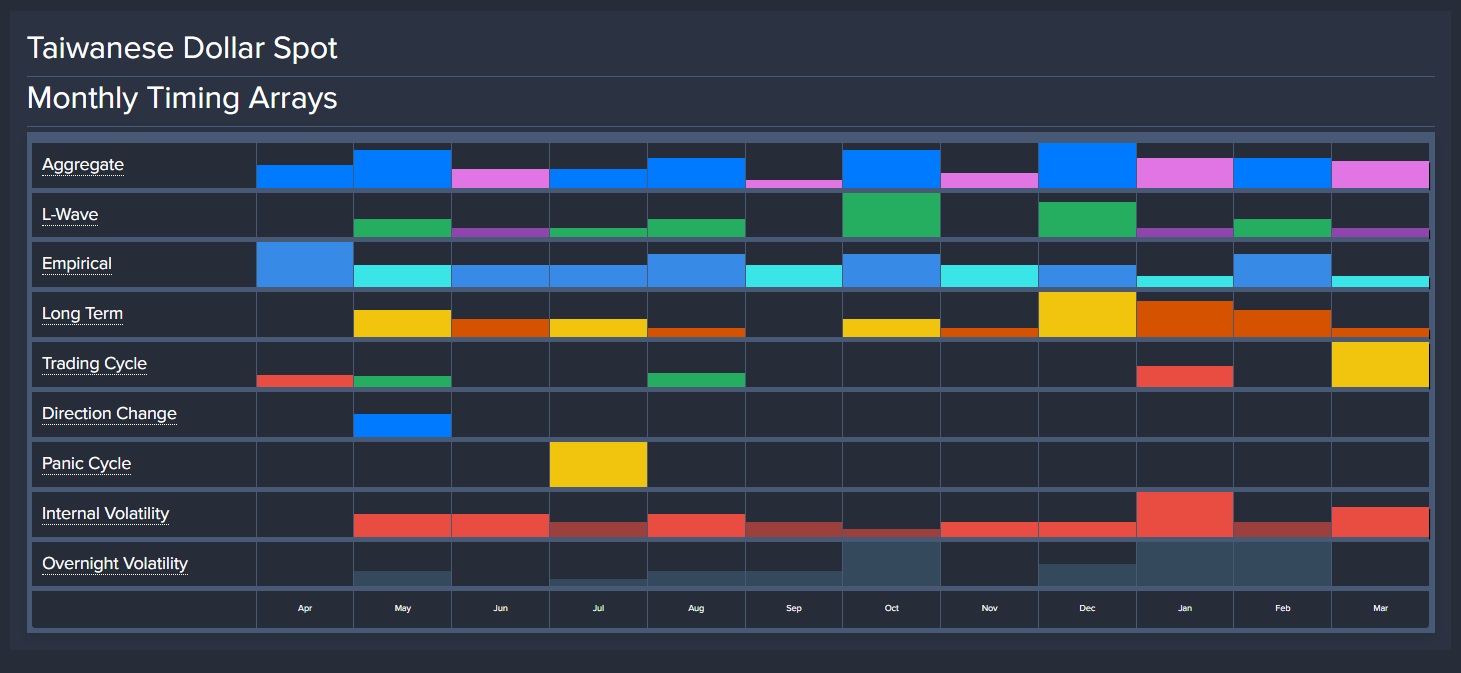
I do not believe that Taiwan developed or deployed offensive weapons systems like ballistic missiles for striking mainland China. Therefore, I believe Taiwan looked at Iran and adopted a military restructured layered system (decentralization). Thus, the Panic Cycle of 2025 saw a tactical evolution in how Taiwan defends itself—moving to decentralized control like Iran and strengthening coastal defenses. They did not adopt an offensive posture to invade China or something stupid like that.
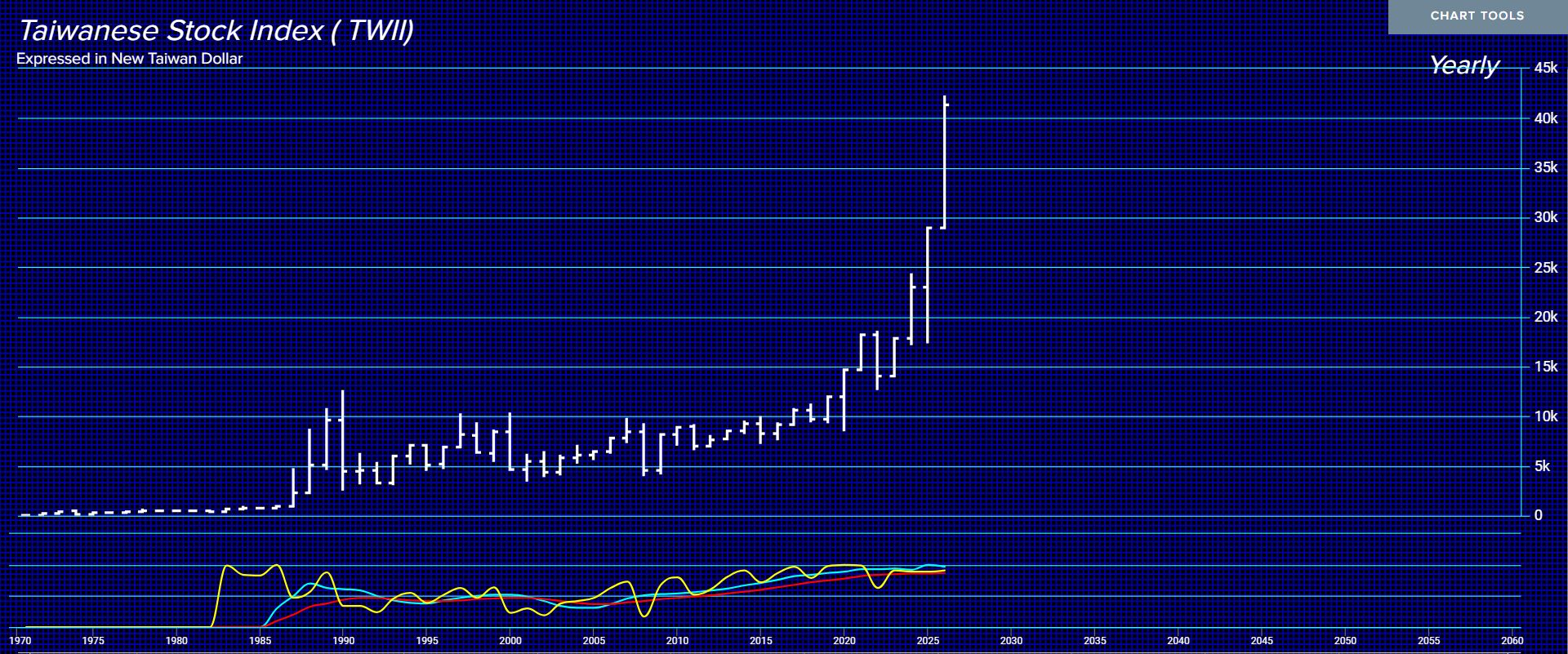
Taiwan is also buying more advanced weapons, extending military service, developing systems like the “T-Dome” missile shield, and training for asymmetric warfare against a possible invasion. From Beijing’s perspective, Taiwan under President Lai Ching-te has taken a more confrontational role. Taiwan is becoming less accommodating politically toward Beijing. Our computer warns that Taiwan may be reaching a major high in the share market and economy. Hold on. It looks like next week is a critical target.