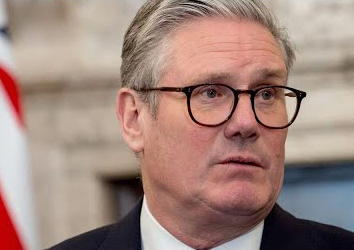
The latest polling on Keir Starmer is not simply weak, it is a clear rejection. Labour has slid sharply, with support falling toward the high teens in some recent surveys, while his personal approval rating has dropped deep into negative territory, approaching levels that historically signal a government losing control of the narrative. This is not a temporary dip. It reflects a growing disconnect between policy and reality.
What the public is reacting to is not difficult to understand. The UK economy is under pressure from all sides. Borrowing costs have climbed above 5%, households are still dealing with elevated living expenses, and growth remains sluggish. At the same time, policy continues to lean heavily into Net Zero commitments that raise energy costs while offering no reliable alternative capable of sustaining industrial demand. You cannot impose higher input costs on an economy already under stress and expect confidence to improve.
Starmer positioned himself as the steady hand, promising stability after years of political turmoil. Instead, the perception is that nothing fundamental has changed. The same structural problems remain in place, and in some cases, they are being reinforced. Energy policy continues to squeeze industry, regulation remains heavy, and there is no coherent strategy to reverse capital outflows or stimulate productive growth. People are not reacting emotionally. They are reacting to what they are experiencing in their daily lives.
There is also the issue of credibility. Once a government begins to lose public confidence, every decision is questioned. Scandals, internal disputes, and policy reversals all begin to carry more weight because the trust is no longer there. The Mandelson controversy only added to the sense that decisions are being made behind the curtain rather than in the open. That perception accelerates the decline.
What makes this particularly important is that this is not isolated to the UK. Governments across Europe are facing similar backlash because they have followed the same playbook, restricting energy, expanding regulation, and ignoring the economic consequences. The result has been stagnation, rising costs, and a steady erosion of confidence. When people feel their standard of living slipping, they do not care about political messaging. They look for alternatives.
Starmer’s problem is that he represents continuity at a time when the public wants change. You cannot campaign as a reformer and then govern as a caretaker of the same policies that created the problem. The numbers reflect that contradiction. This is not about personality. It is about policy failure becoming visible in real time.
Once sentiment turns this sharply, it rarely stabilizes on its own. It tends to accelerate as opposition grows and internal pressure builds. That is what these polls are signaling. The market may tolerate uncertainty for a time, but the public does not. When confidence breaks, it becomes a political issue first and an economic one shortly after.