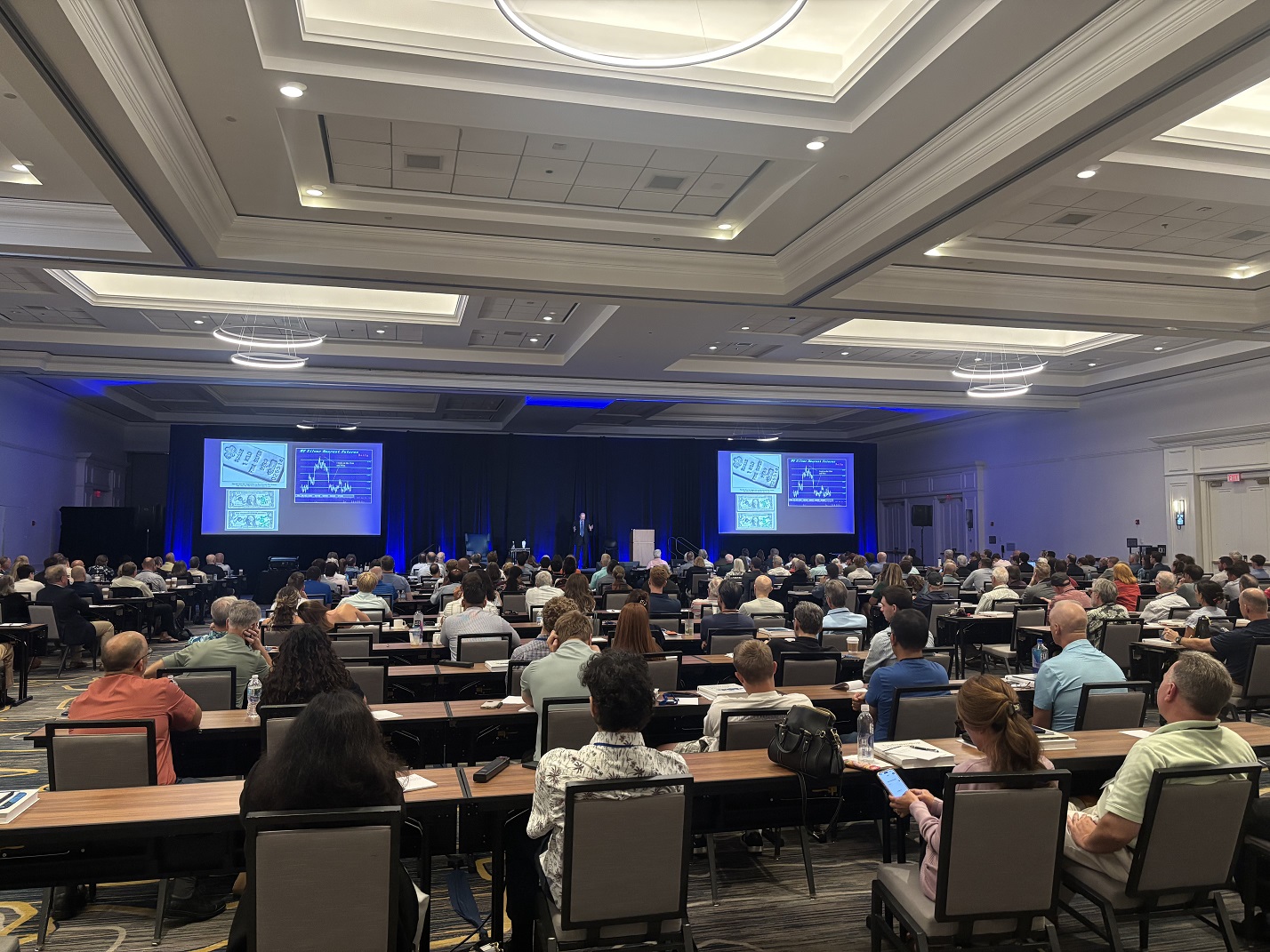
QUESTION: Marty, I wanted to tell you that your Tampa conference was amazing. You really blew the doors off conventional economics. I was especially fascinated by your explanation that making too much money at a young age caused you to lose your fear of money, which ultimately allowed you to manage trillion-dollar portfolios while others were always afraid of losing.
I know your seed money came from silver coins, but you also mentioned your loss in Fidelity Trend. Looking back, did you make more money from silver or from the rare coin market?
Brian
P.S. I can’t wait for the video. I really hope you do another conference.
ANSWER: My mother couldn’t believe that someone would pay me $50 for a quarter. She finally went with me to a coin dealer because she wanted to see if it was true. The dealer paid me $50 for a 1932-D Washington quarter right in front of her. She was absolutely stunned. Until then, she couldn’t understand how I was making money buying and selling coins.
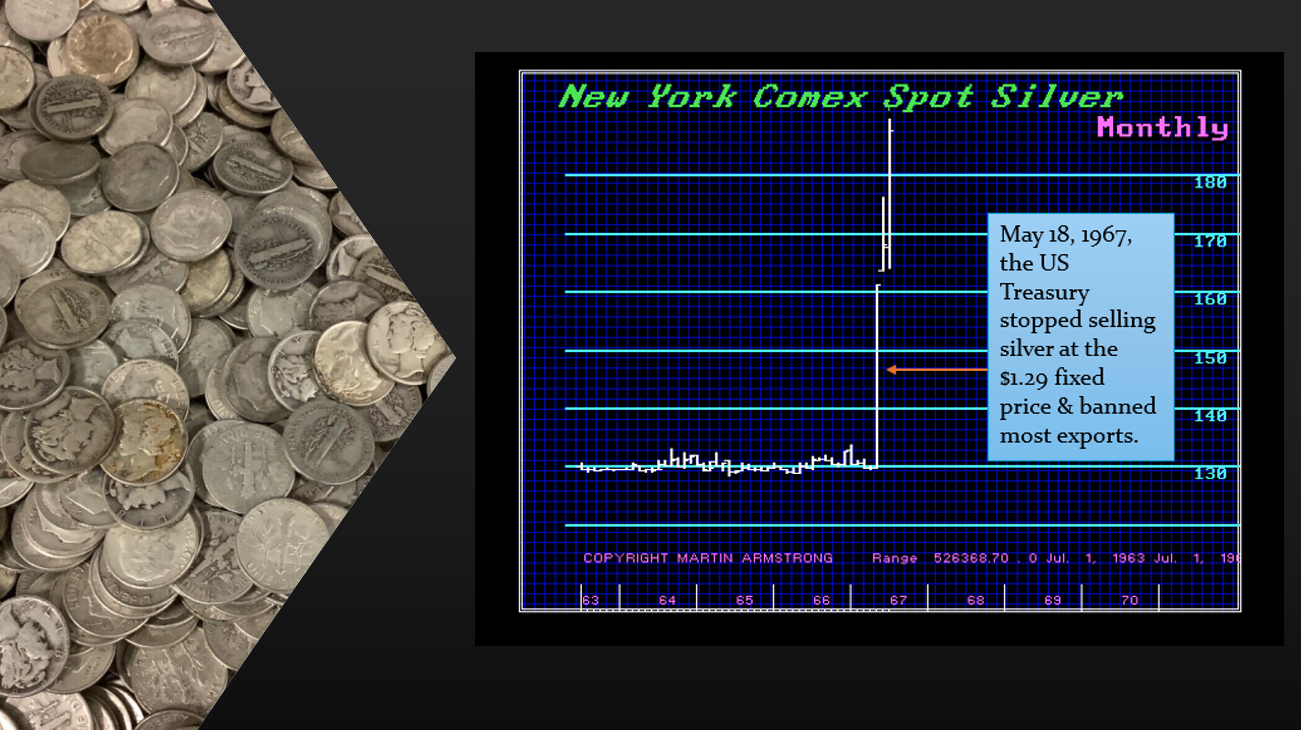
I made a great deal of money from the silver market, particularly when the U.S. Treasury stopped selling silver at $1.29 an ounce in 1967. But, overall, I made even more in the rare coin market.
One of my best purchases was a hoard of uncirculated Athenian Owl tetradrachms from an estate in Princeton, New Jersey. They had a beautiful blue patina and were among the finest examples I had ever seen. I eventually sold the entire hoard to Stack’s Coin Galleries in New York City. If I remember correctly, they brought about $1,000 per coin at the time. I didn’t keep a single one. Today, those same coins would likely sell for $15,000 or more each. I keep looking for one to come up for auction to buy for memory sake.
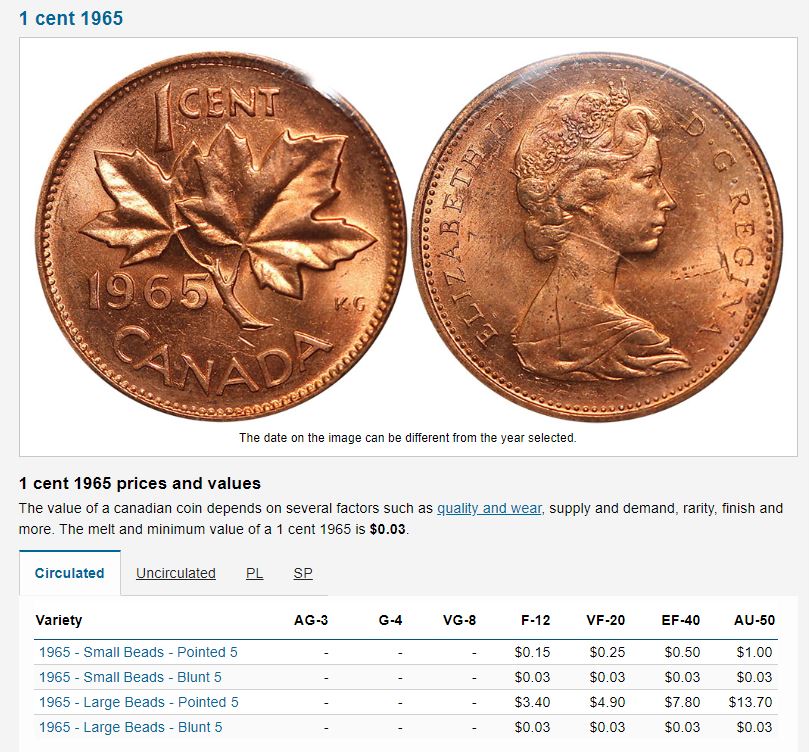
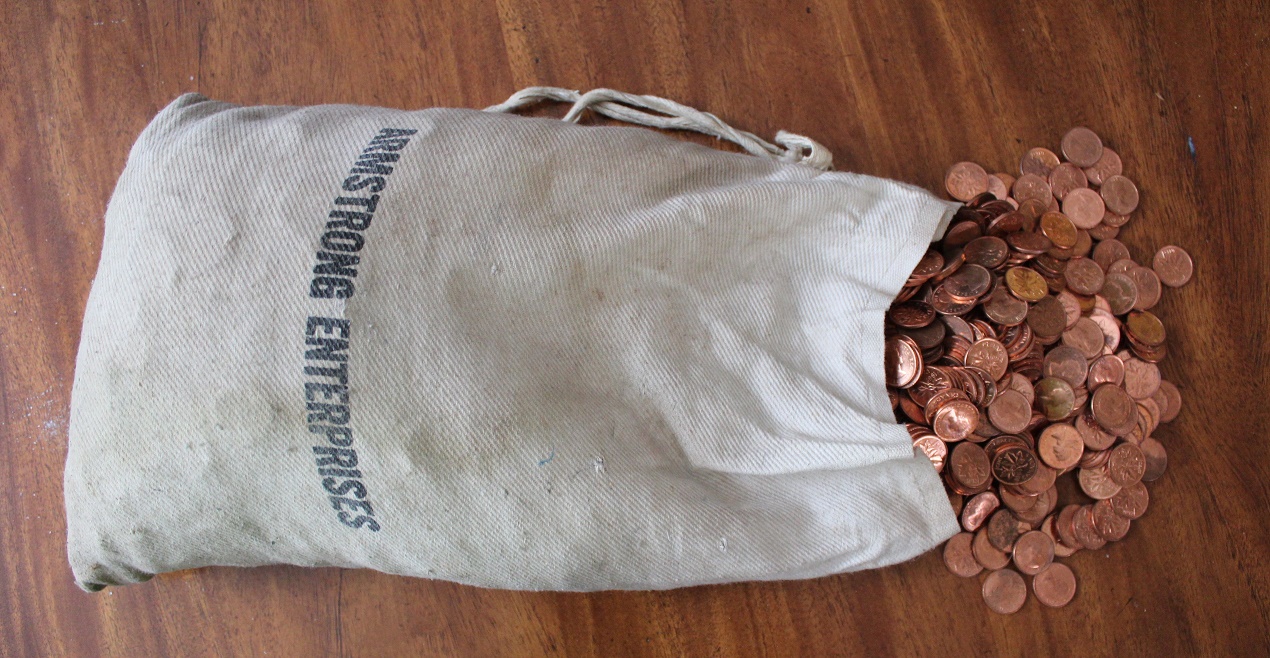
I had three full bags of those Canadian large bead pointed five coins. People actually flew in from around the country just to buy rolls from me. My mother simply could not believe that people would board an airplane to purchase a roll of pennies for $700 and more. For perspective, a standard $50 face-value bag contains 5,000 pennies.
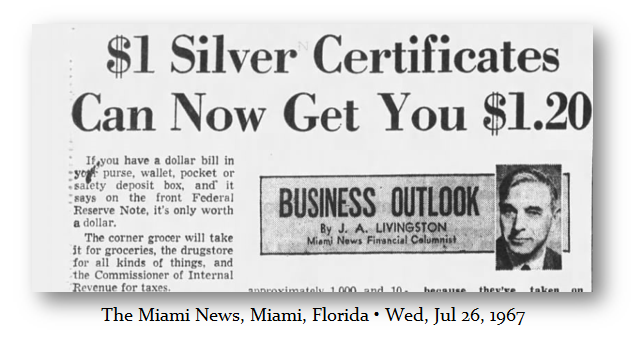
I was also buying Silver Certificates and redeeming them with the U.S. Treasury for silver bullion beginning in 1965. At the time, the Treasury required a minimum redemption of $10,000 face value, which meant most individuals could not redeem them directly. As a result, many people sold their Silver Certificates at a discount to dealers like me who could meet the minimum requirement. The government deliberately established that threshold to slow the heavy demand for silver as the redemption program was coming to an end.
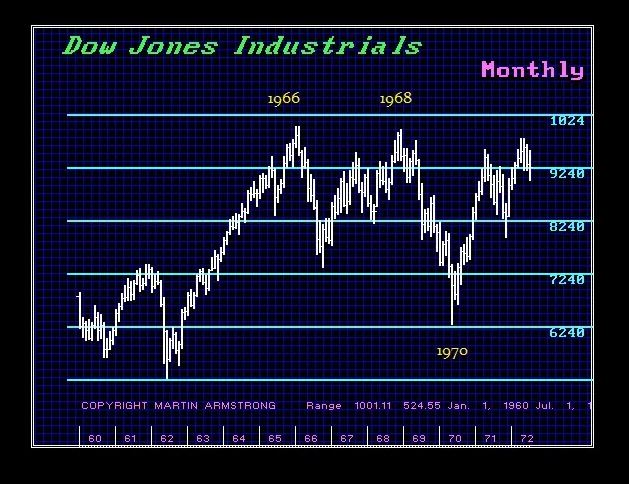
 What the 1966 Crash taught me was that its was an EVERYTHING BUBBLE. Stocks crashed, rare coins crashed, real estate crashed. That was my lesson in understanding the interconnectivity of everything. Then in 1968, the Bretton Woods gave way and suddenly there was a free market in gold trading in London starting in 1968.
Then the 1970 Crash saw gold fall BELOW the $35 fix of Bretton Woods. That was earth shattering. Inflation, Vietnam, protests, and gold fell below $35? That was supposed to be impossible.
Those events taught me about false moves and how the majority MUST be wrong for that is the real engine behind market and economic movement.
That taught me more than anything in school ever did.