There has always been this convenient belief that Big Tech operates independently from government, as if the data you store, search, and upload exists in some neutral corporate space, but that illusion is breaking down rapidly as the lines between Silicon Valley and Washington disappear in real time.
Google has now entered into a classified agreement with the Pentagon allowing its artificial intelligence systems to be used for “any lawful government purpose,” which is a phrase that sounds benign until you understand what it actually means in practice.
This is not a narrow contract tied to a single project. It opens the door for integration into mission planning, intelligence analysis, and even weapons targeting systems operating on classified networks, and once those systems are embedded, the distinction between commercial technology and state infrastructure effectively disappears.

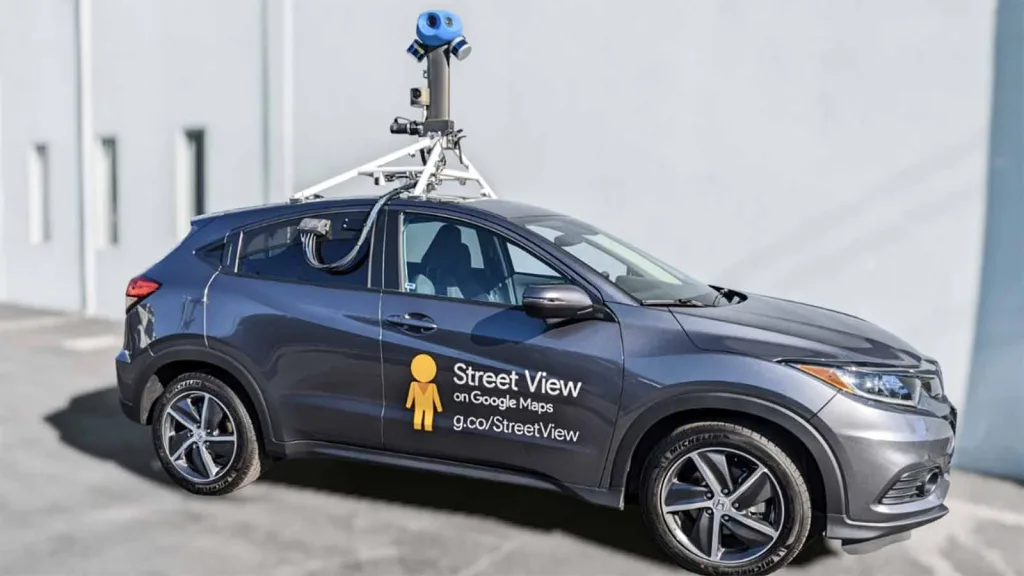
At the same time, Google does not retain control over how that technology is ultimately used, because under the terms being reported, the company has no ability to veto lawful government operations, meaning once access is granted, the downstream application is no longer in their hands. Please be reminded that Google has been collecting data on everyone and everything for decades: Google Maps, Google Search, Google Photos, Google Drive, Gmail, etc.
This is where the narrative people have been told begins to collapse, because for years the assumption was that your data sat within a corporate ecosystem governed by terms of service and internal policies, yet what is now being constructed is something entirely different, a shared infrastructure where private data, artificial intelligence, and state power intersect.
Even inside Google, there is significant resistance to this shift, with more than 600 employees signing letters to CEO Sundar Pichai warning that these systems could be used for “lethal autonomous weapons and mass surveillance,” and expressing concern that once deployed in classified environments, there is no meaningful oversight or transparency. “We want to see AI benefit humanity; not to see it being used in inhumane or extremely harmful ways. This includes lethal autonomous weapons and mass surveillance but extends beyond,” the letter reads.
This is part of a broader shift in which every major AI company is now aligning with the defense sector, competing for contracts reportedly worth hundreds of millions of dollars, thereby transforming artificial intelligence from a commercial tool into a strategic asset within global power dynamics.
From my perspective, this follows the same pattern we see in every major cycle of power consolidation, where private innovation is gradually absorbed into state control during periods of rising geopolitical tension. Once that process reaches a certain threshold, the distinction between public and private effectively vanishes.
People focus on the wrong question, asking whether Google is “sharing your data” directly with the government, when the real issue is far more structural. Once the same systems that process your emails, photos, searches, and behavior are integrated into government operations, the architecture itself becomes unified, and access becomes a matter of policy, not possibility.
When artificial intelligence becomes the interface between data and decision-making, whoever controls that system controls the interpretation of reality itself, and that is where the real power lies. For the first time in history, we are witnessing the convergence of data, technology, and government authority into a single structure that has already become far too powerful to dismantle.