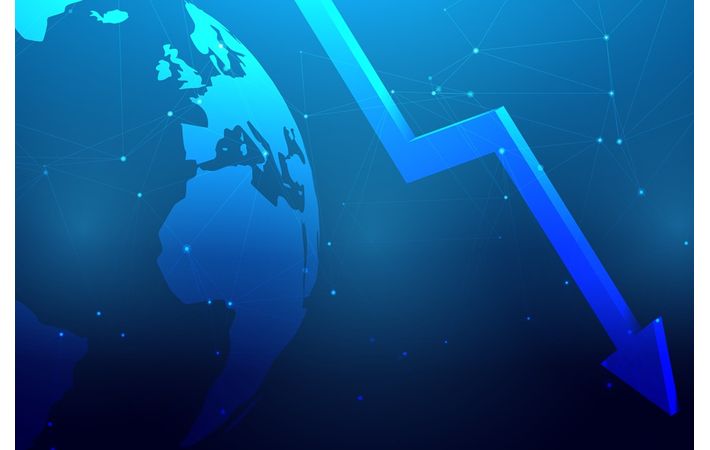
The IMF has once again reduced its outlook for global growth, pointing to persistent geopolitical tensions, expanding trade barriers, and growing uncertainty surrounding conflicts stretching from Eastern Europe to the Middle East. Global output is now expected to grow at roughly 3% this year, a pace well below the historical average.
Modern economists often separate military conflict from economic performance as though they are unrelated subjects. Every prolonged conflict diverts resources away from productive investment and toward military production. Steel that might have built factories instead becomes armored vehicles. Microchips are directed into missile systems rather than consumer electronics. Governments absorb increasing amounts of capital through debt issuance while businesses delay investment because they cannot predict where the next geopolitical crisis will emerge. Those developments do not remain confined to defense ministries. They eventually work their way into every household through higher prices, slower growth, and declining purchasing power.
Europe is steadily increasing defense budgets after decades of reducing military expenditures. Germany has abandoned many of the fiscal restraints that once defined its economic policy. Poland continues purchasing military equipment on a scale unprecedented in its modern history. Finland has spent years constructing extensive underground civil defense infrastructure capable of sheltering nearly its entire population. Governments are discussing emergency preparedness, strategic stockpiles, expanded ammunition production, and even renewed conscription. These are not isolated policy decisions. They represent an entire continent reorganizing itself around the assumption that geopolitical confrontation will remain a defining feature of the years ahead.
Every additional defense commitment must ultimately be financed either through taxation, inflation, or borrowing. Since raising taxes remains politically unpopular, governments overwhelmingly choose debt. The United States is approaching $40 trillion in federal obligations. France continues struggling with chronic deficits while attempting to finance both social spending and military expansion. Britain faces rising borrowing costs alongside growing defense commitments. Similar pressures exist throughout much of the developed world because every government believes it can postpone today’s expenses until tomorrow’s taxpayers arrive.
Most forecasting models begin with the assumption that political conditions remain reasonably stable. Once that assumption disappears, many of the underlying projections quickly lose their value. Energy markets respond to military developments rather than supply and demand alone. Shipping costs fluctuate because of security concerns instead of commercial activity. Capital begins seeking jurisdictions perceived as politically safer rather than merely offering higher returns. Central banks discover that adjusting interest rates cannot reopen disrupted trade routes or restore confidence damaged by expanding conflicts.
Wars have always carried two battlefields. One is fought with soldiers and weapons. The other is fought on government balance sheets, in bond markets, and through the purchasing power of national currencies. Politicians generally devote far more attention to the first battlefield because the second is less visible to the public. Yet history repeatedly shows that financial exhaustion has brought down governments every bit as effectively as military defeat. That is why the economic consequences of prolonged conflict deserve far greater attention than another routine revision to a global growth forecast.