People frequently ask how to convert an Economic Confidence Model turning point into a specific calendar date. The ECM is based on time, not opinion, and time must be measured consistently.
The model’s foundation is the year expressed as a decimal. One full calendar year equals 1.000. The primary cycle is 8.6 years, but within that cycle are fractional turning points such as .25, .50, and .75. These represent shifts in confidence, not fiscal or monetary policy decisions, and they unfold regardless of what governments or central banks attempt to do.
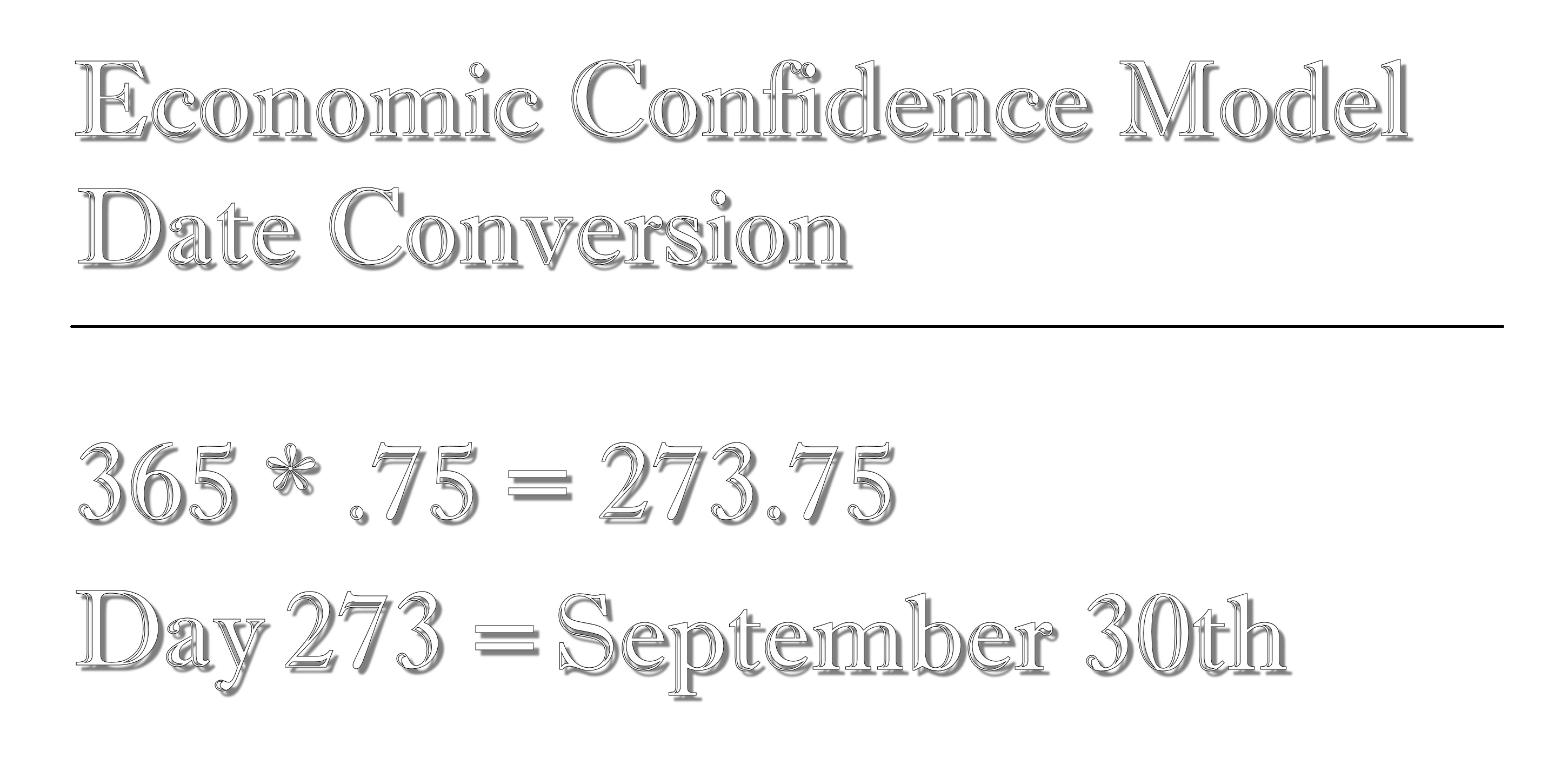
To convert a decimal year into a calendar date, you must translate the fraction of the year into days. A calendar year has 365 days. Therefore, you multiply 365 by the decimal portion of the year you are converting.
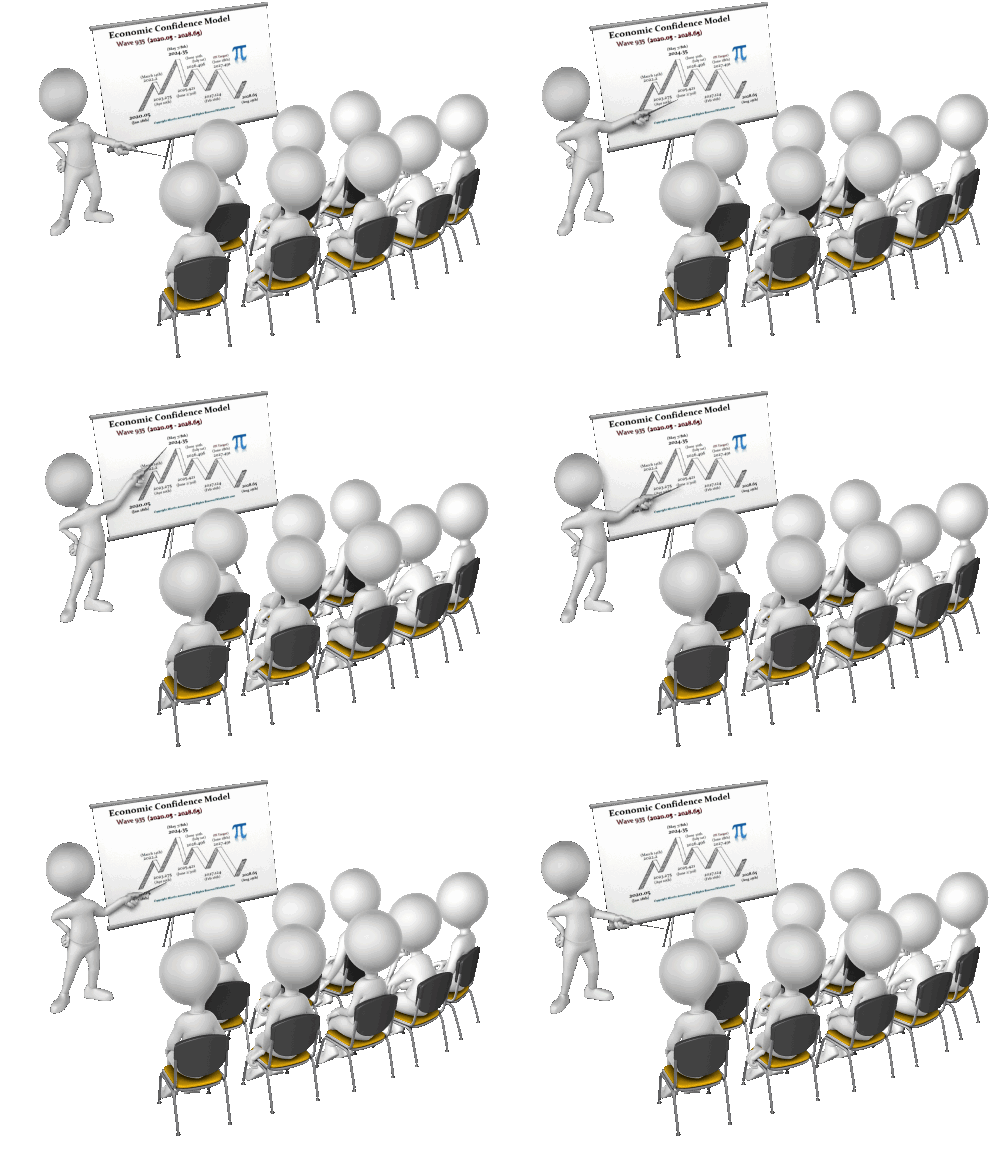
If the turning point is .75, then the calculation is straightforward.
365 × 0.75 = 273.75
We drop the fraction because markets do not turn on the hour. What matters is the day. That leaves Day 273 of the year.
Now comes the part where most people make a mistake. Day 273 does not mean September 27. It means the 273rd day counting forward from January 1. When you count through the calendar, Day 273 falls on September 30 in a non-leap year.
This is why major ECM turning points repeatedly align with late September and early October. That period has marked financial panics, sovereign stress, currency reversals, and geopolitical escalations throughout history. This is not a coincidence. Confidence shifts into the fourth quarter as capital repositions globally ahead of year-end settlement cycles.
The ECM does not forecast events. It forecasts the timing of change. Wars, debt crises, market crashes, and political upheavals all erupt when confidence breaks. The model tells you when the window opens, not what excuse history will later assign to it. This is also why trying to “manage” the economy fails. Politicians and central bankers respond to events, but the cycle creates them. You cannot vote confidence into existence, nor can you print it.
Once you understand how to convert the dates properly, you will see the same timing repeat over centuries. Rome, the French Revolution, 1929, 1987, 2008, and what lies ahead all follow the same clock.