.png?width=1200&name=shutterstock_1376790440%20(1).png "shutterstock_1376790440%20(1).png?width=1200&name=shutterstock_1376790440%20(1)")
I wrote about Angela Lipps back in March because her case demonstrated exactly what happens when government begins trusting a computer more than basic human investigation. Now this 50-year-old Tennessee grandmother is suing the City of Fargo and a former detective for $10 million after spending nearly six months behind bars for crimes she says she could not possibly have committed. She had never even been to North Dakota before this nightmare began, yet facial recognition software identified her as a possible match in a bank fraud investigation and the government machinery took over from there.
Lipps was arrested at gunpoint by U.S. Marshals in Tennessee in July 2025 while babysitting four children. Fargo police were investigating a woman who allegedly used fraudulent identification to withdraw tens of thousands of dollars from banks, and facial recognition technology produced Lipps as a possible match. According to the lawsuit, investigators then compared photographs from her driver’s license and social media and proceeded against her. She eventually faced eight felony charges, including offenses carrying the possibility of years in prison, while basic financial records later showed she was more than 1,000 miles away in Tennessee when the crimes occurred.
AI did not walk into her house and put handcuffs on her. PEOPLE did that. The computer produced a possible identification and human beings entrusted with the power of the state allegedly failed to perform the basic investigation necessary before destroying someone’s life. Technology gives government enormous power while simultaneously giving bureaucrats something else to blame when they get it wrong.
Lipps reportedly spent 108 days jailed in Tennessee before being transported to North Dakota and remained incarcerated for months until her attorney produced records supporting that she was in Tennessee when the thefts occurred. The charges were dismissed on Christmas Eve. By then, according to her lawsuit and attorneys, she had lost her home, car, possessions, and even her dog because she could not pay her bills while sitting in jail. She was released in Fargo during winter without a coat and with practically nothing to her name. No computer experiences those consequences because the computer simply produces another output and moves on.
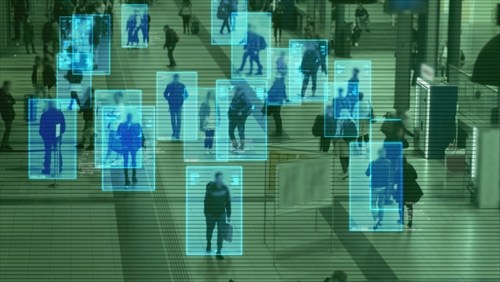
Facial recognition poses a serious threat to privacy, and as I warned years ago, would eventually track ordinary people simply walking through public places. At the time, this sounded like something out of Minority Report. Now facial recognition is embedded throughout policing, airports, border systems, private security networks, and massive surveillance databases. I recently wrote about Flock’s network of more than 120,000 cameras spread across 49 states, where law enforcement agencies can search vehicle movements across jurisdictions. Add facial recognition and AI to that infrastructure and government gains the ability to identify, locate, categorize, and investigate people on a scale that previous governments could never have imagined.
The problem is that AI is not some all-knowing intelligence. It identifies patterns and probabilities based upon the information and methodology behind the system. A match is not proof that someone committed a crime, yet people have an extraordinary tendency to surrender their own judgment once a computer produces an answer.
I wrote about Jason Killinger in 2025 after facial recognition at a Nevada casino reportedly identified him as a “100% match” for another person. Killinger produced identification, vehicle registration, and other documentation, yet authorities still arrested him. The machine had spoken, so reality itself became suspect.
Angela Lipps is hardly the only person caught in this mess. The ACLU says more than a dozen people in the United States are now publicly known to have been wrongfully arrested after police reliance on facial-recognition results. Kimberlee Williams of Oklahoma was arrested because Maryland authorities were looking for somebody else even though she said she had never been to Maryland. These are not harmless glitches where Netflix recommends the wrong movie. When government plugs imperfect technology into the criminal justice system, an error can mean armed agents at your door, jail, extradition, lost employment, financial destruction, and months of your life that nobody can ever return.
This is why the expansion of biometric databases should concern everyone. Your face cannot be replaced like a password. Governments are increasingly collecting facial scans, fingerprints, iris patterns, location records, license plate data, financial information, and countless other identifiers. AI can connect those databases in seconds. Once that infrastructure exists, government does not need to follow you physically because the cameras, databases, banks, phones, cars, and computers can reconstruct your life for them.
People respond by saying they have nothing to hide, but Angela Lipps apparently did not need anything to hide. The entire point of due process is that government must prove YOU committed the crime rather than forcing you to prove that the computer picked the wrong face. When technology reverses that burden, we have abandoned one of the most fundamental principles of a free society.
Technology itself is not the enemy. AI can be extraordinarily useful, but it cannot become a substitute for evidence, investigation, probable cause, and human accountability. A facial recognition hit should be an investigative lead, not a conviction generated by an algorithm. The moment government begins treating probabilities as facts, every innocent person becomes one bad computer match away from having to prove who they are.
Angela Lipps lost months of her life because a machine allegedly pointed government in her direction and the humans involved failed to establish the truth quickly enough. Her $10 million lawsuit will now force the courts to examine who is responsible when technology gets it wrong, but the larger question is far more important. We are building the most sophisticated surveillance infrastructure ever created while simultaneously discovering that the machines watching everyone can identify the WRONG person.