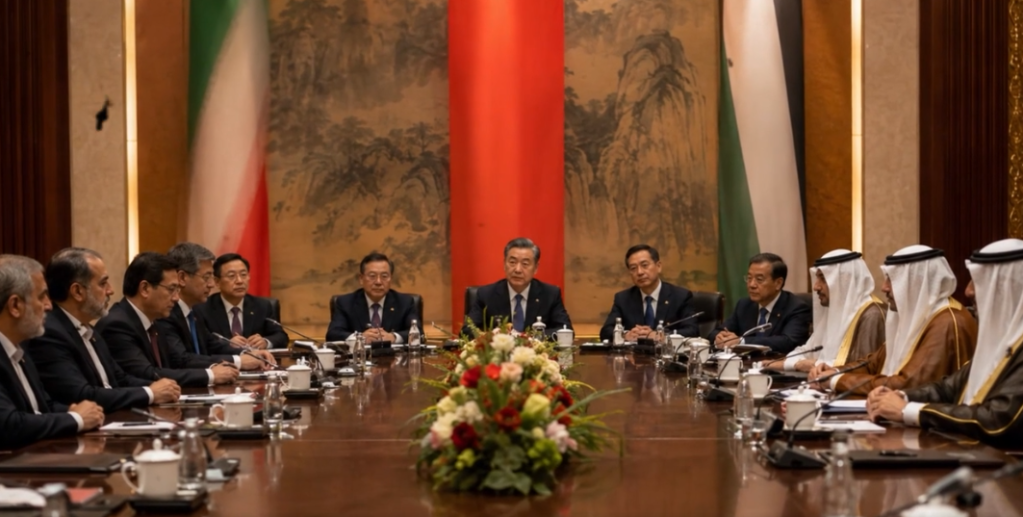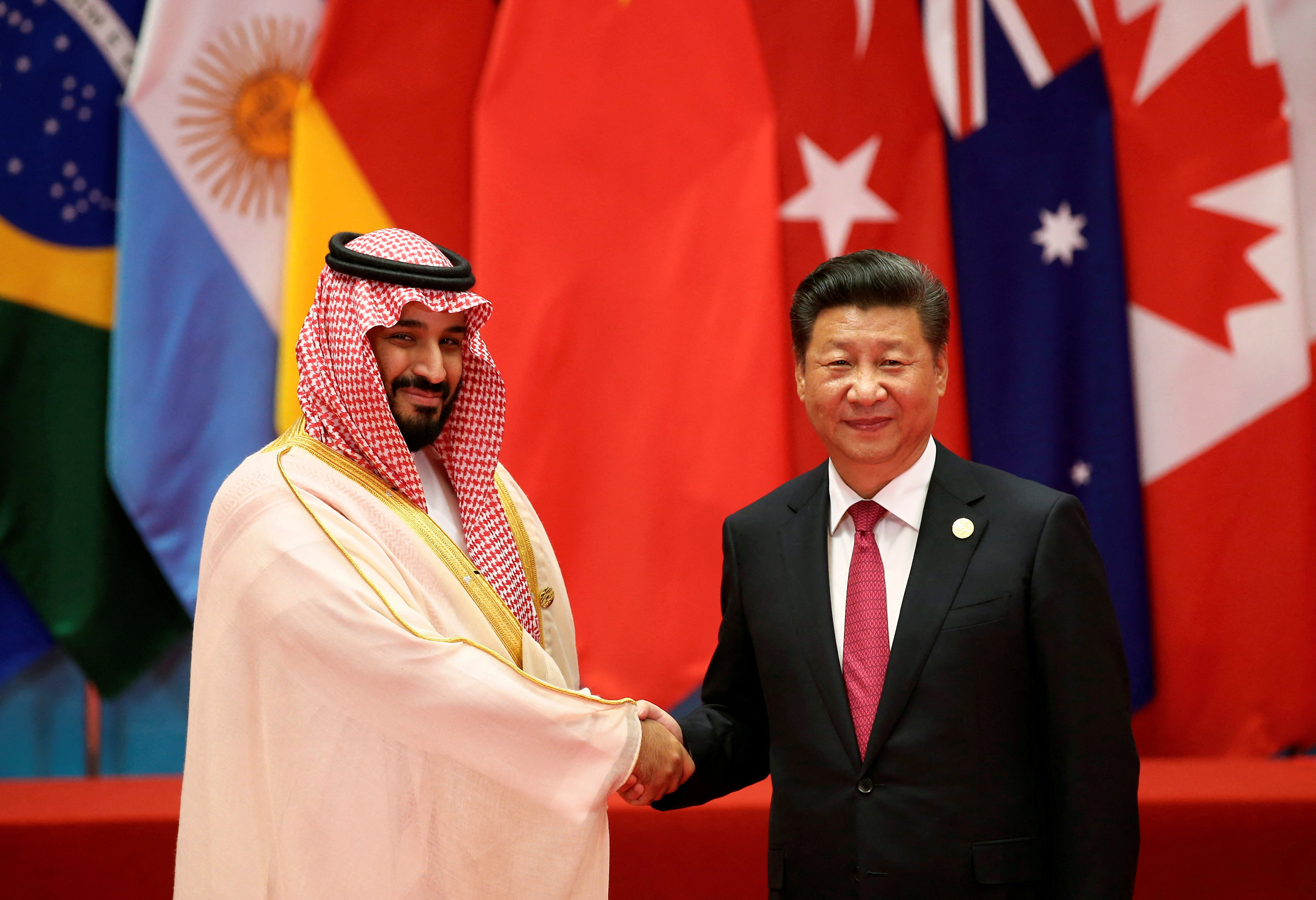
Something rather extraordinary has happened in the Middle East. Saudi Arabia has turned to China for help with Iran and the Houthis. Riyadh appealed to Beijing after the Houthis advanced along Yemen’s Red Sea coast and around Bab el-Mandeb, threatening the western route Saudi Arabia increasingly depends upon for oil exports. China then privately approached Tehran and asked Iran to use its influence to restrain the Houthis and prevent the conflict from spreading further across the region’s energy routes.
Think about what has actually happened here. Saudi Arabia did not turn first to Washington to carry a message to Tehran. It went to Beijing. The country that was once viewed primarily as the factory of the world is increasingly becoming the economic middleman of the Middle East because China has something the West has steadily destroyed through sanctions and ideological foreign policy: relationships with BOTH sides.
China buys Iranian oil. It trades heavily with Saudi Arabia and the Gulf states. It needs energy from the entire region. It has no economic interest in watching Iran shut Hormuz while the Houthis turn Bab el-Mandeb into another battlefield. Roughly half of China’s oil imports come from the Middle East, while trade between China and the Gulf Cooperation Council states is around $300 billion annually. More than 80% of Iran’s seaborne oil exports went to China in 2025, according to Kpler data cited by Reuters. Beijing does not need some humanitarian lecture from the United Nations to understand what is at stake. Its factories need energy and its economy needs those shipping lanes OPEN.
China has leverage with Iran because Iran needs China economically. Beijing remains Iran’s largest trading partner and principal customer for its oil. At the same time, China has spent years deepening economic relationships with Saudi Arabia, the UAE and the rest of the Gulf. China therefore finds itself sitting at a table where it can pick up the telephone and speak to Riyadh, Tehran and, increasingly, the Houthis themselves. Reuters reported back in July that Beijing had already established direct contact with the Houthis seeking guarantees that Chinese tankers could safely transit the southern Red Sea.
China brokered the restoration of diplomatic relations between Saudi Arabia and Iran in 2023. That was an enormous signal that most people in Washington dismissed. Beijing was demonstrating that its Middle East strategy would be based primarily on commerce. China did not need Saudi Arabia to love Iran or Iran to love Saudi Arabia. It merely needed both countries to recognize that trade is preferable to war. There is an old lesson here that politicians never seem capable of understanding. Commerce creates relationships. Sanctions destroy them.
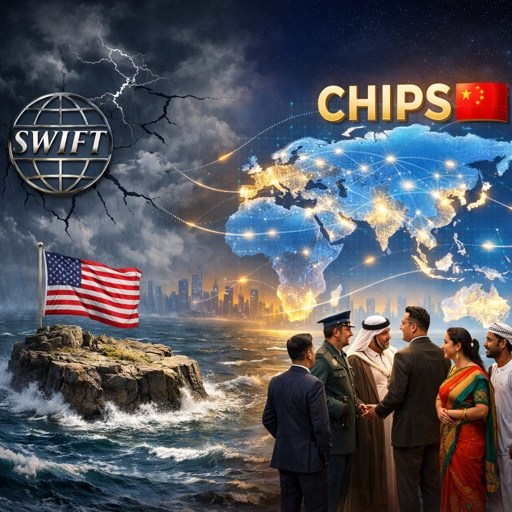
Washington has spent years weaponizing access to the dollar, SWIFT, technology, banking and trade. Every geopolitical disagreement is answered with another sanction. Politicians imagine this demonstrates strength because they look only at the immediate target. They never calculate what happens ten years later when everyone they sanctioned has built alternative relationships precisely because they could no longer trust the West.
China took the opposite approach. It bought the oil. Now look at where that has brought us. Saudi Arabia needs somebody capable of speaking to Iran because Iran possesses enormous influence in the region. China can make that call because it never completely severed the economic relationship. Tehran in turn cannot simply ignore Beijing because China purchases the majority of Iran’s exported crude and remains one of the few major economies capable of providing the investment Iran desperately needs.
This does not mean China controls Iran, nor does Iran simply issue orders to the Houthis. The Houthis have developed their own political and military interests, particularly now that their territorial gains have increased their leverage around Bab el-Mandeb. Beijing can pressure Tehran, and Tehran may influence the Houthis, but none of these relationships amount to absolute command. Nevertheless, the shift in diplomacy is unmistakable.
China’s interests are brutally straightforward. It needs Hormuz open. It needs Bab el-Mandeb open. It needs Saudi oil, Iranian oil and Gulf trade. It does not want an ideological crusade in the Middle East because wars interrupt commerce. Beijing is not doing this out of charity. It is protecting China.
Saudi Arabia understands that China has skin in the game. If Bab el-Mandeb closes while Hormuz remains disrupted, Beijing suffers immediately. Chinese manufacturers face higher energy costs. Tankers must travel farther. Freight and insurance costs rise. Supply chains become less reliable. Inflation spreads outward through the entire world economy. China’s incentive to mediate is therefore economic rather than merely political.
This is also why the rise of China cannot be understood simply by looking at GDP or military spending. Economic power eventually becomes diplomatic power. When you become the largest customer of one nation and one of the largest trading partners of another, governments begin answering your phone calls. That is how power shifts.
America emerged as a global power through commerce and capital long before Washington became obsessed with sanctioning half the planet. The dollar became dominant because everyone wanted access to American markets and American capital. China has studied that lesson while Washington seems determined to forget it.
None of this means the dollar disappears or China suddenly replaces the United States. China’s capital controls remain an enormous obstacle to the yuan becoming a true global reserve currency. But reserve currency status and geopolitical influence are not the same thing. China does not need to replace the dollar tomorrow to become increasingly important diplomatically.
The Saudis are facing Iran across the Persian Gulf and the Houthis across the Red Sea. Their oil infrastructure is increasingly squeezed between Hormuz and Bab el-Mandeb. When Riyadh needed someone capable of carrying a serious message into Tehran, it turned toward Beijing. That is how geopolitical power changes hands. Not with some grand announcement. Not because politicians hold a press conference declaring a new world order.