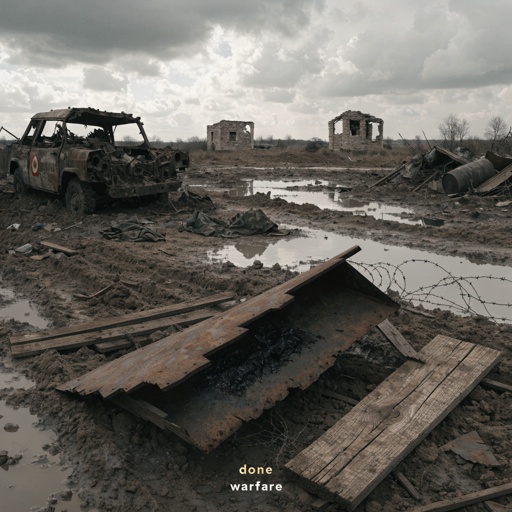
The front in Ukraine is largely positional. A wide “kill zone” created by drones makes massed Russian assaults costly and difficult to sustain. Ukraine is closer to collapse for they lack the soldiers and have been turning to drones and robots. Russia has manpower depth and a wartime economy that, while strained, continues to function. Ukraine faces manpower, ammunition, and sustained Western support challenges but has improved its technological edge (especially drones) and defensive effectiveness. Peace negotiations remain stalled, and a protracted conflict remains the most likely near-term trajectory.
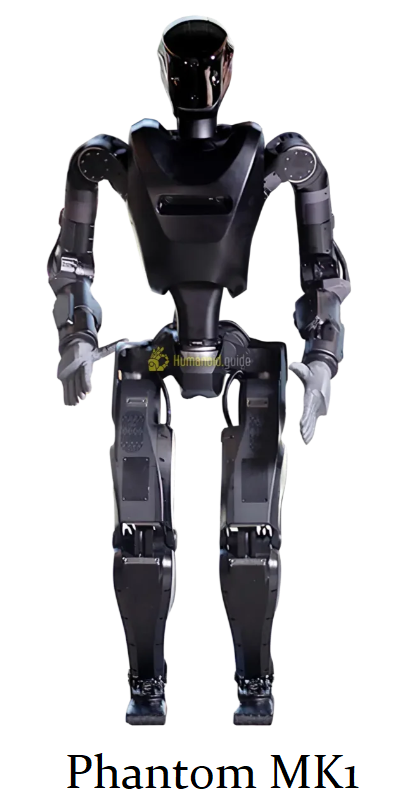
What is changing the way wars are fought is the experiments going on in Ukraine. Fully autonomous drones have killed human soldiers for first time. Ukraine is also looking at Humanoid Robots. A US startup, Foundation, sent two Phantom MK-1 humanoid combat robots to Ukraine for trials in early 2026. These are designed to operate conventional weapons like rifles.
Ukraine has become a leader in using unmanned and autonomous systems in warfare, the focus remains on specialized vehicles and drones. The concept of humanoid robots like the “Terminator” is still in its infancy in this conflict, with only early tests having been reported.
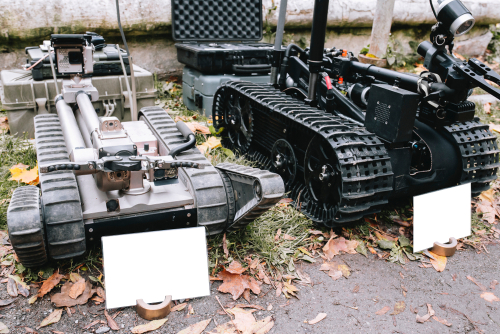
Ukraine is actively developing and deploying various types of Unmanned Ground Vehicles (UGVs) and AI-enhanced drones. UGVs are already in combat. Ukraine has successfully used remote-controlled and semi-autonomous UGVs in combat. For example, the DevDroid TW 12.7, a tracked vehicle equipped with a heavy machine gun, has been used to hold front-line positions for extended periods, allowing soldiers to operate from a safe distance . These are not humanoid but are effectively “robot soldiers” in a broader sense.
Ukraine is scaling up this effort significantly. In April 2026, President Zelensky announced a plan to increase UGV production to 50,000 units in 2026 . This reflects a strategy to use robots to replace soldiers in the most dangerous roles, with one commander stating his goal is for robots to eventually make up 80% of his force .
A major part of Ukraine’s strategy involves integrating AI into aerial drones to enhance autonomy in navigation, targeting, and flying through GPS-jammed environments . Ukraine has even established the world’s first independent branch of its military dedicated to unmanned systems . The focus here is on aerial systems, not humanoid forms.
Ukraine has a formal, high-level partnership with NVIDIA to develop national AI infrastructure. In late 2025, Ukraine’s Ministry of Digital Transformation announced a joint initiative to build “sovereign AI” for state and defense sectors, giving the country access to NVIDIA’s world-leading technologies.
The first project under this initiative is the creation of Diia AI LLM – a Ukrainian sovereign language model to power AI services within the state’s digital ecosystem. While this partnership is focused on broad AI infrastructure, it explicitly includes defense sector applications. Ukrainian researchers have also published academic papers praising NVIDIA’s Jetson Orin Nano as an “ideal solution” for AI-powered drones in the 2-10 kg class, citing its “outstanding high-performance task capability.”
However, NVIDIA’s Jetson Orin series AI modules have become a critical component in combat drones used by both Ukraine and Russia. These are essentially powerful, miniature AI computers designed originally for robotics, autonomous vehicles, and industrial vision systems, but they are now being repurposed for war.
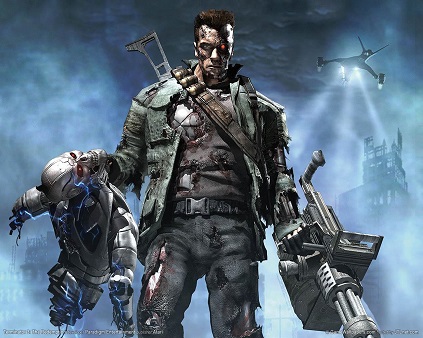
Ukraine has tested fully autonomous AI systems that can lock onto targets without human intervention, reportedly used in Crimea against fuel depots and military equipment. Now we are getting into the Terminator scenario.
Ukrainian drones, such as the “Hornet” and “Martian” models, are equipped with NVIDIA chips and increasingly operate with autonomous AI to identify, track, and strike targets with minimal human input. This opens the door to exactly what the theme was in the Terminator movies. Can the machines operating without human input kill their owners?
Key uses documented in Russia (with NVIDIA chips found in their wreckage by Ukraine). Russian S-71M “Monochrome” cruise missiles, Shahed MS001 autonomous drones, V2U kamikaze drones, and “Molniya” (Lightning) kamikaze drones, all use NVIDIA.
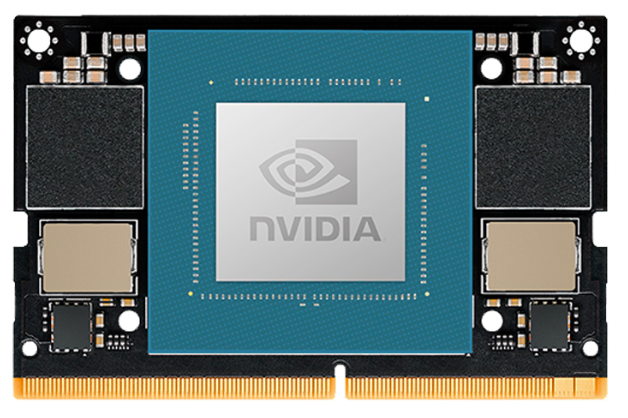
The NVIDIA Jetson Orin series is a commercial, consumer-grade product, not military-grade hardware. It costs a few hundred dollars and is sold openly to developers and students for benign uses like robotics and AI research. Its importance on the battlefield lies in its AI processing power. These chips enable drones and missiles to perform real-time visual recognition and autonomous terminal guidance. In some documented cases, drones have been found with no communication antenna, meaning they flew entirely pre-programmed routes and identified targets autonomously without remote control. This is making them immune to electronic jamming, which is a huge advancement.
In July 2026, a Russian drone equipped with an NVIDIA Jetson Orin module killed three civilians in Zaporizhzhia, Ukraine. The drone reportedly had no remote control link, meaning the AI system independently identified and struck the target, the propane tank at a gas station. This has been described as the first confirmed case of a fully AI-controlled weapon causing civilian casualties .

All we hear about is the AI Bubble and they pull out the charts of the DOT.COM Bubble of 2000. Of course, most of these analysts were not old enough to even trade back then so it is no surprise to realize that all the do is look at chart patterns with no knowledge of the underlying factors. Th DOT.COM Bubble was all hype. Because stock prices were driven by speculation rather than the underlying business fundamentals, the market became extremely fragile. The bubble burst when reality set in and investors realized the promised earnings were not materializing.
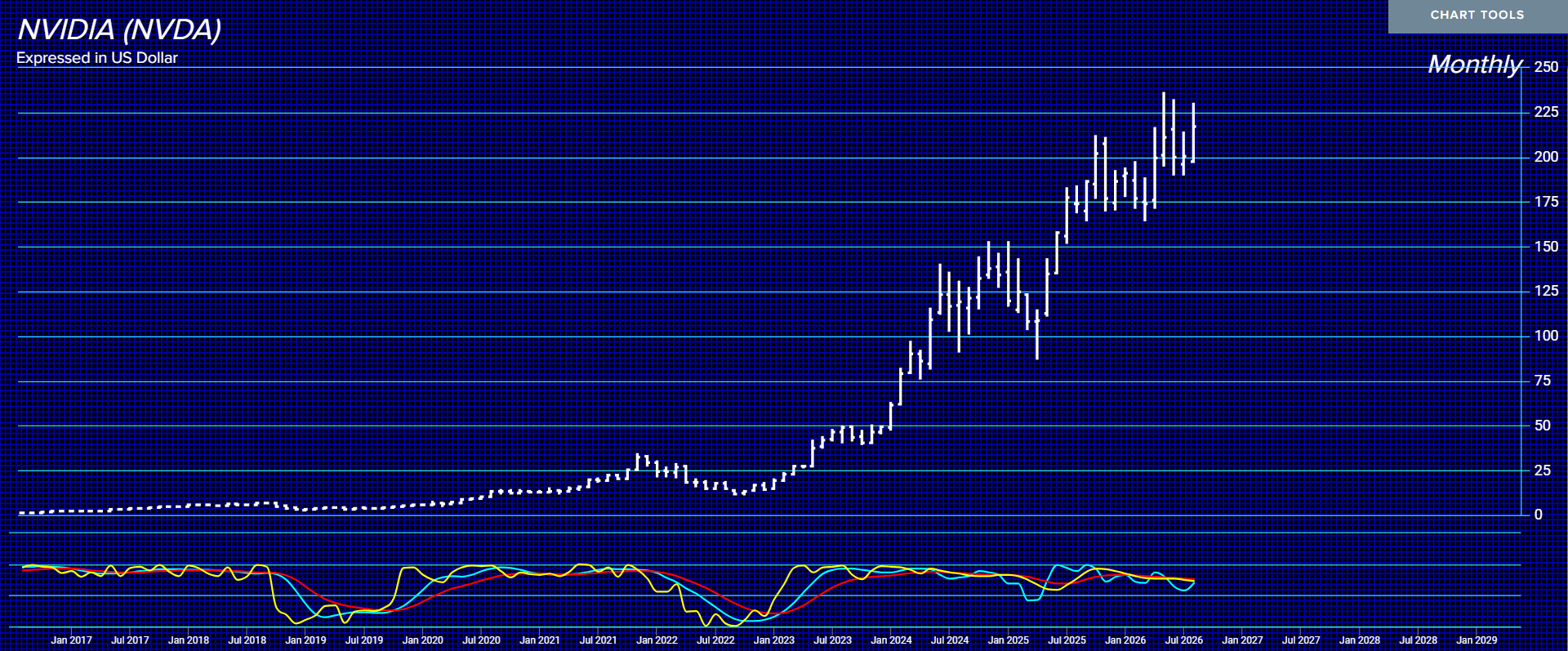
Yes, NVIDIA’s sales are increasing at a dramatic rate, and while drones and the war in Ukraine are a contributing factor, the overwhelming driver is the massive global demand for AI infrastructure, not military applications. With the prospects of World War III on the horizon, NVIDIA could become the DuPont of this one. Of course, they labeled DuPont the Merchant of Death.
Massive AI Infrastructure Demand
NVIDIA’s explosive growth is fundamentally tied to the AI boom. In its most recent quarter, revenue more than doubled year-over-year, reaching a record $96.2 billion. The core of this growth is its data center business, which alone generated $89 billion in revenue – a 117% increase from the previous year. Nonetheless, there is a new customer and that is autonomous drones and robots designed to kill humans.
This is not the DOT.COM Bubble where people were buying dreams. Here there is revenue already.