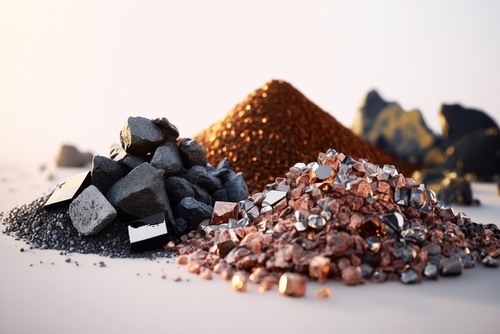
The West suddenly discovered that Brazil is sitting on one of the most strategic mineral reserves in the world. The Associated Press reports that Brazil has the second-largest known rare-earth reserves behind China, and foreign interests are now rushing into the country as governments desperately attempt to break China’s grip on the supply chain. More than 86% of Brazil’s rare-earth exploration applications were filed within the last three years, and over 40% have foreign financial backing. This is what happens when governments wake up decades too late to the importance of commodities.
China understood long ago that control of natural resources and their processing is a form of geopolitical power. The West abandoned mining and manufacturing, imposed endless environmental regulations, and outsourced production to Asia because politicians assumed globalization would last forever. China was happy to take the business. Today it controls roughly 90% of global rare-earth processing, and Beijing has already demonstrated that it is prepared to use that position when geopolitical tensions rise.
Rare earths are essential for electronics, automobiles, aerospace, robotics, energy technology, and modern weapons systems. Washington suddenly realizes that depending on China for materials necessary to manufacture military equipment is a national security problem. American and Australian interests are therefore pouring into Brazil, while Brazil’s only commercial rare-earth producer, Serra Verde, has been acquired by a U.S.-backed company. The West is now scrambling to recreate supply chains it voluntarily surrendered.
Brazil would be foolish not to recognize the tremendous leverage it now possesses. President Lula has made clear that he does not intend to allow foreigners simply to extract Brazil’s resources and take the valuable processing elsewhere. Brazil wants the refining, technology, and industrial development to remain inside the country. That is precisely what China did successfully. China did not become powerful simply because it possessed minerals. It built the processing capacity and then moved up the industrial chain until everyone else became dependent upon it.
This is where Brazil has an opportunity that commodity-producing nations have repeatedly squandered. Digging something out of the ground and exporting it creates revenue, but processing it and converting it into finished products creates industry. The British Empire understood that distinction. So did the United States during its rise as an industrial power. The countries that merely supplied raw materials remained dependent upon those that controlled manufacturing and finance.
The AP found that roughly one-quarter of the exploration applications overlap with or are located within about 10 kilometers of protected areas and Indigenous territories. Rare-earth production can create serious environmental problems involving toxic waste and water contamination. These are legitimate concerns, particularly around the Amazon, but the same Western governments that spent years lecturing Brazil about environmental protection are now desperate for alternative sources because they allowed China to dominate the industry.
The green movement never wanted to discuss where all these materials would come from. Electric vehicles, wind turbines, batteries, computers, and virtually every technology promoted under the so-called energy transition require enormous quantities of raw materials. Politicians pretended they could shut down mines and industry at home while simultaneously transforming the entire energy system. They merely exported the environmental consequences to other countries and then claimed they had become environmentally responsible.
Brazil is now caught directly between Washington and Beijing, but it does not have to choose either side. This is what the geopolitical establishment in Washington constantly fails to understand. Brazil should deal with China when that benefits Brazil and deal with the United States when that benefits Brazil. It is not Brazil’s responsibility to sacrifice its economic interests because Washington decided China is suddenly an adversary after spending decades encouraging American companies to move production there.
The rise of BRICS is part of this broader shift. Many emerging nations possess the commodities, energy, agricultural capacity, and growing populations that the developed world increasingly needs. They are no longer willing to accept the old arrangement where the West dictates policy while expecting unrestricted access to their resources. Brazil has food, energy, minerals, and an enormous domestic market. That gives it negotiating power that will only increase as the world fragments into competing geopolitical blocs.
China’s dominance of rare earths did not happen overnight. It was the result of decades of Western policy mistakes combined with deliberate Chinese industrial planning. Now Washington is spending billions attempting to reverse something it helped create. Brazil should certainly welcome investment, but it should not simply become America’s replacement mine for China.
The world is moving away from globalization and back toward economic nationalism. Governments are discovering that access to energy, food, metals, and strategic minerals cannot simply be assumed. Brazil happens to possess something everyone suddenly needs, and that places it in an extremely powerful position between China and the West. The question is whether Brazil will simply sell its resources or use this opportunity to build the industrial capacity that could transform its position in the world economy for decades to come.