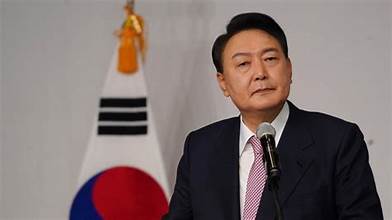
South Korea sentencing former President Yoon Suk Yeol to five years in prison over his martial law attempt is a major historical event because it cuts straight to the heart of what always happens when a leader believes he personally IS the state. The court found him guilty of abuse of power, obstruction of justice, and falsifying official documents, all tied to that failed martial law move.
Martial law exists in most constitutions as a last-resort mechanism because once a head of state tries to invoke it for political survival, it is no longer governance. It becomes the weaponization of government against the people. Yoon panicked when it became apparent that he was facing impeachment. Blaming North Korea, Yoon declared emergency martial law for a full three hours before it was overturned by Parliament.
The former president was sentenced to five years in prison, a small price to pay considering there were calls for the death penalty. South Korea has not carried out a execution in three decades. “Calling for the death penalty for Yoon is not a matter of choice but a necessity and cannot be considered excessive,” said Moon Geum-ju, a Democratic Party floor spokesperson. Executing a former head of state does not inspire confidence to say the least.
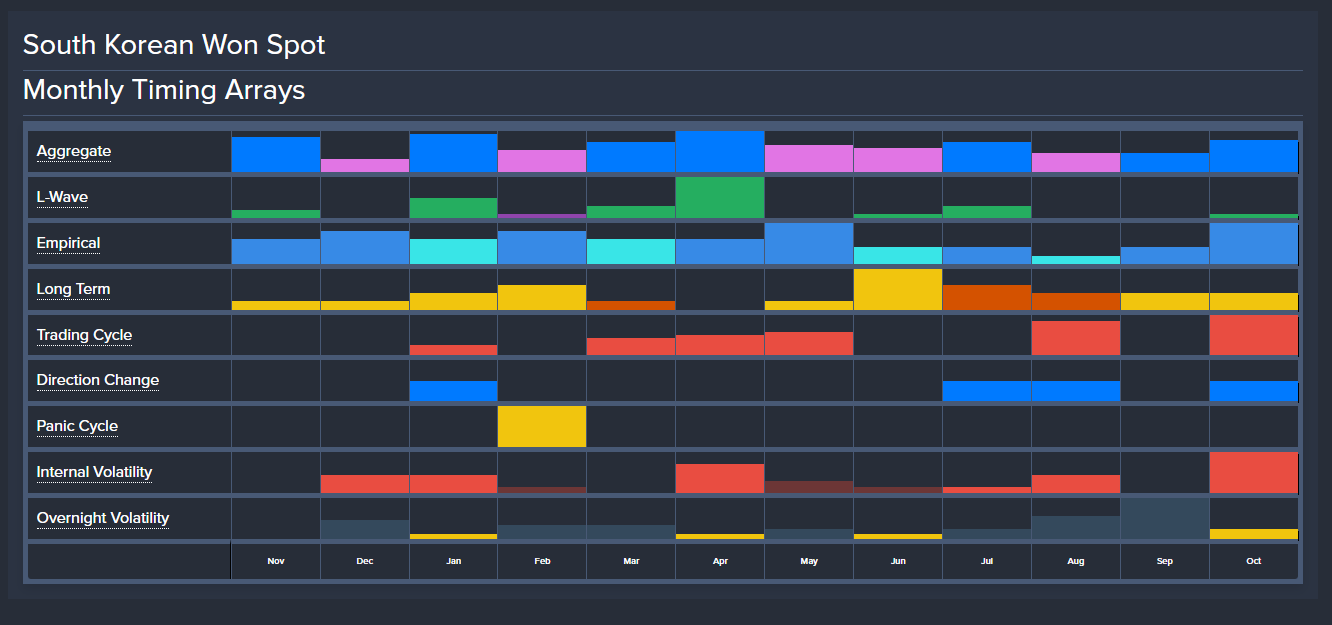
When we look at the Monthly Array from 2023, we can see that the major turning point would be April 2024, which the computer was projecting from November 2023. The April 10, 2024, election, when all 300 members of the National Assembly were elected, 254 from first-past-the-post constituencies and 46 from proportional party lists. The two largest parties, the Liberal Democratic Party and the conservative People Power Party, once again set up satellite parties to take advantage of the electoral system.
The election served as a “mid-term evaluation” of President Yoon Suk-yeol’s administration, which is nearing its third year. The question became whether the ruling party could surpass the constraints of the ruling coalition, which did not secure a majority in the previous general election. The election saw opposition parties, primarily the Democratic Party, retain their majority in the National Assembly. We can see that the numerous Directional Changes thereafter ensured a divided political state.
South Korea has a long history of prosecuting former leaders after they leave office. But this case is uniquely important because it wasn’t just a bribery scandal or political persecution. Yoon is being held accountable for permitting his own ambitions to override the constitution and crossing a line that no leader in a constitutional republic is permitted to cross.
Leaders start thinking they can rule by decree. They silence opponents. They use state power to protect themselves. And when they fall, the entire system suffers the aftershock. The markets may shrug for a day, but society doesn’t.