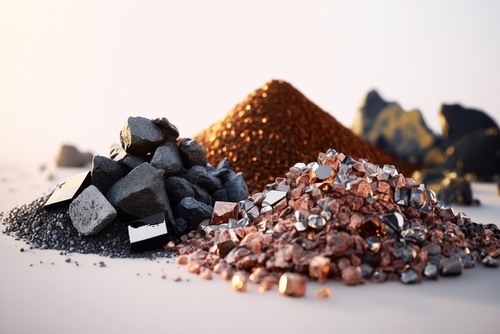
The press is reporting that Venezuela is opening its mining sector to American companies, allowing foreign investment to extract gold, diamonds, and rare earth minerals after the National Assembly approved the first step in rewriting the country’s mining laws. The reform extends mining concessions from 20 to 30 years and allows international arbitration in disputes, clearly designed to attract Western capital that had previously been locked out under the old socialist system.
The real story is rare earth minerals and the global race to secure them. Washington has already authorized transactions involving Venezuelan gold through the state mining company Minerven and is working to bring American mining firms into the country. The move comes after the United States began reopening Venezuela’s oil sector to American companies as well, signaling that the real objective is securing access to resources that have become strategically vital.
The deeper issue is that the United States does not control the resources it needs to maintain its technological and military dominance. Rare earth minerals are essential for missiles, fighter jets, radar systems, electronics, and advanced manufacturing. As I have explained before, America’s defense supply chain depends on materials it does not control. That is a serious vulnerability in any geopolitical confrontation.
China dominates the global rare earth supply chain, accounting for the majority of production and refining. In fact, China supplied about 71% of U.S. imports of rare earth compounds and metals in recent years and controls much of the processing capacity for these materials. These minerals are not just another commodity. They are the foundation of modern industrial technology, electric vehicles, renewable energy systems, and the entire defense sector.
This is why Washington has been quietly pursuing mineral deals around the world. The United States has already secured preferential access to Ukraine’s mineral resources, which include significant deposits of graphite, titanium, lithium, and rare earth metals. Ukraine holds roughly 5% of the world’s critical raw materials, making it strategically important in the mineral race. The mineral agreement between Washington and Kyiv was never just about economic reconstruction. It was about securing long-term access to materials needed for modern industry and military technology.
Japan has also been drawn into this geopolitical struggle. After China restricted rare earth exports in the past, Tokyo began aggressively diversifying its supply chain and securing new mineral partnerships to reduce dependence on Beijing. The entire world is now scrambling to secure access to the materials that underpin modern technology.
Venezuela now enters that equation. The country is believed to possess significant untapped mineral deposits. If these resources are opened to Western investment, it will provide another potential supply source outside of China’s control. That is why this move is important. It is not about reviving Venezuela’s economy. It is about the strategic mineral competition that is quietly reshaping global politics.
Behind every war and every geopolitical confrontation lies the same fundamental issue – resources. Oil dominated the last century. Rare earths and critical minerals will dominate the next. The United States understands that its technological future depends on securing these materials, and that explains the sudden interest in places like Ukraine and now Venezuela.
The public hears about democracy, sanctions, and diplomacy. But the real game is being played beneath the surface. Control the resources and you control the future of industry, defense, and economic power. Venezuela’s coerced decision to open its mineral wealth is just another move on that global chessboard.