Iran’s Supreme Leader Mojtaba Khamenei has congratulated himself on the Democratic victory in the American midterm elections, declaring, “The process of the US’s collapse has accelerated.” Read those words carefully. He did not say America’s collapse had begun. He said it had ACCELERATED. Iran’s leadership believes the United States was already in decline and that the war in the Middle East has hastened that process. We have been warning about the decline of Western civilization for decades through our Economic Confidence Model. The Iranian regime is now openly celebrating the political and economic divisions that have emerged in Washington, but the question is whether its leaders understand the underlying economic forces or are simply interpreting the election as their own victory.
Iranian Parliament Speaker Mohammad Bagher Ghalibaf, who has represented Tehran in negotiations with Washington, declared, “Conscience or the cost of living, Americans said NO TO WAR, and we endorse this message.” He went further, warning that if Washington ignored the voters to serve foreign interests, Iran’s rejection would come with what he called a “Nightmare.” Gholam-Hossein Mohseni-Ejei, head of Iran’s judiciary, proclaimed that Trump had been defeated both militarily and politically and promised additional defeats. The regime’s newspapers joined the celebration. Hamshahri declared “Iran’s shadow over US elections,” while Jam-e Jam announced “The twilight of Trumpism.” The Iranian establishment is portraying the November 3 election as proof that the war has inflicted political damage inside the United States.
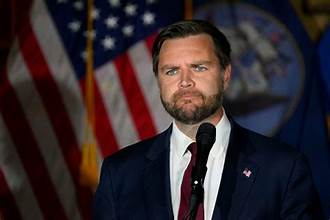
The United States and Israel launched their military campaign against Iran on February 28, and the conflict has dragged on for more than eight months. Washington has imposed a naval blockade, Iran has disrupted shipping through the Strait of Hormuz, and the consequences have spread throughout the international energy markets. Americans are paying the price through higher fuel costs, transportation expenses, and inflationary pressures. Trump campaigned on ending endless wars, yet his administration became entangled in another Middle Eastern conflict. The Republicans have now lost control of Congress, and even Vice President JD Vance has acknowledged that the war played a central role in the defeat.
What Iran understands is that a military confrontation does not have to end with an invading army capturing Washington to inflict damage upon the United States. The economic consequences can undermine political confidence from within. Iran cannot match the United States militarily in conventional terms, but the Strait of Hormuz gives Tehran leverage over a critical artery of international commerce. When oil supplies are disrupted, the economic consequences spread far beyond the battlefield. Energy costs influence transportation, agriculture, manufacturing, electricity, and ultimately the prices consumers pay. An adversary does not need to destroy America’s military to create domestic political pressure through economic disruption.
Iran’s government has endured severe sanctions, military attacks, and enormous economic pressure, yet they are now pointing to American voters as evidence that Washington cannot sustain its own foreign policy commitments without domestic consequences. This is not proof that Iran has won the war or that the United States is on the verge of collapse. Iran’s economy has suffered enormously, and its own population has paid a terrible price. Nevertheless, the regime recognizes that the American public is increasingly unwilling to finance foreign conflicts while struggling with the cost of living at home.
Khamenei explicitly warned Iranians against believing that Democratic control of Congress would fundamentally change American foreign policy. He said those expecting the United States’ behavior to change through partisan shifts were “seriously mistaken.” That is perhaps the most revealing admission of all. Tehran is celebrating the Democratic victory while simultaneously acknowledging that the American political establishment operates beyond the temporary control of either political party.
Yet Iran’s celebration may also be premature. Trump remains commander-in-chief, and the incoming Democratic Congress does not automatically possess the votes necessary to override a presidential veto. Iranian officials reportedly remain concerned that Trump could respond to his political defeat with renewed military strikes. The Supreme Leader’s rhetoric is therefore serving two purposes. It reassures the Iranian public that their sacrifices have weakened Washington, while attempting to pressure the American administration into accepting Tehran’s terms. That is political warfare, and it should not be confused with an objective assessment of America’s economic condition.
Empires rarely collapse because a single enemy defeats them on the battlefield. They decline as the costs of maintaining their international commitments begin exceeding the economic resources available to support them. Rome experienced this problem as military expenditures expanded while its fiscal system deteriorated. Governments respond by increasing taxation, borrowing, and eventually undermining the confidence of the very population whose productivity sustains the state. Military strength can conceal economic weakness for a considerable period, but it cannot eliminate the underlying problem.
Khamenei’s declaration that America’s collapse has accelerated is propaganda from a hostile government, not an established economic fact. But propaganda works when it exploits real weaknesses. Iran sees the divisions in Washington, the anger over the cost of living, and the political consequences of a war many Americans never wanted. The regime is using those developments to claim that the United States is destroying itself.