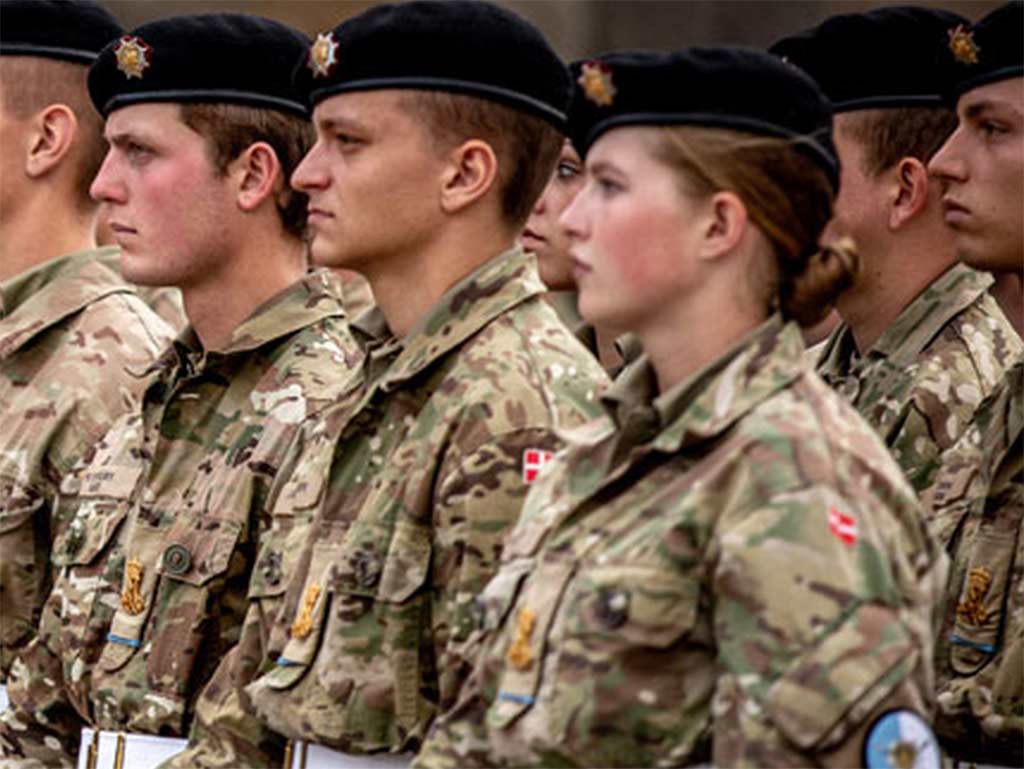
Reuters reports that 1,600 Danish recruits began an expanded 11-month term of military service on August 3, up from only four months under the previous system. Denmark has extended conscription to women, plans to increase the annual intake from roughly 5,000 to 7,500 by 2033, and will send conscripts to Greenland for the first time. Europe is not preparing for peace. It is preparing an entire generation for a war its political class refuses to prevent.
The new Danish program requires five months of basic training followed by six months of operational service. New tracks include drone warfare, and more than 100 conscripts will be sent to Greenland to assume military duties previously performed by professional soldiers. The government calls this security. I call it the gradual conversion of ordinary citizens into military assets for politicians who have spent years escalating every dispute they could have negotiated.
Denmark still uses volunteers before filling vacancies through a lottery, but a lottery backed by state coercion is still conscription. Every healthy man and woman who turns 18 enters a system that can seize nearly one year of life because politicians in Copenhagen, Brussels, and NATO have decided that Russia represents a permanent threat. When voluntary recruitment no longer supplies enough bodies, the meaning of “service” will become much clearer.

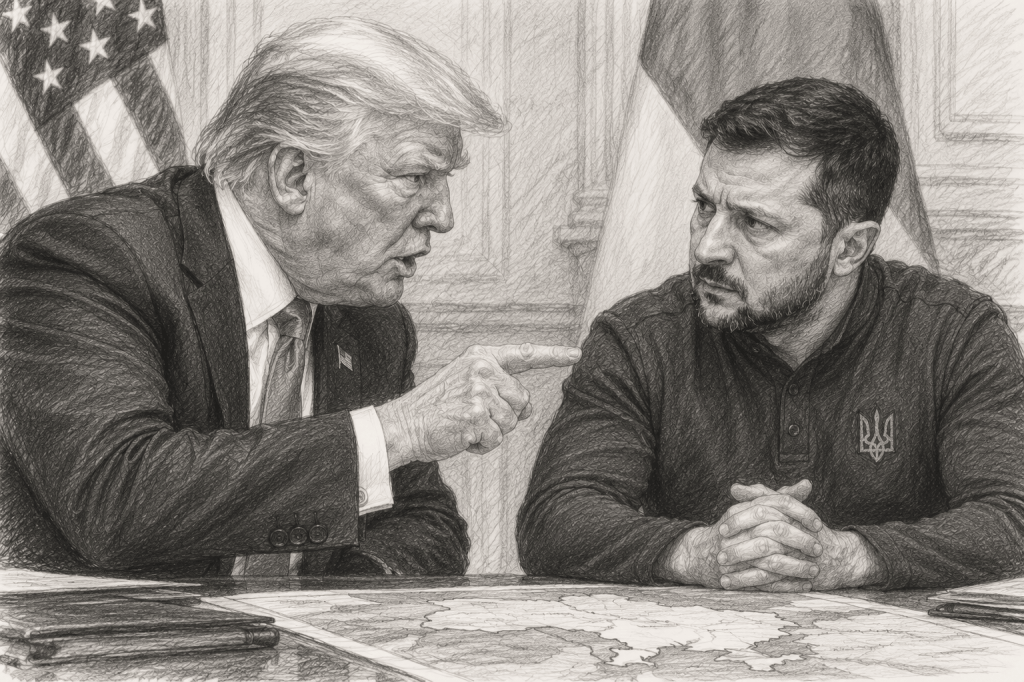
Prime Minister Mette Frederiksen says Denmark is prepared to defend every inch of NATO territory, “including our own.” That statement also refers to Greenland, where Trump’s repeated demands for American control have created a separate confrontation. Denmark is therefore invoking both Russia and the United States to justify a military expansion that began with Ukraine and now extends into the Arctic.
The Danes are told that Moscow may eventually attack NATO, although Russia has struggled for years to achieve limited territorial objectives in Ukraine. Russia has neither the manpower nor the economic incentive to occupy Europe. Invading a NATO member would also trigger a confrontation with an alliance possessing vastly greater combined resources and nuclear weapons. The story that Russian tanks are preparing to roll from Ukraine through Denmark is political propaganda designed to frighten the public into surrendering money and children.
Denmark says it has supplied approximately €9.7 billion in military support and €1.1 billion in civilian assistance to Ukraine, excluding its indirect contributions through the European Union. Its national Ukraine Fund allocated DKK 60.4 billion, or roughly €8.1 billion, for military support between 2023 and 2028. Copenhagen then announced a 30th military package worth another DKK 4.4 billion, approximately $672 million, in June 2026.

This is an enormous commitment for a country with only about six million people. Denmark has provided F-16 aircraft, artillery, tanks, missiles, drones, air-defense equipment, ammunition, training, and direct financing for Ukrainian weapons production. It pioneered the so-called Danish model under which outside governments pay Ukrainian companies to manufacture weapons for Kyiv.
Military and security spending has risen to roughly 3.5% of Danish GDP in 2026. Denmark created a DKK 50 billion fund, about $7 billion, to accelerate military purchases and has already aligned itself with NATO’s march toward a broader 5% defense-and-security objective. Before the Ukraine conflict, NATO’s European members spent far less, but fear has become the most effective budgetary weapon invented by government.
The Danish budget surplus is already projected to fall from 2.9% of GDP in 2025 to 0.9% in 2026 and 0.5% in 2027. The European Commission explicitly attributes that deterioration partly to greater defense spending and support for Ukraine. Even a fiscally stronger country is being pulled toward the same war economy consuming the rest of Europe.
The debt problem explains why Brussels embraces militarization with such enthusiasm. Governments that cannot win public support for unlimited borrowing can always manufacture an emergency. Climate was used to justify joint programs, subsidies, taxation, and centralized authority. COVID was used to suspend fiscal restraints and expand government power. Now Russia is being used to place defense spending beyond normal budget limitations.
Germany changed its constitutional fiscal rules to permit enormous military borrowing. The European Union proposed a €2 trillion seven-year budget containing €131 billion for militarization, five times the previous defense allocation. Brussels created loan schemes for weapons, while NATO members committed themselves to spending targets that will redirect trillions into defense contractors and government-controlled projects.
NATO was expected to spend around $1.59 trillion in 2025, with Canada and Europe accounting for approximately $608 billion. The June 2025 Hague commitment to move toward 5% of GDP by 2035 will require a staggering transfer of capital from the productive economy into the military establishment. Europe cannot find money to reduce taxes, restore cheap energy, or revive industry, but it always discovers another billion for weapons and Ukraine.
The draft is the human side of that transfer. First, they take the taxpayer’s income. Then they borrow against the taxpayer’s future. Finally, when the professional military cannot meet the politicians’ ambitions, they take the taxpayer’s children. The state consumes capital and labor to defend a strategy that the public was never allowed to vote upon honestly.
They will sell Denmark’s program as equality because women are now subject to the same coercion as men. Equality does not transform state compulsion into liberty. A government violating everyone equally is still violating everyone. True equality would permit every adult to decide whether a foreign geopolitical project is worth sacrificing eleven months, a career, a family, or eventually a life.