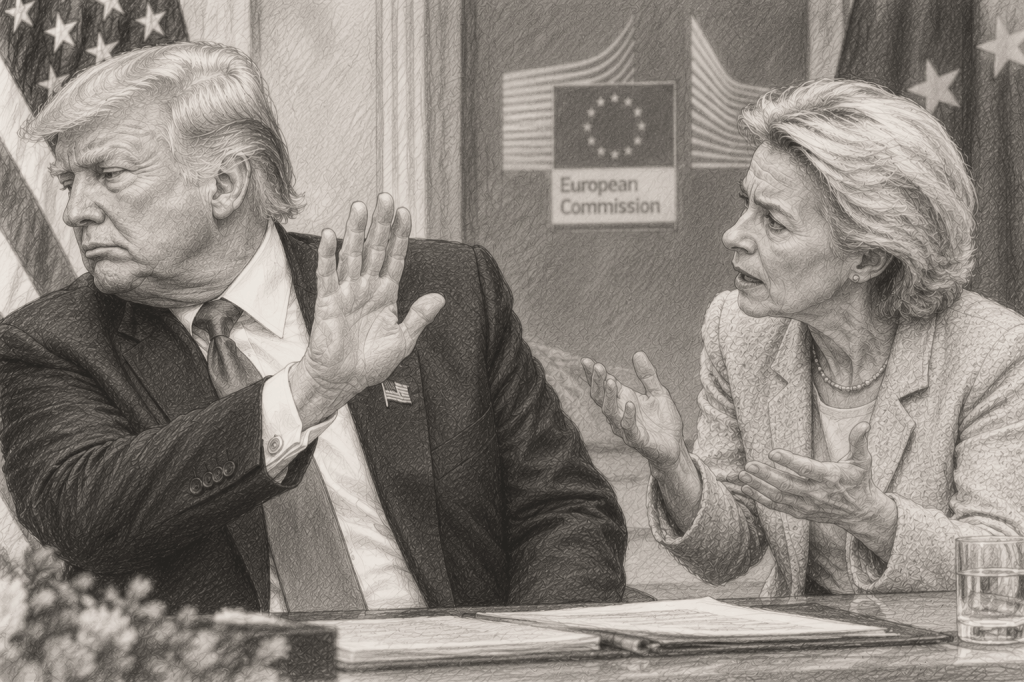
QUESTION: Mr. Armstrong, I appreciate that you are nonpartisan. You called out Kushner and his sidekick and explained that since they were not actual government employees but volunteers, they did not have to comply with the Freedom of Information Act like Hillary and her private server. I can see how you have forecast that, going into 2032, confidence in government on both sides will collapse.
Do you think Kushner will be investigated for treason?
DP
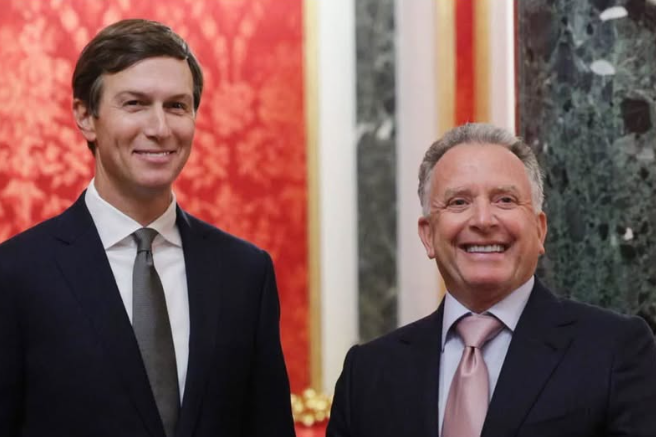
ANSWER: My red flag was raised when Jared Kushner played a key role in bringing former Goldman Sachs President Gary Cohn into the Trump administration during the first term. Kushner’s Role was critical. After Trump won the 2016 election, Kushner arranged a meeting between Cohn and Trump to provide a general briefing on the economy. Reports indicate that Cohn entered Trump’s circle through Kushner and Ivanka Trump, who were both critical advisors. Cohn ultimately left Goldman Sachs to serve as the Director of the National Economic Council. That was against everything people voted for Trump to end the inside deals with the Neocons & bankers.
The during the second term, Jared Kushner probably convinced Trump to listen to Netanyahu to start this war. The record indicates Kushner was present at the meeting. I believe even Rubio advised against it. Then to send Kushner and his sidekick as INFORMAL negotiators in the Middle East and Russia/Ukraine, I think was the worst possible decision and I believe they will not merely undermine the Republican Party, they will destroy Trump’s legacy and destroy the critical CONFIDENCE in government from both sides that will be why we end up in 2032. The Democrats will no doubt target them. They cannot help themselves. They will burn down the barn to get a mouse. This will only expose the distrust in government demanding political change as we head into 2032. Gallup Poll already has found:
Democrats: 91% hold this view, a sharp increase from 57% in 2024.
Independents: 90% hold this view.
Republicans: 83% hold this view, relatively stable compared to previous years.
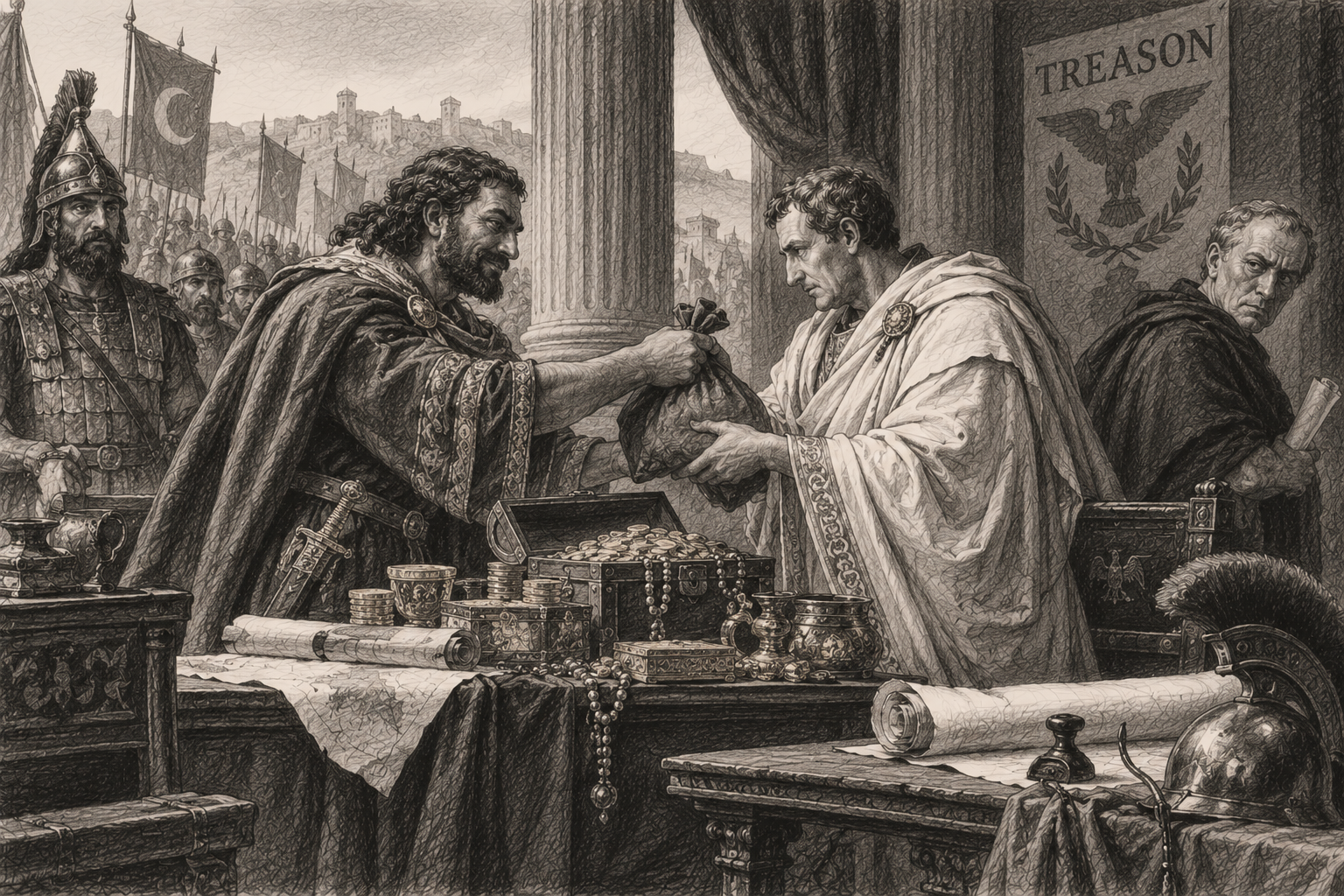

The question of TREASON is a curious one. In the Roman Republic, the legal concept closest to “treason” was perduellio (roughly meaning “acting as an enemy of the state“), and its core prohibited acts included aiding the enemy, surrendering to the enemy, or colluding with the enemy. Regarding the specific scenario of “accepting money from the enemy,” history does record such events. As I have said, human nature never changes throughout the centuries.
However, according to the historian Livy, during the early Republic, the Vitellii brothers conspired with the exiled king Tarquinius Superbus, proposing to betray the Roman state in exchange for payment, and were ultimately punished as proditores (traitors). This case directly demonstrates that “betraying the state for money” constituted treason.
During Gaius Licinius Verres’ tenure as governor of Sicily (73–70BC), he was accused by Cicero of secretly colluding with pirates (Rome’s enemies) for personal financial gain, including releasing pirates and even hosting them in his home, conduct that Cicero characterized as treason (maiestas). Although Verres primarily faced charges of extortion, this case illustrates the legal and public opinion stance on officials who colluded with the enemy for profit. As they say, there is NOTHING NEW under the Sun.
The treason law in ancient Athens (known as prodolia) included in its scope of punishment “accepting gifts from enemies” (taking gifts from them). This meant that receiving money from an enemy and engaging in corresponding actions could potentially constitute betrayal of the city-state.
However, the historical cases actually recorded often involved military commanders, and the charges frequently intertwined military failure, corruption, and betrayal. For example, the famous case of Timotheus. He was prosecuted through a “treason indictment” (graphē prodosias) and ultimately sentenced to a massive fine of 100 talents. According to records, the reason he was accused was “taking bribes from allies” in order to seek reduction of tribute payments for them, this was more like corruption involving foreign interests, but the charge was categorized under treason.
The Athenian generals, Pythodorus and Sophocles, lost the battle in the Sicilian expedition. They fled fearing being charged. They were tried in absentia and sentenced to death. The charges often involved both corruption and betrayal; the generals feared being prosecuted for “corruption or betrayal” upon returning home.
During Medeval times, the core of the famous English 1351 Treason Act was “compassing the death of the king,” “levying war,” or “adhering to the king’s enemies and giving them aid and comfort.” Receiving foreign money to influence policy, unless it directly constituted aiding enemies in wartime, was generally difficult to fit within this narrow definition.
However, cases involving “foreign money” are mostly tied to espionage or wartime treason. For example, during World War I, Frenchman Bolo Pasha was prosecuted for treason for receiving German funds, and the prosecutor argued that “receiving German money itself was sufficient for the death penalty,” though the money was not actually used against France.
Then there was the Irishman Roger Casement who was convicted of TREASON under the 1351 Treason Act for seeking German support for Irish independence, but this was “aiding the enemy,” not merely “influencing policy.”
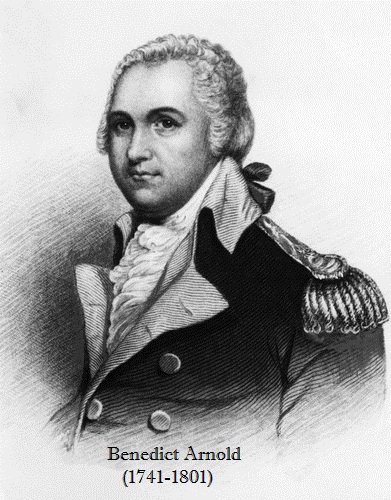
Benedict Arnold (1741-1801) was never formally tried and convicted by a court for “treason” in the modern legal sense. He was declared a traitor through a legislative resolution after his plot to surrender the vital American fortress at West Point to the British in exchange for MONEY and a military commission was exposed. He had previously been court-martialed only for other misconduct charges (unrelated to treason) while serving in the Continental Army. After learning that Major John André had been captured with the incriminating documents, Benedict Arnold fled to the British.
US LAW ON TREASON
Under U.S. law, a person acting for the U.S. government accepting payments from a foreign government would generally not be considered treason. Treason is defined very narrowly by the U.S. Constitution, and such an act would more likely fall under other federal criminal statutes, ethics regulations, or specific prohibitions regarding foreign gifts. The Strict Constitutional Definition of Treason legally is defined exceptionally narrow and is explicitly outlined in Article III, Section 3, Clause 1 of the U.S. Constitution. According to this clause, treason against the United States consists only in:
Levying War against the United States; or
Adhering to their Enemies, giving them Aid and Comfort
Crucially, for an act to constitute treason, the foreign government in question must qualify as an “Enemy” of the United States. This generally requires a state of open hostilities or war. The U.S. Supreme Court has interpreted this to require a formal declaration of war or actual armed conflict; merely accepting money from a foreign government that is not an active enemy in a war does not meet the constitutional threshold for treason . The Framers intentionally made the definition strict to prevent the charge of treason from being used as a political weapon against dissent as historically it was abused for just speaking out against the King.
Legal and Ethical Issues Besides Treason
While accepting foreign payments might not be treason, it is still subject to strict regulation and can be illegal under other laws.
Federal Gift Regulations:
Under the Foreign Gifts and Decorations Act, U.S. government employees generally cannot accept gifts or payments from foreign governments valued over a minimal threshold (often cited as $100 or a similar limit depending on the specific regulation and context). If a foreign government offers a gift exceeding this limit, the employee must generally turn it over to the government or seek specific approval .
Bribery and Ethics Rules:
If the payment is made with the intent to influence an official act, it could constitute bribery under federal criminal law (such as 18 U.S.C. § 201). Additionally, government ethics principles strictly prohibit employees from soliciting or accepting gifts from entities that might seek official action or do business with their agency .
Just for the record, I cannot accept a gift from a foreign government and under securities law, I cannot even buy tickets to Disneyland to give to a CEO of a company for that is considered to be paying a bribe. I question if Kushner and his sidekick could be charged with Treason unless they accepted anything from Iran, when we are in an active wartime that could be construed as providing aid and comfort to Iran’s war effort, the act does not legally qualify as treason. However, it would almost certainly violate federal gift acceptance rules, ethics regulations, or anti-bribery laws.
I would suspect that that Kushner is blinded by the money, and assumes he can get a pardon on Trump’s last day, or he will flee to Israel. The chaos this has introduced is mind-boggling. Based on current legal understanding, the president likely cannot validly pardon himself, but the Constitution does permit pardoning family members—even those who carried out a bribery scheme on his behalf. The legality of a self-pardon remains untested and highly contested. This maybe Kushner’s ace-in-the-hole.
However, a person cannot rely on a future presidential pardon to deliberately break the law with impunity. While the President’s pardon power is broad for past offenses, it cannot be used to authorize or license future crimes, and a pardon granted as part of a corrupt bargain (like a bribe or to obstruct justice) can itself be illegal. The fact that Kushner is a family member, if it could be shown that Trump benefited at all, then any pardon maybe null and void.
As I said, this is going to be sheer chaos and we are likely to see this completely bring down the two-party system and raise the specter that government is just too corrupt and that may be what 2032 ultimately resolves.
The Inevitable Pardon
Core Legal Principle: Pardons Only Cover Criminal Liability
The U.S. Constitution grants the President pardon power that extends ONLY to federal criminal offenses. It does NOT extend to civil lawsuits, NOR does it extend to state-level criminal charges. Even if Trump tries to pardon him as Biden did, the Democrats could (1) use a state to pursue him that could gather evidence, and (2) go after him civilly. This will all undermine the CONFIDENCE in government overall. The Democrats may assume they will score a victory, but they are burning down the barn to get the mouse.
I have often been asked why I would not join the “club” to become a multi-billionaire. The answer is simple. I was a TRADER not a market-manipulator just to make money. I enjoyed the challenge of figuring out the markets and how they function. You cannot possibly spend that kind of money anyway so all you can do with it is bribe other people to do things you want done. Sorry, I have never been interested in such schemes. Trying to make billions this way is for POWER – not accomplishment. But there are people who think the more zeros they have means they are better than everyone else. You can’t take it with you on the way to the sky. I was more interested in solving mysteries and accomplishment than making money as if that is somehow magnanimous. Many think accomplishment is to add zeros. That does not make you more important than someone else at the end of your time.
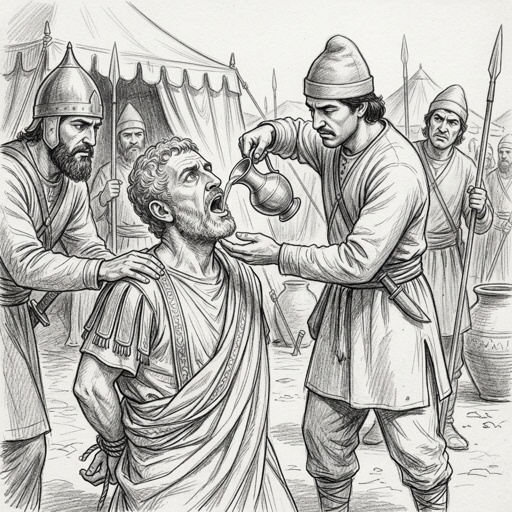
The richest man in Rome was Marcus Crassus. That was not enough. He wanted glory. He led a military campaign against the Persians, lost, and they poured melted gold down his throat to kill him to symbolize his wealth.