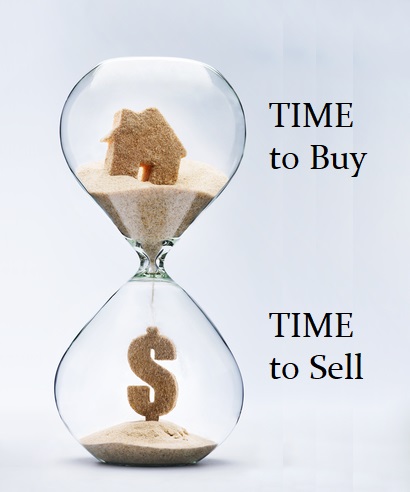
November home sales in the US paint a picture of stagnation and a frozen market. Home prices and mortgages have risen and demand has waned. This is a buyer’s market but conditions are not particularly favorable due to the cost of ownership.
Sales rose 0.5% from November to October and were 1% lower on an annual basis, according to data from the National Association of Realtors. A total of 4.13 million homes were sold for the month based on closings.
Supply remains constrained on a monthly basis, declining 5.9% from October, but have risen 7.5% on the yearly. A six-month supply is considered a balanced buyer-seller market, but current conditions show a 4.2-month supply.
The median home price in the US has reached $409,200, up 1.2% annually, and the highest reading on record for November. Lower-priced homes are not selling as those with less cannot afford to enter the market. Homes priced from $100,000 to $250,000 are down 8% from last year, but homes above $1 million rose 1.4%.
Gone are the days of overbidding cash offers. Homes are sitting on the market for an average of 36 days. Investors are slowly re-entering the market and accounted for 18% of sales compared to 13% one year prior. New homeowners accounted for 30% of sales, but historically, first-time home owners account for 40% of closings.
Weak regions are seeing declining values while stronger capital-inflow areas remain firm. This is classic late-cycle behavior. Real estate does not move as a monolith. It turns region by region, driven by employment, taxation, migration, and regulatory burden. The myth of a single “national housing market” is one of the great analytical failures of modern economics.
Transactions are falling and inventory is uneven. The real pressure will come not from housing itself, but from government debt, taxation, and declining economic confidence as we move toward the 2026 turning point. The model indicates that the current buyers market will persist into 2028. There will NOT be a housing bubble collapse as we saw in 2008. Commercial real estate is far more vulnerable than residential and operates on a different cycle. People have fled and are continuing to flee states that are unfavorable to capital, as we have seen with mega corporations fleeing places like New York and California. We will see fragmentation on a regional basis in real estate.
Interest rates will not collapse to save housing as capital demands higher yields and the central bank cannot toy with the markets as they have in recent years. Capital is migrating to states that offer financial stability, lower taxation and regulation. Transaction volume is declining and sellers are refusing lower prices. Buyers are waiting. Liquidity is vanishing. This is all par for the course during a collapse of confidence that will intensify in 2026.