QUESTION: Kevin Warsh said that responsibility for 65 months of inflation is the Fed’s fault yet he seemed to to imply price stability and the speed of inflation is more important. Some say he just just flipped the script on inflation. Can you decipher what this means?
HG
ANSWER: Kevin Warsh has noted that the rise in long-duration Treasury bond yields had effectively done some of the work for the central bank. Higher bond yields at the long end of the yield curve can raise borrowing costs and temper above-average inflation. So he is saying the market is doing part of the job. He pointed out the importance that inflation not only decline to the FOMC’s long-term target, but that it does so in a timely manner. Kevin Warsh cannot say what I am about to explain because this is a CONFIDENCE game.
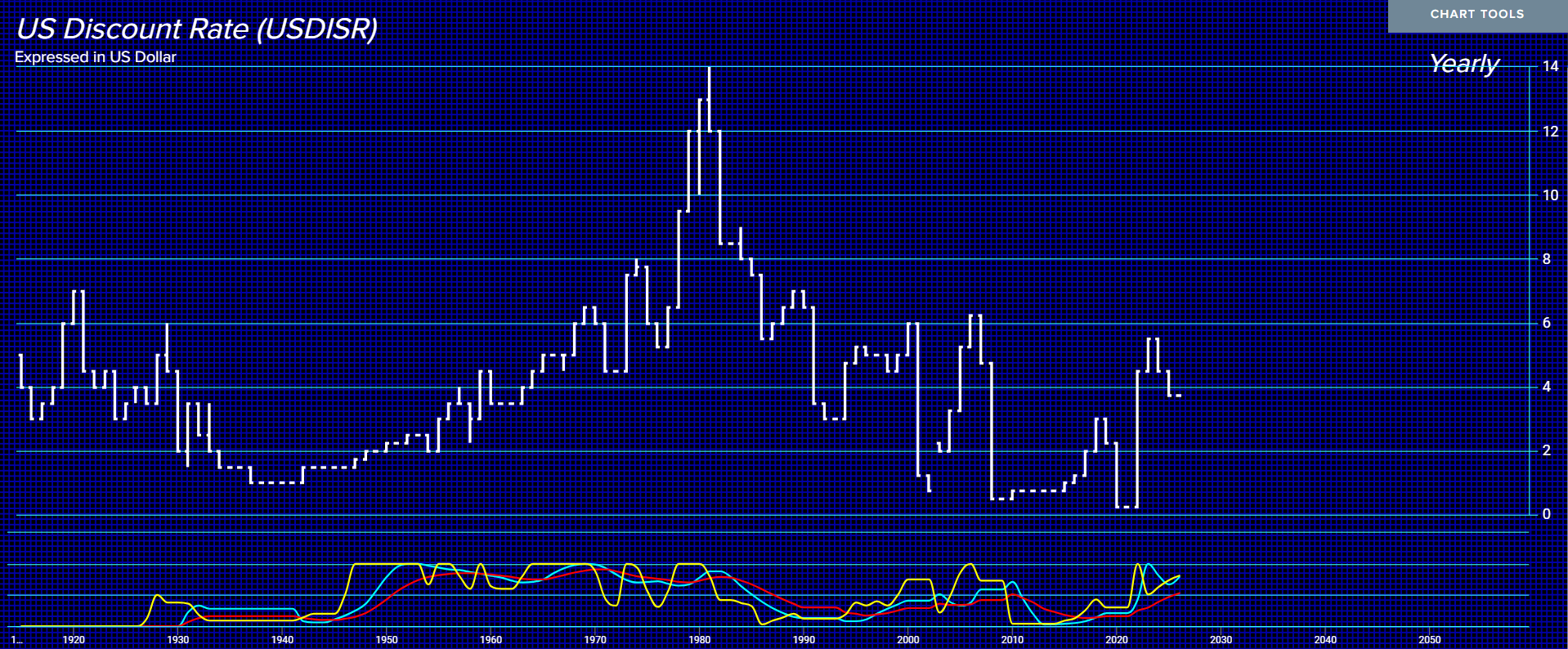
Look, rates are going higher and the Fed is NOT in control. Even what Kevin Warsh has said that the responsibility for inflation lies with the Federal Reserve is total BS. That is the standard Keynesian propaganda crafter during the era of the gold standard when the US had a balanced budget. The absurdity that the stock market will crash if rates rise is the propaganda of the socialists from the Keynesian era.
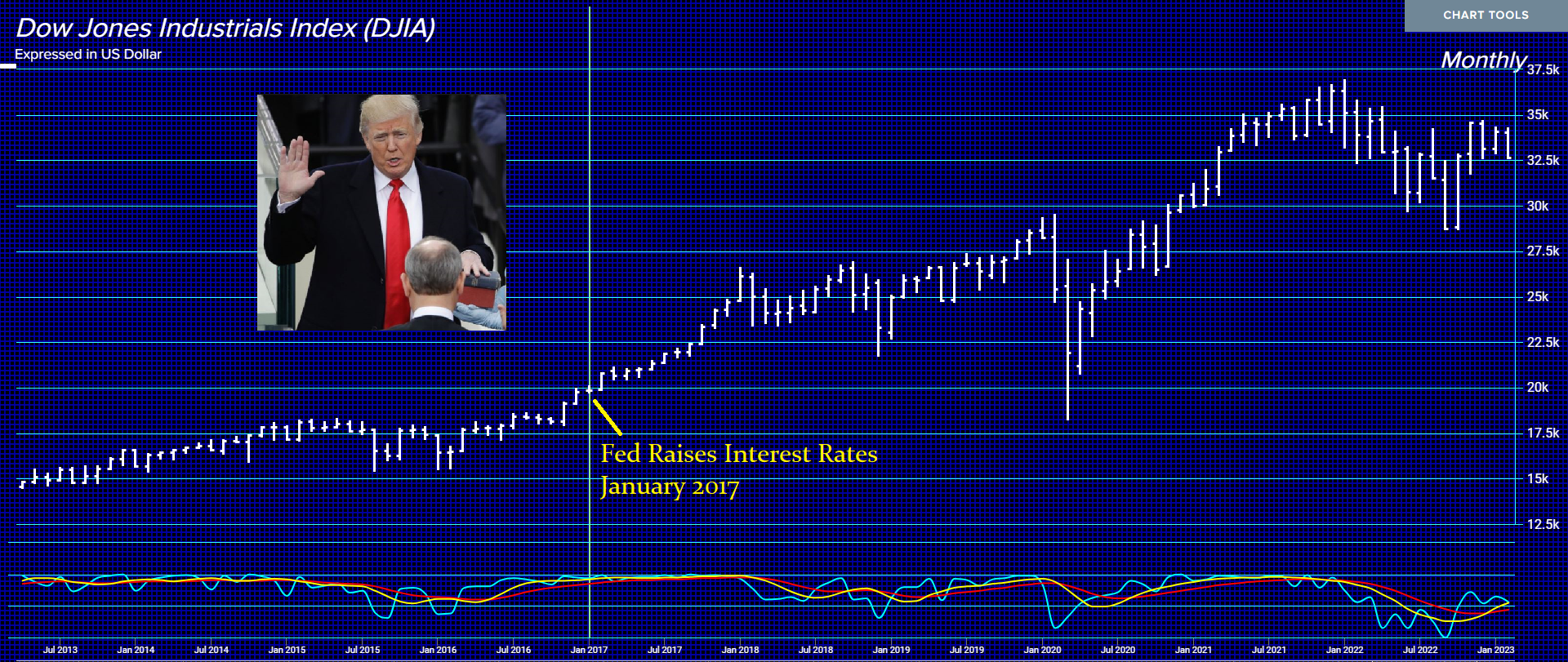
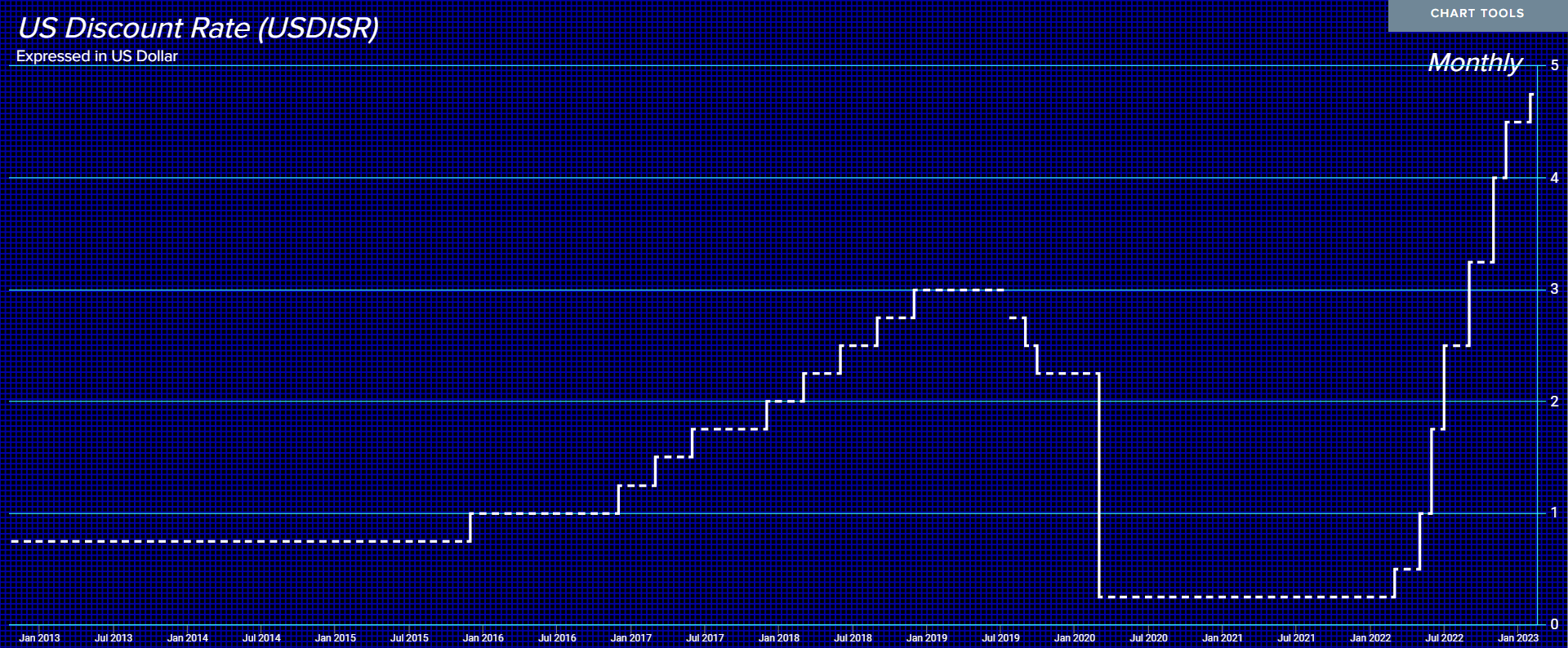
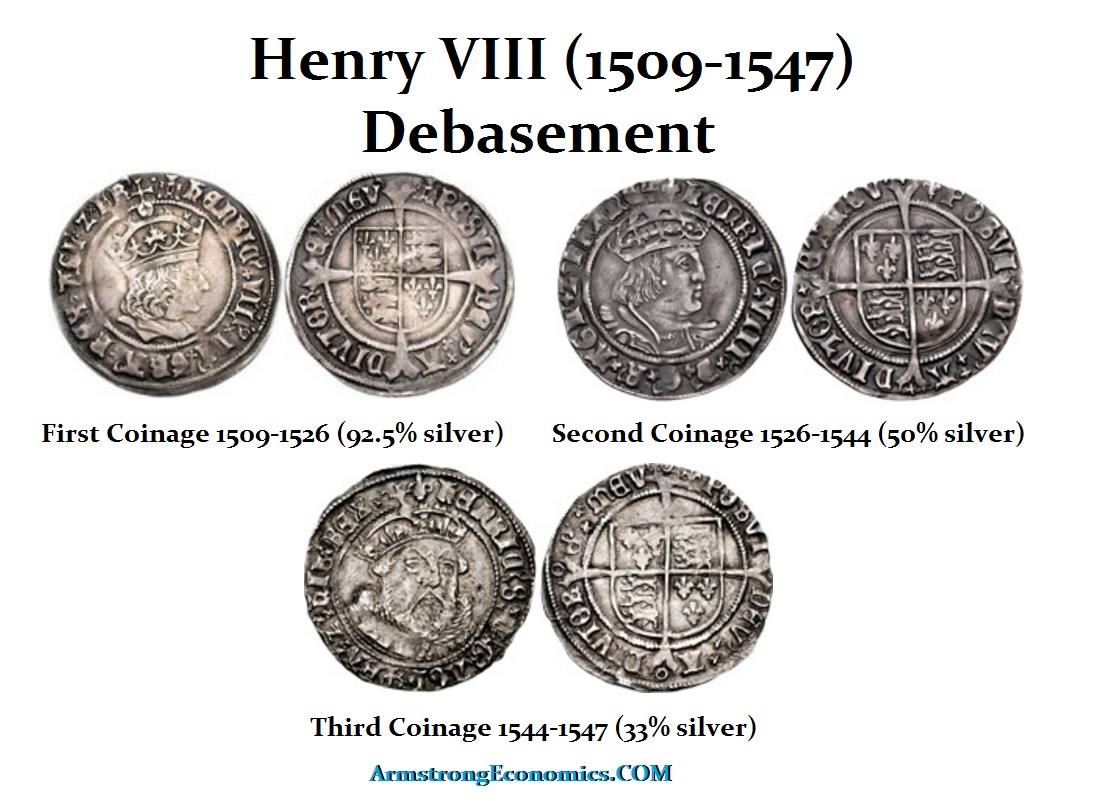
When you even visually compare the stock market to interest rates there is no such correlation that interest rates up stocks down. Interest rates are the market demand for compensation for inflation (the debasement of the currency as Henry VIII pulled off).
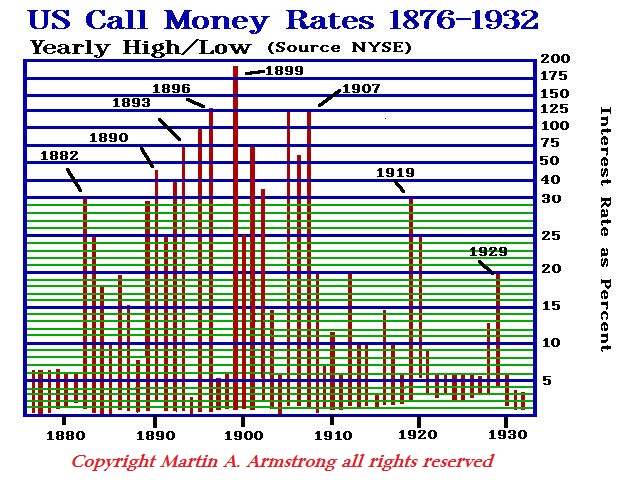
This is not my personal opinion. This is simply FACT. I do not repeat what everyone else says to conform with the consensus. The truth is very clear. The stock market has NEVER peaked with the same level of interest rates even once. I retired from managing money, been there done that. I am not soliciting money for some investment, nor am I running for Congress or local dog catcher. I am a trader that realizes if you trade on theory, you go broke very quickly. The market peaks with a third variable – expectation. If you believe the market will double, you will pay 25% interest. If you do not believe the market will rally by 1%, you will not borrow at 0.25%. It has always been the spread between the interest rates and expectations. This is the real meaning of Kevin Warsh’s statement, trying to instill confidence.
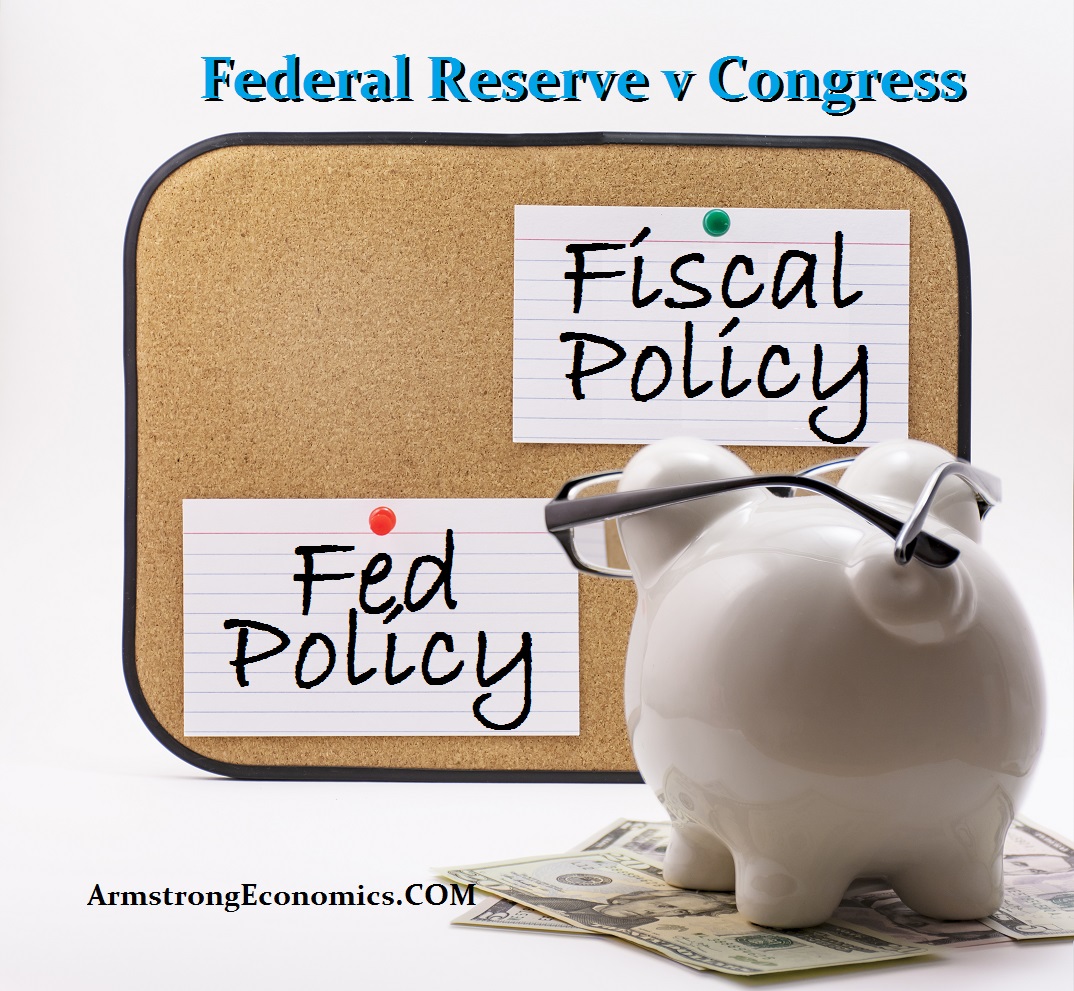
The Fed cannot control the fiscal side. The development of national debts changed everything. The exchange rate between currencies today rests on CONFIDENCE. The entire idea of inflation and the theories of the Austrian School are so outdated it becomes laughable. That was an era when the exchange rate between currencies was the metal content. That was the entire observation of the bad money drives out good by Sir Thomas Gresham who was the crown agent in the Armesterman exchange during the reign of Henry VIII. He saw the resistance to lending kings money when they would repay with debased coinage.
The 15th century saw the development of more systematic, long-term debt in city-states, while the 16th century witnessed the rise of massive, empire-scale borrowing that could be considered a more “aggressive” phase. During the 1400s, borrowing became a regular tool for state finance, moving beyond occasional loans from wealthy merchants with a few tax revolts from the people since 1381. Instead of relying only on the monarch’s personal credit, states began to create long-term debt instruments. In places like Italy and Catalonia, this took the form of public annuities (often called censals or rentes), which were sold to investors and guaranteed by future tax revenues.
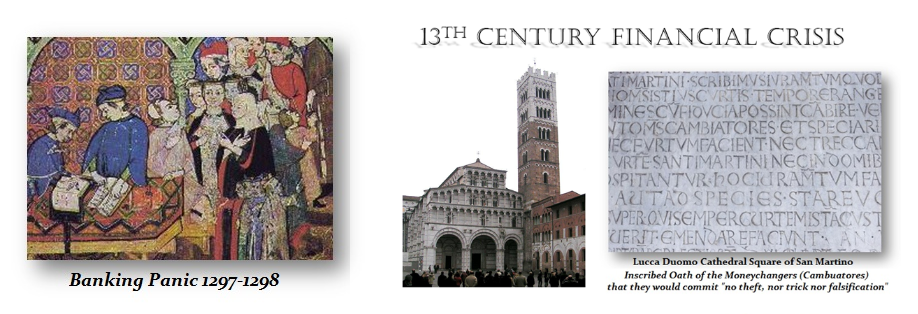
The Bonsignori bank was known as the Gran Tavola, which had become the most powerful of the Italian merchant banking firms throughout Europe between 1255 and 1298. The Gran Tavola was indeed the greatest bank of the 13th century with branches in Paris, Marseille, Genoa, Bologna, and Pisa in addition to the main office in Siena. They fell victim to Philip IV of France.
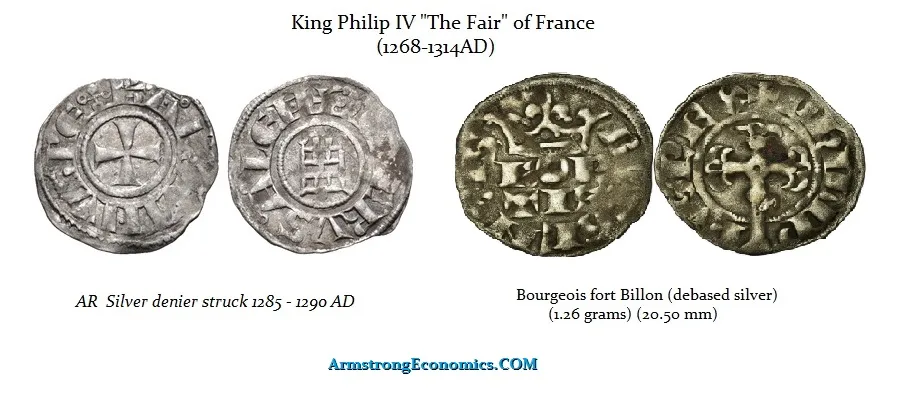
Philip IV of France was also strapped for funds. He chose the debasement of the coinage which was massive. Philip had no other course of action to meet the expenses of the war. He began with a massive debasement of the coinage. Silver began to migrate out of France. This debasement only accelerated after 1298 when Philip IV confiscated all the assets Italian bank known as the Gran Tavola in France on claims that they owed him money, without netting anything with respect to his loans owed to them. He also confiscated the Knight Templar and seized the Vatican desperate for money and moved to to Avignon.
Italian city-states like Florence and Genoa, and cities in the Crown of Aragon, were early adopters. They developed complex debt management systems. For example, by the 15th century, Florence’s public debt office, the Monte, had officials who personally arranged loans and even managed a secondary market for debt. This period marked a shift toward “modern” public debt structures.
In England, while the Crown had long borrowed, the 15th century saw a pushback from Parliament. The Commons were reluctant to approve new taxes, especially during the costly and unsuccessful wars in France. They sometimes authorized the government to borrow money but left the responsibility of repaying it to future Parliaments, creating significant financial strain and conflict.

The 16th Century saw the new Age of Empire and “Aggressive” borrowing began. The scale of borrowing changed dramatically in the 1500s, driven by the enormous costs of empire and continental warfare. The reign of Philip II of Spain (1556-1598) became a defining example of aggressive state borrowing. By the second half of the 16th century, Spain’s public debt reached an unprecedented level of about 60% of national production, financed through perpetual bonds (juros). To fund his wars, Philip borrowed vast sums from German and Genoese bankers, famously defaulting on his debts four times. By the time of Philip IV, Spain defaulted for the 6th time in 1647.
This new scale of borrowing spurred financial innovation. Philip II’s system of debt often relied on assigning tax revenues directly to creditors, which gave lenders more control and reduced the cost of borrowing for the crown. In Northern Italy, states began borrowing at interest rates as low as 2.3%, a sign of sophisticated financial markets. Thus, the 16th century was also the era of powerful international banking houses. The rise of the Habsburg dynasty under Charles V was enabled by loans from German bankers like the Fuggers, as well as Genoese financiers. This system allowed rulers to access huge sums of capital from across Europe to finance their ambitions.
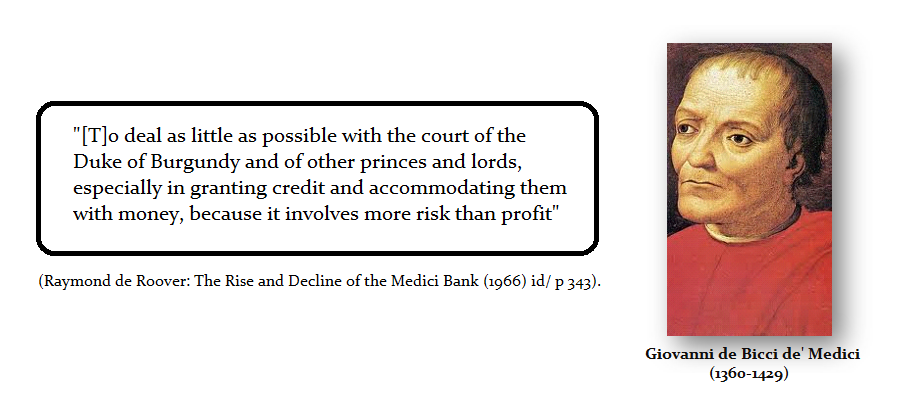
The Medici were different. Raymond de Roover, who became a Professor of history at Brooklyn College, wrote “The Rise and Decline of the Medici Bank,” which was first published in 1966. It remains the seminal work on this period. He had access to contracts and internal documents. A special clause was entered into the core contract of the Medici bank “to deal as little as possible with the court of the Duke of Burgundy and of other princes and lords, especially in granting credit and accommodating them with money, because it involves more risk than profit.” (id/ p 343)
Obviously, Raymond de Roover makes it clear that the Medici did not wish to lend to the princes of Europe, for there was no way to collect a debt from a sovereign. The contract continued by warning that “many merchants in this way fared badly…our fathers have always been wary of such involvements and stayed aloof, unless it was a matter of a small sum lent to make or to keep friends.” The Medici policy was “to preserve their wealth and credit rather than enrich themselves by risky ventures.”
Indeed, later generations ignored this command, and once they lent to government, that was the end of the Medici. The Fugger’s were the German bankers wiped out by the default of Spain, which was rather stupid since they had previously defaulted after wiping out the Italian bankers.
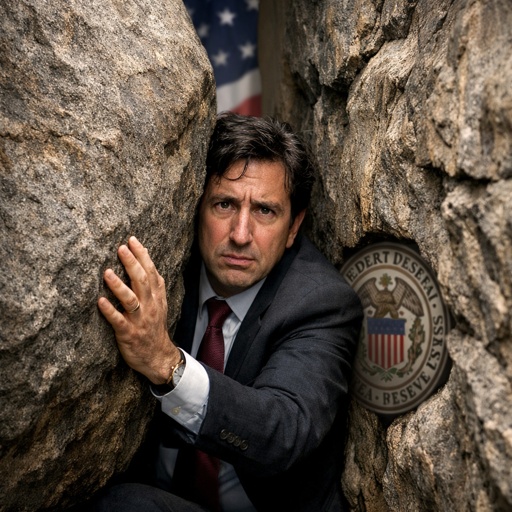
Today, we have a global crisis in central banking. They are NOT in charge of inflation -that is sheer nonsense. They cannot control the fiscal side of the budget. The U.S. State Department is funded through a combination of congressional appropriations and fees collected for services. For Fiscal Year (FY) 2026, Congress enacted about $50.07 billion for the State Department and related programs, which is a 3.5% decrease from FY2025 levels. Now look at just the arms sales of the real Merchant of Death Lockheed Martin, where total company sales (FY2025) was $75.05 billion. President Eisenhower warned us but nobody listened. The Fed cannot raise interest rates to bring oil prices down or to stop the Neocons from trying to rule the world. Kevin Warsh is between a rock and a very hard place. He is not in charge of the fiscal side and he certainly cannot stop the military industrial complex from destroying the United States with their greed for endless wars that result in higher taxes and reduction in various programs from medicare to social security all to fill the pockets of the Neocons.