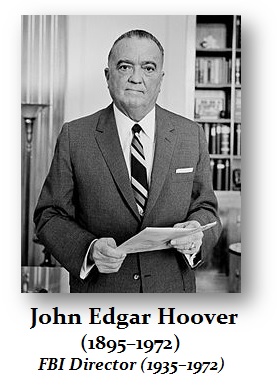
QUESTION: I just watched Genius on Albert Einstein. Beyond the fact that I can see why people compare you to him—driven by your research and curiosity rather than money, which is also why you don’t sell advertising or flood inboxes with 50 solicitation emails a day—what also struck me was how obsessed J. Edgar Hoover was with bringing Einstein down. He even carried out illegal searches and used what he found to manipulate both judges and the press against him. They manipulated the press during COVID too. Is there any way to ever get an honest government?
KL
ANSWER: Historians and researchers who have examined the declassified FBI files describe J. Edgar Hoover’s campaign against Albert Einstein as a personal vendetta or a “secret war” fueled by ideological suspicion. While there’s no evidence of a personal slight between the two men, Hoover’s deep distrust of Einstein’s politics drove a two-decade effort to discredit him.
Hoover used the FBI for his personal para noia. He maintained a massive file on Einstein from his arrival in the U.S. in 1933 until his death in 1955, eventually reaching over 1,400 pages. Hoover personally ordered investigations and the Bureau employed aggressive tactics, including tapping his phone, opening his mail, and searching his trash.
Hoover’s obsession was rooted in Einstein’s outspoken activism against war, not just his science. The FBI director labeled him an “extreme radical” and Hoover suspected him of being a communist or even a Soviet spy as he also maintained files of just about every member of Congress and presidents. This suspicion was driven by Einstein’s public stances against racism, nationalism, and nuclear weapons, as well as his friendships with controversial figures like Paul Robeson.
Hoover was desperate to deport or discredit him. Hoover’s personal war against Einstein was extremely intense and was revealed by its objectives. Hoover tried for years to link Einstein to a Soviet espionage ring, hoping to have him arrested or deported. In 1950, he launched an intensified effort to gather “derogatory information” specifically to discredit Einstein at all costs where he acted no different than a communist state he pretended to hate so much. Hoover ignored all rights of Einstein and ignored all constitution restraints on his power.
The allegations the Hoover pursued were often absurd, including claims that Einstein was plotting to kidnap the Lindbergh baby, had invented a “death ray,” or was the mastermind of a Communist plot to take over Hollywood. Ultimately, Hoover failed to prove any of these claims or limit Einstein’s public influence during his lifetime.
I was personally told years ago by member of Congress that he would assemble a file on a politician, walk into his office, say this is what they found, your opponent could use this. He would claim to bury it and then you owed him a favor.
This is the prosecutor I faced—a man who held me in contempt and was desperate to find anything. They knew I advised on numerous takeovers and investigated even my family, assuming I must have hidden accounts somewhere for insider trading. His deputy, Brian Code, wanted to go after the bank, but someone stopped him. He told my lawyer, “We know he didn’t take anything.” At that reverse proffer, Owens told me he would not drop any charges and simply called me “one smart SOB” because they couldn’t find anything.
They never got it. When you have offices around the world, you have to comply with the laws of every jurisdiction. My lawyer said plainly that the only way I could possibly comply worldwide was to not even have a stock account. I was paid big bucks because I had no conflict of interest. People in such positions seem compelled to assume everyone is guilty and rotten to the core, just so they can look at themselves in the mirror and pretend they are defending society. I have seen this pattern not just in my case, but in so many others.
.
There should be an independent panel of private lawyers, rotating in service, that reviews every potential indictment. No single prosecutor should ever have the power to bring charges alone. When one person holds that authority, their ego and career ambitions become entangled with the case. Prosecutors are drawn to making a name for themselves by taking down a famous figure—the way Rudy Giuliani built his reputation on convicting John Gotti of the New York Mafia and rode that fame all the way to the mayor’s office. The pattern is everywhere: look at how many politicians were once prosecutors, down to Chris Christie, the former governor of New Jersey. Until the power to craft charges against any person is placed before an independent panel, there will never be truly honest government.