??Ireland, mainly Northern Ireland, has seen rising tensions over rapid immigration, asylum accommodation & integration issues. Many ordinary citizens have legitimate concerns about housing shortages, crime, and cultural change. Those deserve open, democratic debate & not armed… pic.twitter.com/q1hrcEkvjr
— Mantrashree (@DivyaParihar007) March 31, 2026
An armed group identifying itself as the “New Republican Movement” has issued warnings to Irish politicians, accusing them of flooding communities with what they describe as military-age men and claiming that cultural and religious identity is under threat, and while governments will immediately dismiss such statements as fringe or extreme, the existence of these groups is not the cause of the problem but a symptom of something that has already been building beneath the surface.
The core issue is not simply immigration. It is illegal immigration layered on top of an economy that is already under strain, where housing shortages, rising costs of living, and pressure on public services have left many citizens feeling that their own needs are being ignored while policy priorities are directed elsewhere, and that is where the anger originates.
I have said many times that governments make a critical mistake when they assume people will tolerate unlimited inflows without regard to economic capacity, because immigration has always functioned best when it aligns with economic expansion, yet when it is introduced during contraction or stagnation, it becomes a point of conflict rather than growth. What makes this situation particularly volatile is the refusal of political leadership to even acknowledge the economic dimension of the issue.
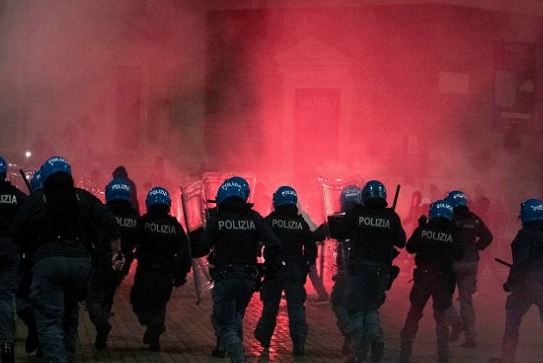
That is when you begin to see the formation of groups like this who not only distrust government but see the political establishment as an enemy. From the standpoint of the Economic Confidence Model, this is exactly how civil unrest begins, because when confidence in government declines, people stop believing that the system represents them, and once that trust breaks down, opposition moves outside traditional political channels and begins to organize in ways that are more confrontational.
This is not unique to Ireland. It is happening across Europe, where migration pressures combined with economic stagnation are creating similar tensions, and governments continue to underestimate how quickly sentiment can shift when people feel that policy is being imposed without consent. The outrage you are seeing is not manufactured. It is the result of a population that believes it is being forced to absorb the consequences of decisions made at a higher level without regard for local impact, and when that perception takes hold, it becomes very difficult to reverse.
What governments also fail to understand is that labeling all opposition as extremist only accelerates the problem, because it removes any legitimate avenue for dissent, and when people feel they have no voice within the system, they begin to create alternatives outside of it. This is where the risk escalates, because once movements begin to frame their position in terms of cultural survival, compromise becomes increasingly unlikely, and the situation shifts from political disagreement to something far more entrenched.
From a cyclical perspective, this is precisely the phase where social cohesion begins to fracture, and once that process starts, it rarely remains contained, because economic pressure, political division, and demographic change reinforce each other. This is not about one group issuing a warning, but rather, this is a warning to governments worldwide that the people will eventually reach a breaking point.