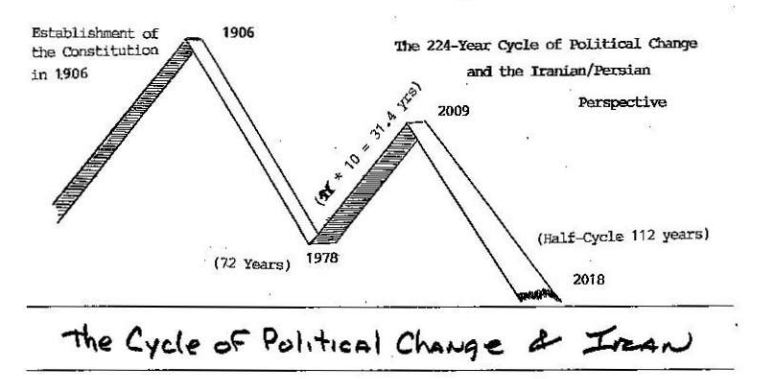
QUESTION: Thank you so much for your article on the private blog. You give the details and behind-the-scenes view that others have no idea about at all. You had forecast back in 2018 that Iran reached a major turning point that would escalate their militant posture. That forecast was on point. Do you see any options here for the US regarding Iran?
Jim
ANSWER: The 2018 marked a significant turning point where Iran adopted a more confrontational and militant posture. This shift was primarily a direct response to the US decision to withdraw from the 2015 nuclear deal and re-impose crippling sanctions, which fundamentally altered the strategic landscape for Tehran. That was the most significant shift. President Donald Trump’s announcement in May 2018 that the U.S. was withdrawing from the Joint Comprehensive Plan of Action (JCPOA). This move was met with defiance from Iran and set the stage for a series of militant escalations. The US argued the deal was flawed for not addressing Iran’s ballistic missile program and regional influence, while Iran viewed the withdrawal as a breach of international trust.
In response to US pressure and the re-imposition of sanctions on Iran, only saw that Iran took several actions demonstrating a more militant and defiant stance. In August 2018, Iran’s Defense Minister declared that developing the country’s missile program was the nation’s “top priority,” and they announced plans to unveil a new fighter jet. This was a clear signal that they would not be deterred by United States sanctions aimed at curbing their military capabilities. They are historically a proud nation.
In September 2018, President Hassan Rouhani publicly stated that Iran would “never decrease our defensive capabilities” and would increase them “day by day,” specifically pointing to their missile program as a key source of national strength that angered the West. From their perspective, they saw disarming was unacceptable when Israel would not take the path. That would be like the USA abandoning all nuclear weapons without a corresponding action by Russia and China.
Iran’s military leadership urged the formation of a regional coalition involving Russia, Syria, Pakistan, and Iraq to stand against what they saw as a US-led coalition, including Saudi Arabia and Israel. This signaled a move to consolidate opposition against United States influence in the region. This confirmed our model’s forecast for a change in trend in 2018.
While ruling out the possibility of a direct military conflict with the USA at the time, Iran’s top leaders stressed the need for its armed forces to remain vigilant and boost their capabilities. The nation also showed a willingness to resist the economic pressure from sanctions by developing domestic mechanisms to bypass them.
The Paradox of a Regime That Can’t Afford Peace
Iran’s state media reported about 600 vessels taking part in a Gulf naval drill in September 2018, with Iran vowing a “pounding reply” awaited its enemies, showcasing its military readiness. At the time, the Supreme Leader Ayatollah Ali Khamenei downplayed the likelihood of a full-scale military conflict in 2018. However, the overall actions and rhetoric from Iran, from prioritizing military development to forming regional alliances, was clearly indicating a shift toward a more militant and defiant posture in response to US economic pressure.
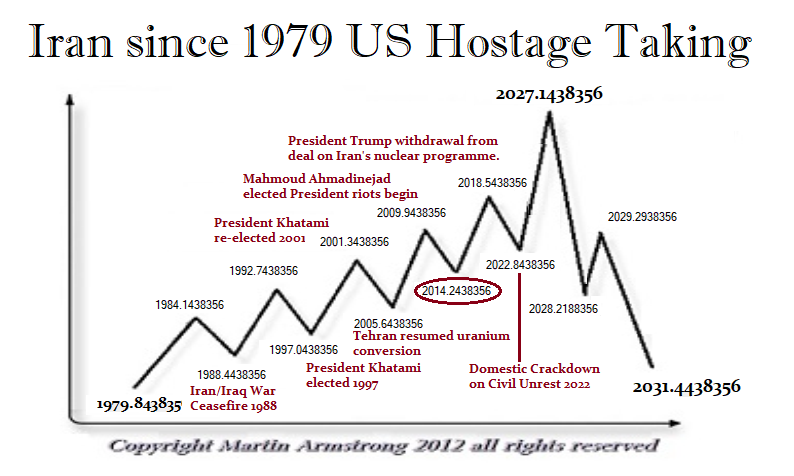
As our model warns, we are in the final up-leg of Iran, where we are likely to see the overthrow of the government in 2027. However, between then and now, the government is fighting for its survival domestically between a division politically, which implies that the hardliners will become more authoritarian. This trend is by no means unique to just Iran. We are witnessing political divergences everywhere and we move into 2028 with a deepening economic recessionary contraction.
There are only three options for Trump. First, he washes his hands and walks away. That does not seem plausible. Second, he escalates bombing military targets and infrastructure, hoping to bring them back to the table, which I do not see working for the reasons provided on the Private Blog. The last and THIRD option is all-out war with a grand-scale invasion putting boots on the ground. That would be political suicide.
This is already the most unpopular war the Neocons have orchestrated. Some 68% of Americans now believe the Iran war is “not worth fighting.” Overall, 69% of Americans hold an unfavorable view of the president’s handling of the situation in Iran. These figures indicate that opposition to the war in Iran is very high, reaching levels exceeding those on Vietnam. I was 18 at the time, so I remember. By May 1971, a Gallup poll found that 61% of Americans believed it was a mistake to have sent troops to fight in Vietnam. By every measure, this war is THE MOST UNPOPULAR in American history.
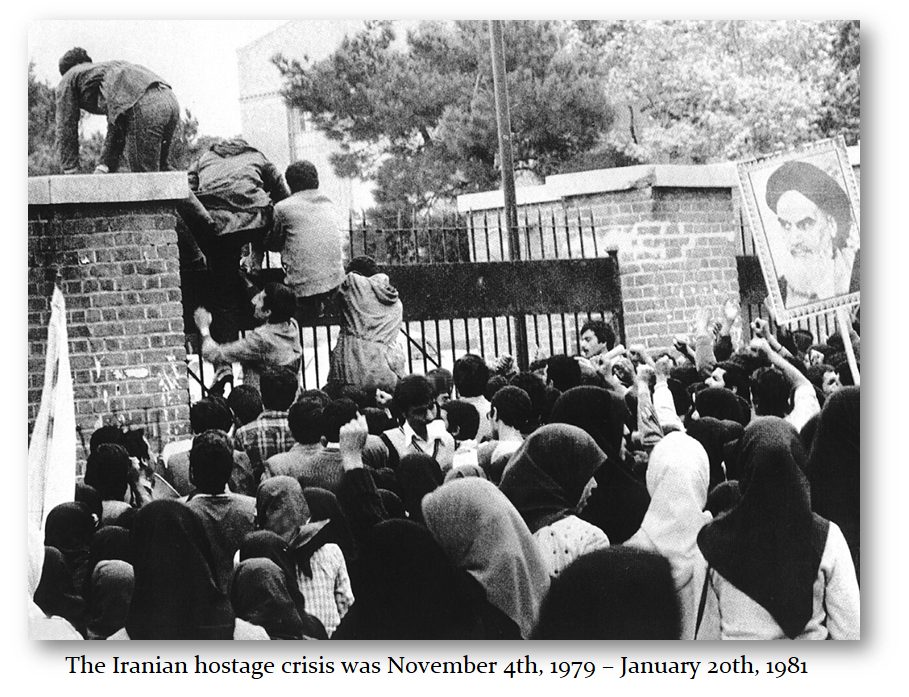
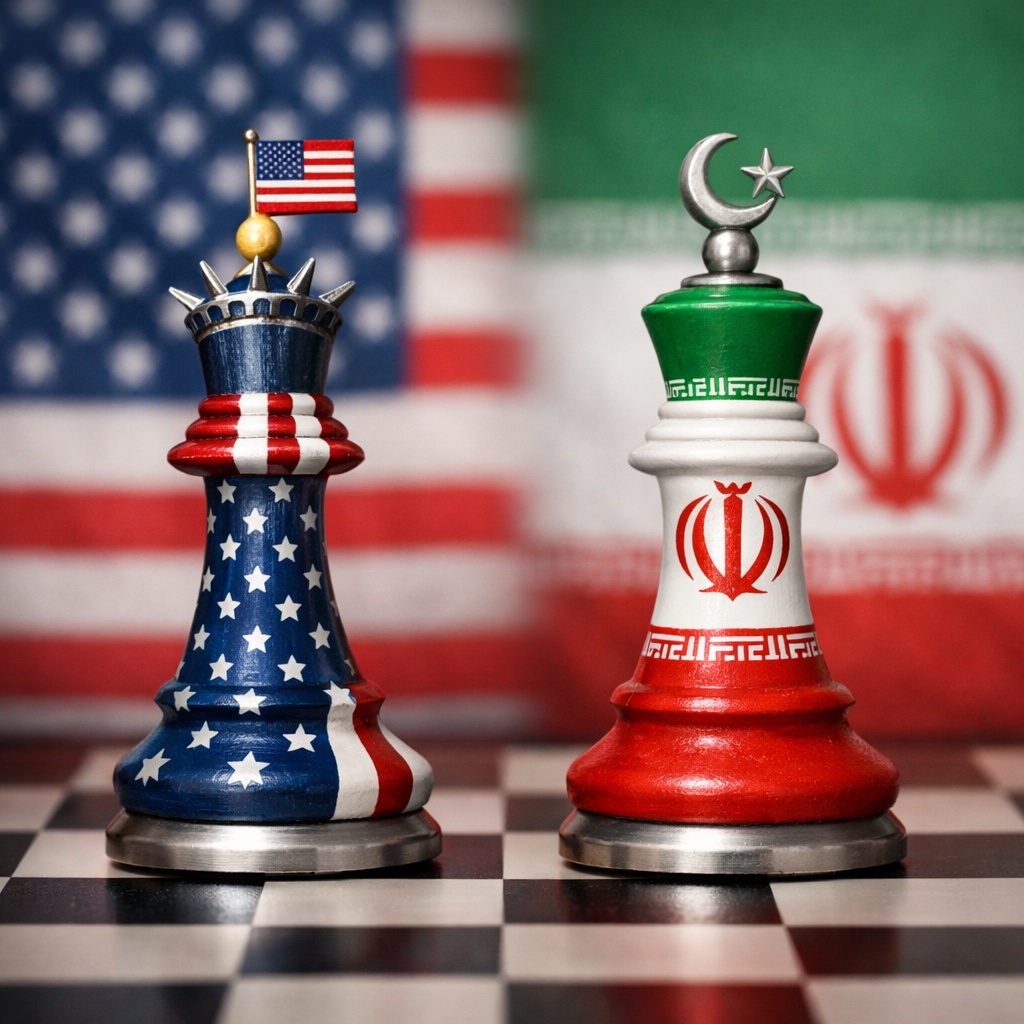
Iran is well aware of the political divisions within the United States. Back in 1979, this revolutionary government understood taking the American hostages was a powerful political tool. The timing was a deliberate and final humiliation for President Jimmy Carter, who had devoted enormous effort to securing the hostages’ release but was defeated in the November 1980 election by Ronald Reagan. By releasing them at the exact moment Carter was leaving office, Iran was seen as denying him a final political victory and symbolically elevating the incoming president. Do not underestimate them. They are playing 3-d Political Chess.
Netanyahu and his Neocon cohorts have thoroughly screwed the United States this time. They always assume they win just because the US has the largest military. The decision to fund the Iraq War entirely through borrowing had a unique impact. By 2023, interest payments on the war debt were absorbing roughly $250 billion per year in servicing costs. Unlike previous major U.S. conflicts, which were partly paid for by raising taxes, this approach ensured the war would continue to add to the national debt for decades, as the government is still paying off the principal and the interest that has accumulated. It was the reckless spending of the Neocons for Vietnam that brought down the gold standard and Bretton Woods. This Neocon War will undermine the American economy going into 2028 and their recklessness will ensure that the title of the Financial Capital of the World will shift to China after 2032. This is the computer forecast, not my personal opinion.