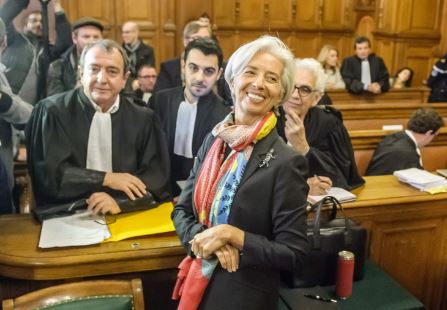
Christine Lagarde is now warning that Europe faces an “existential crisis” unless urgent reforms are enacted. What she is really admitting is that Europe has reached the end of the centralized model. These are 28 independent nations that were never intended to operate as a single homogeneous culture or economy.
Europe’s problem is not monetary policy. Central banks do not create growth. They merely move liquidity around the system. Growth comes from capital formation, innovation, and confidence. Europe has systematically destroyed all three by punishing success, attacking private enterprise, excessive taxation and regulations. “Would rock-bottom interest rates or QE change the barriers I was talking about? No,” she admitted after years of failed policy.
Lagarde claims that internal trade barriers are now strangling Europe, which is astonishing only because those barriers were intentionally created. Every new regulation raised costs and reduced flexibility. Environmental mandates, tax harmonization, and bureaucratic oversight did not make Europe competitive.

“There will be pushback from multiple corners… from people who say: ‘We’re very happy in our corner of Europe, leave us alone,’” she said. The mass socialized project of ensuring the health of all 28 member states is a failure. Nations do not want to curb their economic growth to build up the economy of another nation. These nations also do not necessarily want to invest billions into a war when Europe is not technically at war. “We did so for COVID because it was a matter of survival,” Lagarde said in response to collective defense funding. “Defence is equally a matter of survival and emergency,” she said, calling it “a perfect case in point” for common issuance.
Capital has been fleeing Europe for years, not because of interest rates, but because confidence has collapsed. When governments constantly change the rules and treat capital as an enemy, long-term investment disappears. Europe has borrowed to maintain living standards rather than to increase productivity. That is the classic path of decline. History shows repeatedly that when debt rises faster than output, systems break. What Lagarde calls an “existential crisis” is simply the moment when that reality can no longer be ignored.
This is not a problem that can be solved with reforms from Brussels. The euro was destined to fail from the outset. The computer has been warning since the dawn of the euro and eurozone that the day WILL come when Europe fragments and nations once again choose sovereignty over centralized control.