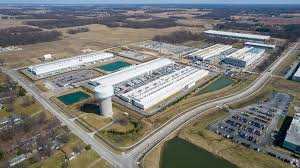
Towns are cheering the arrival of new AI data centers, guaranteed to attract capital and jobs, but new revelations reveal dangerous health consequences for nearby residents.
A large datacenter in Morrow County, Oregon, employs over 1,8000 full-time workers. AWS investments at large employ over 8,320 full-time workers, contributing $11.8 billion to the US GDP.
The facility in Morrow County, operational since 2011, has helped to diversify the area, as 40% of the county’s residents live below the poverty line. Amazon has paid over $100 million in county taxes over the past decade, carrying the local economy. The facility requires millions of gallons of aquifer water each year for cooling, which then mixes with nitrate-rich agricultural wastewater. That wastewater re-enters the local system, and has saturated the sandy soil and contaminated wells. A health department officially randomly tested 70 homes for contaminated water–68 of 70 tested exceeded federal safety limits.
Some wells have concentrations as high as 73 ppm, but the state limit is currently 7 ppm. This means that the water is no longer safe for consumption, but the warning has come too late. The water and nearby agricultural crops are contaminated. The population has noticed an increase in cancer diagnoses. Over 25 women have reported unexpected miscarriages, with another six residents suffering from kidney failure.
Amazon told reporters at Rolling Stone that the nitrate levels “significantly predate AWS’ (Amazon Web Services) presence.” Others believe AWS is exacerbating existing problems significantly:
“When that tainted water moves through the data centers to absorb heat from the server systems, some of the water is evaporated, but the nitrates remain, increasing the concentration. That means that when the polluted water has moved through the data centers and back into the wastewater system, it’s even more contaminated, sometimes averaging as high as 56 ppm, eight times Oregon’s safety limit.”
Amazon has seven facilities in the area and plans to build an additional five. Rural communities have been lobbying for these data centers to boost their economy as tech giants are pouring hundreds of billions into these facilities. The S&P believes demand for mega data centers will double by 2030—AI is only in the early stages. But what will happen to the people who live near these centers, and do they pose a risk to the larger community? Unfortunately, this generation will be the test subjects.