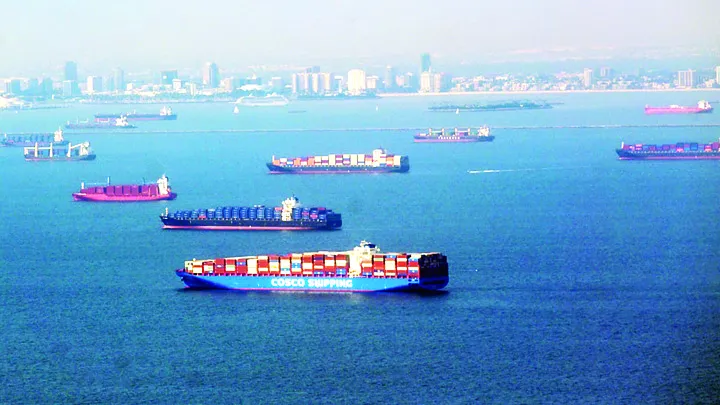
What we are seeing with China’s nearly $1.2 trillion trade surplus in 2025 is not merely a statistic to be cited in passing. It confirms the trend that China is On the Rise. Capital, production, and power are migrating East. The raw data shows exports climbing about 5.5% even as imports showed little growth, marking a widening imbalance of historic proportions.
A trade surplus of this magnitude does not arise from a single policy, tariff, or administration’s rhetoric. Decades of economic reconfiguration have led China to become an economic powerhouse. China has integrated itself into the global supply chain and is crucial to the global economy at large.
A friend recently spoke of their business trip to China during the 1990s. Cars were outdated, roads were unpaved, and farm animals were running alongside the roads. The landscape has changed dramatically in an impressively short amount of time. People may claim that China is communist in nature but in actuality they switched to a capitalistic model.
China’s manufacturing base was built during a rising confidence phase when globalization expanded and capital flowed freely. Now, as confidence fractures domestically, that same capacity is being pushed outward at almost any price. This is why we see export volumes rising even as margins compress and global tensions rise.
Exports from China to the US fell by 20%. China’s strength relative to the US indicates that It is supplying the world with goods rather than merely one isolated market. Sanctions and tariffs are not placing a chokehold on the Chinese economy because it has a plethora of outlets and trade partners who are eager to conduct business.
China’s consumption and property sector have struggled to maintain rapid growth. But weakened domestic demand leads to heightened exports as a simple economic cause and effect. A thriving economy ideally has robust domestic consumption, investment, and saving. Surpluses as large as $1.2 trillion tell us that China’s exports are propping up the economy.
China has been experiencing capital flight by its own citizens, tighter capital controls, and declining foreign direct investment. Policymakers should not view this data as a sign of stability, but heavy export reliance often peaks before contraction when global demand weakens.