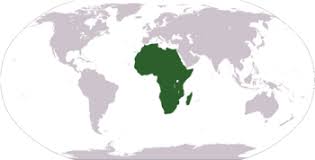
The United States has struck a preliminary agreement with Kenya involving the massive Mrima Hill rare earth and niobium deposit, estimated to be worth roughly $62.4 billion. The press is portraying this as a victory for Washington over Beijing, but that interpretation misses the larger picture. What we are witnessing is the next phase of the global resource war. As sovereign debt crises continue to unfold and governments become increasingly desperate to secure strategic assets, critical minerals are rapidly becoming the new oil.
Kenya has reportedly insisted that these minerals be processed domestically rather than exported as raw materials. President William Ruto openly stated that Kenya and the United States agreed that the minerals would be processed inside Kenya. This is a major shift. African nations are increasingly demanding that value creation remain within their borders instead of allowing foreign powers to capture all the profits.
What is particularly interesting is that this agreement comes as China remains deeply entrenched throughout Kenya and East Africa. Earlier this year, Kenya finalized a major trade agreement with China, granting duty-free access for most Kenyan exports. China continues to finance infrastructure projects, railways, highways, and industrial investments throughout the region. The media wants to frame this as America defeating China, but Kenya appears to be doing what every sovereign nation should do, playing both sides in pursuit of its own interests.
The reality is that neither Washington nor Beijing is acting out of charity. Rare earths, niobium, lithium, graphite, copper, and nickel are essential for military systems, semiconductors, batteries, electric vehicles, telecommunications, artificial intelligence, and advanced manufacturing. The entire green energy agenda depends upon these materials. Every major power understands that whoever controls the supply chains controls the future. That is why competition for Africa’s mineral wealth is intensifying.