QUESTION: I just saw you on Russia Today explaining the Supreme Court decision. You said this will have a psychological impact on Trump internationally. Would you elaborate?
GR
PS. I agree it is strange how you will appear on TV in Asia and Europe even in Russia but not in America.
ANSWER: President Trump said the Supreme Court’s tariff ruling was “deeply disappointing.” He also said “I’m ashamed of certain members of the court—absolutely ashamed for not having the courage to do what’s right for our country.”
I said on Podcasts that I would have voted against the use of that statute. Justice Roberts wrote that Trump “asserts the independent power to impose tariffs on imports from any country, of any product, at any rate, for any amount of time.” But the chief justice wrote that the law Trump invoked to do so “cannot bear such weight”
Chief Justice John Roberts delivered the opinion, joined by Justices Sotomayor, Kagan, Jackson, Gorsuch, and Barrett. Justices Clarence Thomas, Samuel Alito, and Brett Kavanaugh dissented. Chief Justice Roberts wrote that under the government’s interpretation of IEEPA, the president is “unconstrained by the significant procedural limitations in other tariff statutes and free to issue a dizzying array of modifications at will.” All it takes to unlock that extraordinary power is a Presidential declaration of emergency, which the Government asserts is unreviewable.
Chief Justice Roberts further wrote: “IEEPA contains no reference to tariffs or duties. The Government points to no statute in which Congress used the word ‘regulate’ to authorize taxation. And until now no President has read IEEPA to confer such power.”
Trump particularly emphasized the tariffs would boost manufacturing and generate revenue. However, Trump promised that imposing the highest tariffs since the Great Depression would spark a renaissance in U.S. manufacturing. But factories have been in a slump for most of the last year, shedding 108,000 jobs in 2025. I have disagreed with that and pointed out that it was TAXES and REGULATION that led to every auto manufacture to leave Detroit, which because of the fiscal mismanagement defaulted on their debt in 1937. Sorry, but companies have left because of crazy progressive regulations and taxation. They they blame the Chinese for their own stupidity.
Over 60% of total tariff revenue in 2025 stemmed from tariffs imposed under IEEPA, which has never before been used to implement tariffs. This includes country-by-country or “reciprocal” tariffs ranging from 34% for China to a 10% baseline for the rest of the world, and a 25% tariff Trump imposed on goods from Canada, China and Mexico for what the administration said was their failure to curb the flow of fentanyl.
The decision does not affect ALL of Trump’s tariffs, leaving in place ones he imposed on steel and aluminum using different laws. U.S. Customs and Border Protection collected about $133.5 billion of tariff revenue under IEEPA in fiscal year 2025 and in fiscal year 2026 through December 14, representing about 60% of total tariff revenue collected during that time. Trump could seek to reimpose some tariffs using other laws. Companies that had to pay the tariffs may be able to seek a refund from the Treasury Department. Hundreds have already sued.
The Statutory Framework: Duties vs Tariffs
There is indeed a substantial difference between traditional tariffs requiring Congressional approval and various duties, fees, and restrictions the President can impose unilaterally under existing statutory authority. Trump’s first term demonstrated willingness to exploit these authorities aggressively, and a second term will likely see even more creative use of executive power to reshape trade flows without seeking Congressional authorization.
Congress has delegated broad trade authority to the President through various statutes enacted over the past century. These delegations were intended for specific circumstances—national security emergencies, unfair trade practices, international negotiations—but the statutory language is often vague enough to permit aggressive interpretation. Trump demonstrated that these authorities, when pushed to their limits, provide enormous unilateral power over trade policy.
The key distinction is this: Article I, Section 8 of the Constitution grants Congress the power “to lay and collect Taxes, Duties, Imposts and Excises” and “to regulate Commerce with foreign Nations.” However, Congress has chosen to delegate much of this authority to the President through statutes. Once delegated, the President can act without further Congressional approval unless Congress revokes the delegation—which requires passing legislation that can survive presidential veto, a high bar given partisan polarization. This is what Congress does most of the time. They delegate powers to unelected agencies. I believe this undermines the entire Constitutional framework, but that is just my personal opinion.
Section 232: National Security Tariffs
The most powerful tool is Section 232 of the Trade Expansion Act of 1962, which authorizes the President to impose tariffs or other import restrictions when imports threaten to impair national security. This provision was rarely used until Trump weaponized it during his first term. I cannot explain what he did not use this statute. I think whomever advised him was trying to covertly undermine him.
The statute requires the Commerce Department to investigate whether imports threaten national security, but “national security” is undefined and interpreted broadly. The President has essentially unreviewable discretion to determine what constitutes a national security threat.
During Trump’s First-Term, he imposed 25% tariffs on steel and 10% on aluminum under Section 232 in 2018, affecting imports from virtually all countries including allies like Canada and the European Union. The ratification was that domestic steel and aluminum production capacity is essential to defense industrial base—without it, America cannot manufacture tanks, aircraft, ships, and weapons during wartime. The legal arguments were stretched but survived judicial challenge. Courts have been extremely deferential to presidential determinations of national security, recognizing this as a core executive function.
Section 232 authority could theoretically be applied to virtually any critical industry. For example, semiconductors and electronics were targeted during first term but not fully implemented. The argument is straightforward. Modern weapons systems depend entirely on advanced semiconductors. If America cannot produce these domestically and depends on Taiwan, which is vulnerable to Chinese invasion thanks to Biden & Pelosi as well as South Korea, which is vulnerable to North Korean attack. In such cases, national security is imperiled.
This could justify 25-50% tariffs on semiconductor imports from China, Taiwan, South Korea, and potentially even allied producers like Japan and Europe to force production back to the United States. As I have articulated, nobody wants to look at the real reason manufacture left in the first place – excessive progressive taxation line Newsom in California or Mandami in NYC. The CHIPS Act provides subsidies for domestic production; Section 232 tariffs would provide the stick to complement the carrot.
Turning to the Pharmaceuticals and Active Pharmaceutical Ingredients, here too America imports approximately 80% of active pharmaceutical ingredients, predominantly from China and India. The COVID-19 pandemic exposed this vulnerability when supply chains disrupted. Section 232 could justify tariffs forcing pharmaceutical production back to America or trusted allies.
Then there is the Rare Earth Elements. Here, China controls 60-70% of global rare earth production and 90% of processing. These materials are essential for electronics, batteries, magnets in defense systems, and countless other applications. To make onw F35 you need 900 pounds of Rare Earths. Section 232 tariffs could target rare earth imports to incentivize domestic production, though this would be economically painful given the lack of current U.S. capacity.
Trump repeatedly threatened to impose Section 232 tariffs on automobile imports, arguing that domestic auto manufacturing capability is essential to defense industrial base, which is BS. They argue that vehicles, engines, manufacturing expertise is transferable to military production in time of war. So you should pay double for a Toyota or BMW to make it more profitable for over-regulated manufactures that only support further socialism. This was NOT implemented during the first term but remains available.
A 25% tariff on automobile imports would be catastrophic for foreign manufacturers and would force massive restructuring of the industry. It would also significantly increase vehicle prices for American consumers, creating political backlash. I think if Trump tried this, he would be bounced out of office.
Lithium, cobalt, nickel, copper, and other materials essential for batteries, electronics, and defense applications could justify Section 232 actions. America imports the vast majority of these materials, creating strategic vulnerability.
As you can see, there is an advantage of Section 232 is that it provides unilateral authority with minimal procedural requirements and virtually no judicial review. Once the Commerce Department investigation concludes (a process controlled by the administration), the President can impose restrictions immediately.
Section 301: Unfair Trade Practices
Then there is Section 301 of the Trade Act of 1974 authorizes the President through the U.S. Trade Representative to investigate and retaliate against foreign unfair trade practices, including intellectual property theft, forced technology transfer, discriminatory regulations, and trade agreement violations. The USTR must investigate and determine whether foreign practices are “unreasonable or discriminatory and burden or restrict U.S. commerce. Upon such determination, the President can impose tariffs, quotas, or other restrictions.
Here, under Trump’s First Term, the China tariffs affected over $350 billion in annual imports. They were imposed primarily under Section 301 authority based on USTR investigation finding systematic Chinese IP theft, forced technology transfer, and unfair industrial policies. These tariffs started at 10-25% on various product categories and escalated during the trade war, ultimately affecting nearly all Chinese imports. The Section 301 authority provided legal basis without requiring Congressional approval.
The Biden administration maintained most Trump-era China tariffs and even increased some. A second Trump term could expand these to 60% or higher as Trump proposed during the 2024 campaign on all Chinese imports, effectively attempting to decouple the economies. That would increase geopolitical tensions.
Section 301 investigations could target EU digital services taxes affecting American tech companies, agricultural subsidies harming American farmers, or regulatory barriers like GDPR compliance costs. Retaliatory tariffs on European automobiles, luxury goods, wine, cheese, and other products could be justified under Section 301.
Then there is the Indian pharmaceutical manufacturing advantages partly result from regulatory arbitrage and IP protections weaker than U.S. standards. Section 301 could justify tariffs on Indian pharmaceutical imports or generic drugs. This could put a lot of people at health risk.
Vietnam and Southeast Asia countries have become transshipment points for Chinese goods attempting to evade tariffs. Section 301 authority could be used to impose tariffs on countries facilitating Chinese circumvention.
The Section 301 process requires investigation and findings but remains under executive control. The USTR can initiate investigations at presidential direction and reach conclusions supporting administration policy objectives.
There are a lot of other means available:
International Emergency Economic Powers Act (IEEPA)
Countervailing Duties and Anti-Dumping
Reciprocal Tariffs and “Mirror Tariffs”
Import Licensing and Quota Systems
Currency Manipulation Tariffs
Border Adjustment Mechanisms
The proliferation of presidential trade authorities creates flexibility to implement protectionist policies without Congressional approval:
- Section 232 for national security-related industries
- Section 301 for unfair trade practices
- IEEPA for emergency situations or coercive diplomacy
- CVD/AD for industry-specific protection
- Quotas and licensing for quantitative restrictions
- Currency-based measures for exchange rate issues
A comprehensive Trump trade strategy could layer these authorities, using different legal bases for different objectives while maintaining that each action is legally justified under existing statute. This approach is legally defensible (though challengeable) while politically controversial.
The fundamental question is whether Congress will tolerate continued expansion of executive trade authority or will attempt to reassert legislative control. Given partisan polarization and dysfunction, reassertion seems unlikely unless trade actions become so economically painful that bipartisan opposition emerges.
The Psychological Impact
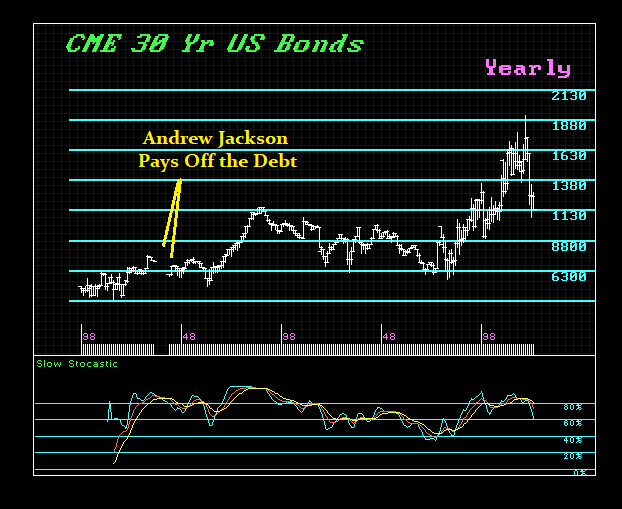
I am more concern that this will create the image that the US debt will rise sharply. The computer is already showing that bonds are entering a bear market. Trump can scream all he wants at the Federal Reserve, it is the free markets that set the long-term rates. You can see that using our database back to the inception of US debt, we are entering crash mode. If things heat up with Iran, this will impact China who gets most of their energy from Iran and this too can undermine confidence in the invincibility of the USA.

Trump possesses extensive authority to impose duties, fees, and trade restrictions beyond traditional tariffs through Section 232 national security provisions, Section 301 unfair trade practice retaliation, IEEPA emergency powers, countervailing and anti-dumping duty processes, quota systems, and various other mechanisms. These authorities allow imposition of trade restrictions affecting hundreds of billions in imports without Congressional approval, fundamentally reshaping global trade flows through executive action. The legal basis for each mechanism varies in strength, but judicial deference to presidential authority in trade and national security matters makes successful challenges difficult.
The economic consequences would be significant make no mistake and could be political suicide for the Midterms. This would result in higher consumer prices, supply chain disruption, foreign retaliation, all as our computer is pointing to a sharp global recession into 2028. The strategic rationale is bringing back critical industries, reducing dependence on adversaries, and using trade policy as leverage for non-trade objectives like immigration control, may be noble goals. But there is NOBODY in the Trump Administration will to even look at the regulatory and taxation issues that forced many industries offshore in the first place. I even warned back in 1985 that UNLESS the CFTC and SEC were merged, the only way to provide professional funds management was to move offshore.
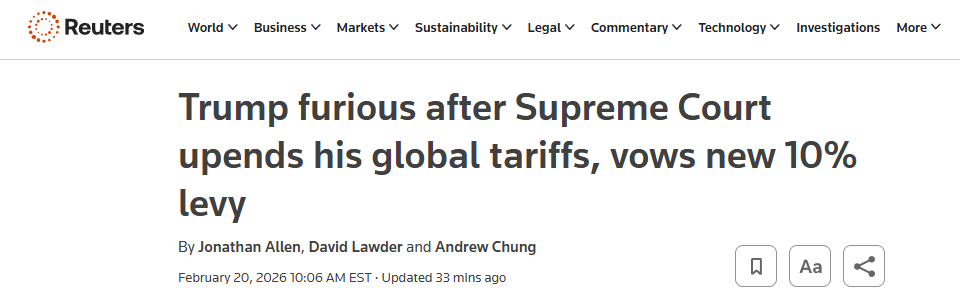
Trump has reacted claiming he will just impose a 10% tariff on everything. He was wrong to be listening to stupid legal advice that had to be deliberate when there were so many other rational paths to achieve the same thing. This represents a very dangerous economic nationalism that only confirms the sharp global decline into 2028. What is indisputable is that the legal authority exists, precedent has been established, and political will to use these tools aggressively has been demonstrated. The constraints are economic and political rather than legal. Trump is endangering his legacy.
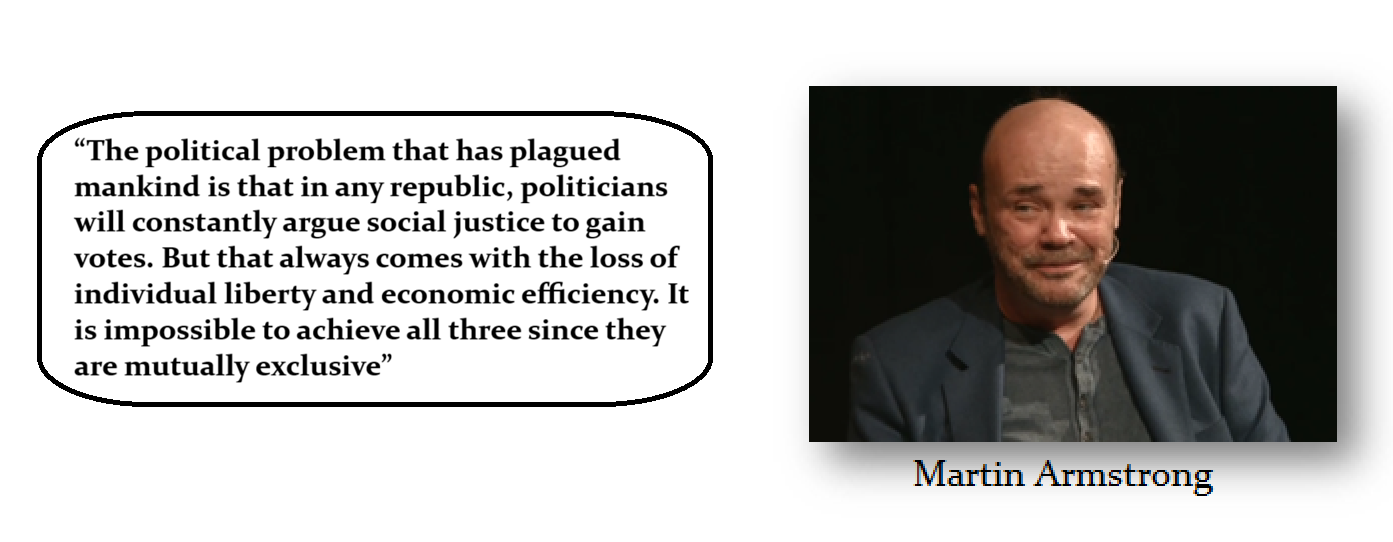
His idea of bringing back American jobs may be noble, but he is listening to old-school economics that has failed and pays no attention to the progressive regulations and this constant taxing the rich and corporations and expecting them to just pay with no impact. Communism collapsed for this very same reason. It is just our turn.