QUESTION: Marty,
I was watching the video of your 1996 World Economic Conference, particularly the technical analysis session, and it brought back some remarkable memories. At the time, everyone was calling for a bear market in gold, yet you focused on $368 as the critical number. Gold closed 1996 at approximately $369.
You insisted that there was no major bear market developing and identified $250 as the key support level. Gold eventually reached that level in 1999, and I bought at the low. Quite frankly, you paid for my house!
You also projected that gold would eventually reach $1,200, which it did in 2009. Looking back, that conference was 30 years ago, and the accuracy of those long-term forecasts remains extraordinary.
I will certainly be attending the conference this year, and I am bringing my son. I want him to experience firsthand what I have witnessed over the decades.
I am amazed that you still have the energy and determination to keep going. I only wish governments would listen to you instead of continuing this endless political and economic nonsense. You are indeed the forecaster.
I also hear that you are interviewing several big-name actors to portray you in the upcoming Hollywood film. Will there be an opportunity for your readers to invest in the production?
Pete
REPLY: Thank you for your kind words. I have always maintained that I am just a trader. I am not an academic sitting in an ivory tower trying to force the world to conform to some theoretical model. I learned long ago to listen to the markets because the markets are NEVER wrong. It is our interpretation of them that can be wrong especially when you rely on fundamental reasoning when markets can move on rumor or innuendo.
The rudimentary problem throughout history has been the arrogance of those who believe they can manipulate society, control human behavior, and dictate how markets should function. This mentality became deeply entrenched with Marx and Keynes, whose theories encouraged governments to believe that they could manage the economy through political intervention.
Look at sanctions. Politicians continue to insist that economic sanctions will force governments to surrender to their demands. Yet history repeatedly demonstrates how ineffective they can be at achieving their stated political objectives.
The United States began imposing sanctions on Cuba in 1960. More than six decades later, the sanctions remain in place, and the political system they were intended to change has survived. All they did was punish the people. Had the people prospered, then they would have demanded political change.
Yet governments continue returning to the same policy, expecting a different result. That is the definition of insanity.
This is the problem with political ideology. When a policy fails, politicians rarely question the underlying theory. Instead, they insist that the solution is to impose even more restrictions, more regulations, and more government intervention.
Markets reflect the collective decisions of millions of people. Governments attempt to override those decisions through political decree. That is why I have always trusted the markets rather than the theories of academics or the promises of politicians.
The objective is not to impose our personal opinions upon the future. It is to understand what the markets are telling us about the future.
That is the distinction between forecasting and ideology.
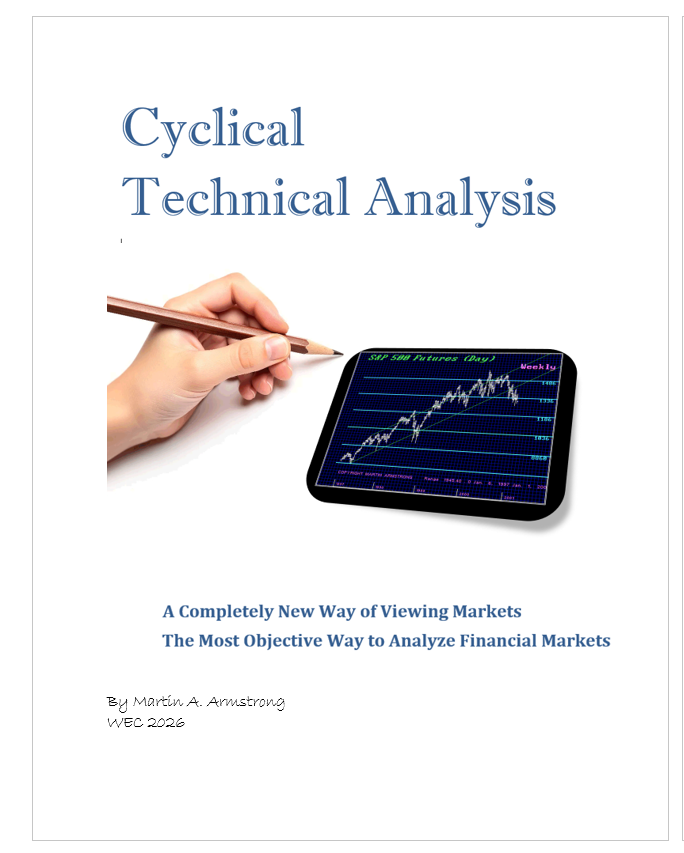
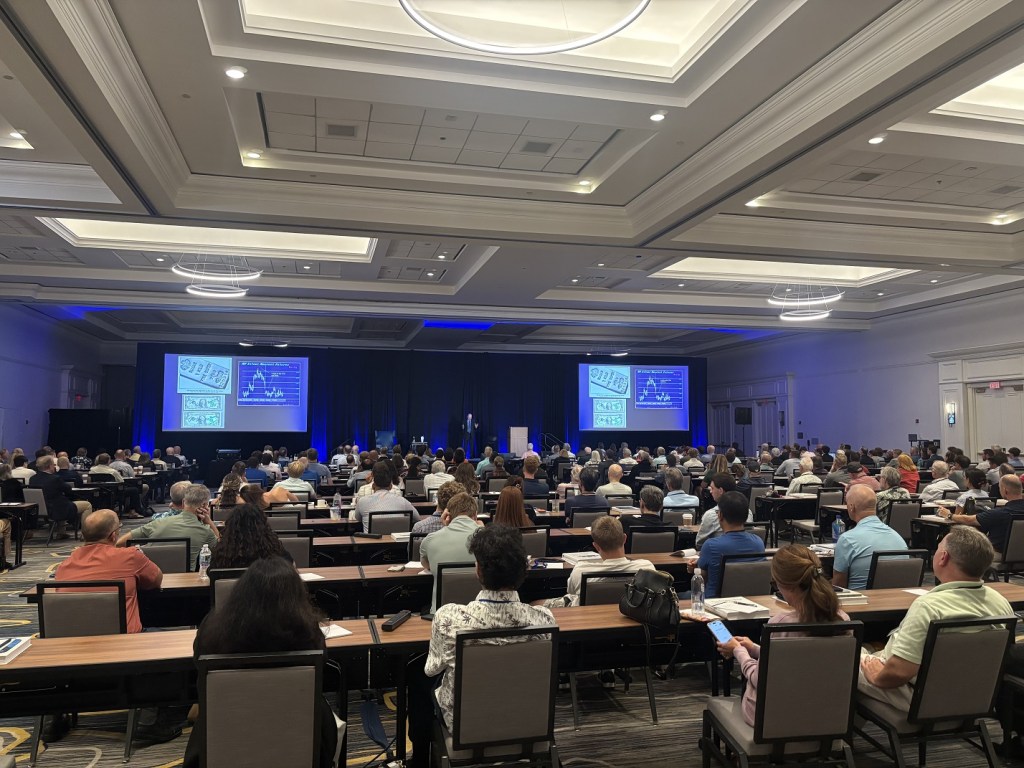
Yes, I will be conducting a Cyclical Technical Analysis session at this year’s conference. What I have developed over the decades is not conventional technical analysis. Most technical analysts focus almost exclusively on price, looking for patterns and indicators while largely ignoring the most critical dimension of all—TIME.
Markets function through the interaction of TIME and PRICE. They have their own language, and they speak loudly and clearly if you learn how to listen. The problem is that most people approach markets with preconceived opinions rather than allowing the markets to reveal what is unfolding.
This will probably be the last time I personally conduct such a session. I may not have turned gray, but that appears to run in my family. President Ronald Reagan was another example of someone who retained his natural hair color into old age. Reagan had Irish, Scottish, and English ancestry. Hair pigmentation is strongly influenced by genetics, and some people begin turning gray in their twenties while others retain their natural color well into their seventies and eighties. There is no single Scottish or Irish gene that prevents graying.
Nevertheless, I have reached the point in life where I recognize that time is finite, even if my hair refuses to acknowledge it.
What has always fascinated me is the arrogance of those who believe they can control the world economy. I have been accused of having too much influence over markets simply because my forecasts have often been contrary to government policy. They cannot comprehend that a forecast can emerge from quantitative analysis rather than personal influence.
The CFTC even accused me of manipulating the world economy, as if identifying a trend somehow creates that trend. That reflects the fundamental problem with their thinking. They assume that because they seek to influence and manipulate markets, everyone else must be doing precisely the same thing.
They cannot distinguish between forecasting an event and causing it.
Instead of listening to what I have been saying and attempting to understand how markets actually function, they continually try to control them. When their interventions fail, rather than question their own assumptions, they look for someone to blame.
Apparently, it is easier to blame the messenger than admit that the underlying theory was wrong.
I have long argued that this is also why certain people would prefer that the mainstream media never report my forecasts. In my view, they fear that the public might begin questioning the official narrative when market movements contradict government expectations. Whether that resistance is deliberate or simply institutional arrogance, the result is much the same.
The entire problem comes down to their inability to understand that you cannot reduce the world economy to a single cause and effect.
The global economy is an extraordinarily complex system involving capital flows, confidence, politics, taxation, interest rates, war, technological change, and human behavior. These forces interact continuously. Nothing exists in isolation.
Yet academics and policymakers repeatedly search for a single explanation. Raise interest rates and inflation must decline. Impose sanctions and a government must surrender. Increase taxes and revenue must rise. Their models assume that human behavior will remain constant, regardless of how governments change the incentives.
That is simply not how the world functions.
Look at Larry Summers and his arguments questioning the ability to forecast markets. The prevailing academic attitude seems to be that consistent forecasting is impossible. Yet when someone makes a successful forecast, the explanation suddenly becomes that the forecaster must have influenced the outcome.
Think about that contradiction.
If you are wrong, forecasting does not work. If you are right, you must have manipulated the market.
Under that reasoning, there is no possibility that the model itself might be wrong or that someone outside academia might have discovered something the establishment has overlooked.
This is the intellectual trap of modern economic theory. Rather than examining the evidence objectively, people defend their theories as if they were religious doctrines.
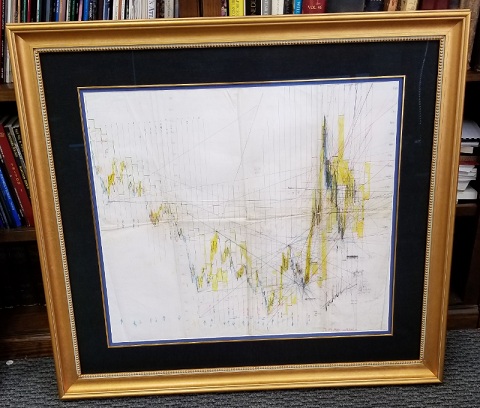
I have spent my life trying to demonstrate that markets are not random collections of disconnected events. There is an underlying structure to their movements, and that structure involves the interaction of time, price, capital flows, and human confidence. This is one of my hard draw charts from the ’80s I framed up for the office.
You cannot understand that structure by attempting to force the markets to obey your personal beliefs.
You must first abandon the assumption that you already know how everything works.
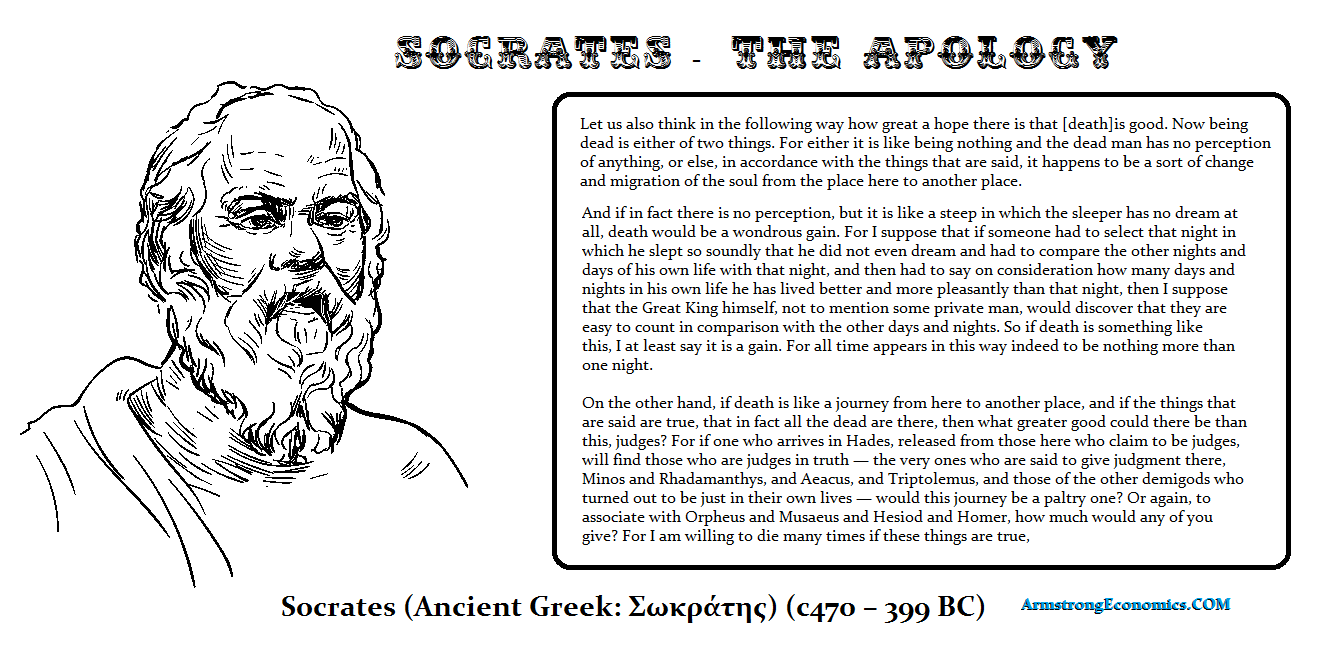
Unfortunately, I suspect they will never listen until Scotty finally beams me up. I names my computer after Socrates. The man they sentenced to death for knowing too much. His apology is what gave me strength. It is either a migration of the soul to see all your old friends, or it is a midsummer night’s sleep, so peaceful, not to be disturbed by a dream.
There is an old tendency in society to dismiss ideas while their proponents are alive, only to reconsider them after they are gone. Perhaps that will be my fate as well.
That is why I continue to write, speak, and conduct these conferences. My objective is not to win an argument with academics or government officials. It is to pass on what I have learned before my own expiration date finally comes due.
The markets will continue long after all of us are gone. The question is whether future generations will learn to listen to them rather than repeat the mistakes of those who believed they could control them.
Tickets are on Sale for the 2026 World Economic Conference
PS:
Yes, there is a list of 3 very major actors. I will have to meet with one in a few weeks. Once they have signed the contracts with the actor, then I can announce who will play me. I have been willing to do this only BECAUSE they understand what I have been doing and that this offers a better way to run governments and get them out of our face. Once they have the name everyone will know, then you get a mainstream class-A movie. I have suggested that some client would like to participate. I have no idea what that will be. I know people invest for movies. I think they are looking at a $25 million budget. I am not involved in that aspect and I am not sure they will accept funds from clients since this one of the largest film companies. I will let everyone know when they actually have the contracts in place.
Yes, there is a shortlist of three very prominent actors under consideration to portray me in the film. I am scheduled to meet with one of them in a few weeks. Once the contracts have been finalized and signed, I will be able to announce who will be playing me.
I have agreed to participate in this project ONLY BECAUSE the filmmakers understand what I have been trying to accomplish throughout my career. This is not simply a story about forecasting markets or my personal experiences. It is about demonstrating that there is a better way to understand how economies function and, ultimately, a better way to govern without constantly interfering in people’s lives.
That is what makes this project important to me. If the film can communicate these ideas to a much broader audience, perhaps it can accomplish something that decades of reports, conferences, and warnings have not.
Once they secure an internationally recognized actor, the project will have the name recognition necessary to become a mainstream, A-list Hollywood production, rather than a small independent film that reaches only a limited audience.
I have mentioned to the producers that some of my clients might be interested in participating financially. However, I have no idea whether that will be possible or how such an arrangement would be structured.
I understand that the preliminary production budget being discussed is approximately $25 million. Investing in films is certainly nothing unusual, but I am not involved in the financing or production arrangements. Since this project involves one of the major film companies, I cannot say whether they would even consider accepting investments from individual clients. I understand many want to see this objective mainstream for society and perhaps that helps with 2032.
That decision rests entirely with the producers and the film company.
For now, everything depends on finalizing the contracts, particularly with the actor who will portray me. Until those agreements are signed, I do not want to make announcements that could be premature.
Once the contracts are in place and everything is official, I will certainly let everyone know who will be playing me.