Giorgia Meloni has finally said what Brussels refuses to understand. Europe does not need MORE centralization. It needs LESS. Speaking about the future of the European Union, Meloni rejected Mario Draghi’s vision of deeper integration and a federal Europe that supersedes the nation-state. She called instead for the “exact opposite”: a confederal Europe where member states retain broad sovereignty and cooperate only where strategic interests genuinely overlap. THAT was what Europe should have been from the beginning.
Meloni said the EU’s current system has proven “inadequate” for dealing with the major challenges confronting Europe. She is absolutely correct. Brussels responds to every failure by demanding more power. Mario Draghi claims Europe can act more like a single political entity because, in this worldview, individual European nations are too small to compete with the United States and China. It sounds wonderful on paper until you ask the obvious question: WHO decides what this European superstate does when Italy, Germany, Poland, Hungary, France, Greece and Spain do not agree? There is no European nation.
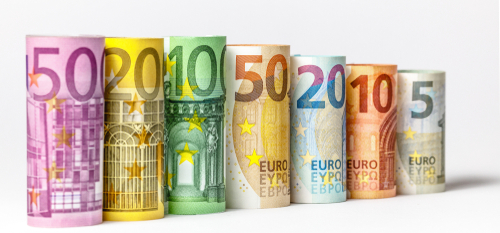
This is the same problem exposed by the ECB’s ridiculous struggle to redesign the euro banknotes. They cannot even find six pictures capable of representing Europe without somebody asking why their nation, history, or culture has been excluded. So they retreat to birds and rivers because birds have no nationality. Yet Brussels somehow believes that while it cannot find a picture everyone agrees represents Europe, it can impose one foreign policy, one monetary policy, one migration policy, one climate policy and increasingly one defense policy upon radically different nations.

Italy has different interests from Germany. Poland’s historical relationship with Russia is nothing like Italy’s. Greece has different economic and geopolitical concerns from Finland. France has nuclear weapons and an enormous agricultural sector. Germany built its industrial economy around manufacturing and cheap energy. Mediterranean countries confront migration pressures that northern European politicians spent years discussing from the comfort of Brussels. Eastern Europe remembers Soviet occupation. Southern Europe remembers what German-imposed austerity looked like during the sovereign debt crisis.
These nations can cooperate. That does not mean they must surrender their sovereignty. Meloni understands the distinction. Her proposal is not to destroy European cooperation. It is to return Europe toward what it should have been: sovereign nations working together where cooperation makes sense. Defense, trade, external borders and strategic infrastructure can involve cooperation without transforming Brussels into the federal capital of a United States of Europe. You can believe in Europe without believing in Brussels.
That distinction has been treated as heresy for years. Anyone who questioned integration was labeled “anti-European.” Meloni addressed that directly, saying that when conservatives previously argued the EU needed a change of direction, they were accused of being against Europe. Now even the establishment admits something is fundamentally wrong. The argument has shifted from whether Europe must change to WHAT that change should be.
Meloni says return sovereignty to the nations. The European Union has repeatedly attempted to force political integration through economics. The euro was perhaps the greatest example. They created one currency without one nation, one treasury, one debt structure or one unified economy. They believed monetary union would force political union. Instead, the sovereign debt crisis exposed precisely the opposite. Greek economic conditions were not German economic conditions. Italian debt was not Finnish debt. Yet every country was trapped beneath the same central bank and the same currency.
Rather than admit the structure was fundamentally flawed, Brussels used each crisis to expand central authority. Now they are doing the same with war. Europe increasingly talks about joint borrowing, common defense procurement and strategic autonomy.
Meloni herself remains firmly supportive of Ukraine, and I disagree with her continued commitment to that policy. She made clear in this same interview that she will not ally herself with political forces that oppose supporting Kyiv’s defense. Fine. That actually demonstrates why her argument for a confederation matters. Italy should be entitled to make that decision for Italy. Hungary should be entitled to reach another conclusion. Slovakia another. France another. You cannot claim nations are sovereign only when they agree with Brussels.
Europe’s strength came from its diversity. The competition between nations produced extraordinary innovation, commerce, art, science and culture. Europe was never powerful because everyone thought alike. It became powerful because dozens of political and economic systems competed against one another.
Centralization destroys that mechanism. When one nation adopts a stupid policy, capital and people can move somewhere better. When Brussels imposes the same stupid policy across the entire continent, there is nowhere inside the system to escape it. A confederal Europe would not mean isolation. Nations could coordinate where their interests align while retaining the right to say NO when they do not.
The European project will either reform itself around the reality of national sovereignty or the political pressure building throughout Europe will eventually reform it by force. You cannot continue stripping authority from elected national governments while pretending voters will never object. You cannot manufacture a European nation through regulations, currency, flags, and bureaucracies.