Indonesia is another economy that deserves far more attention than it receives in the West. The world’s fourth-most-populous nation expanded 5.29% year-over-year during the second quarter of 2026, beating economists’ expectations of 5.10%. That followed an even stronger 5.61% expansion during the first quarter. For the entire first half of 2026, Indonesia grew 5.45%. While governments throughout the developed world struggle to produce 1% or 2% growth without enormous deficit spending, another major Asian economy is steadily expanding above 5%.
Indonesia is particularly interesting because this is not simply another export story. Household consumption, which represents more than half of the economy, increased 5.06% during the second quarter. Construction expanded 6.68%, accommodation and food services grew more than 10%, and manufacturing increased 4.52%. Indonesia has nearly 290 million people, and that enormous internal market provides something smaller export economies simply cannot replicate. As incomes rise, Indonesia increasingly has the ability to generate growth from within.
This is the same transformation I have discussed when looking at India and Vietnam. People can see an economy change in real time when growth begins producing physical results. Roads appear. Airports expand. Industrial parks are constructed. Factories open. Apartment buildings rise. People who never owned automobiles become consumers. Families that previously lived at subsistence levels begin spending money on travel, restaurants, electronics, education, housing, and financial services. That transformation becomes self-reinforcing because an emerging middle class creates entirely new industries around itself.
Indonesia also possesses something Europe desperately lacks: resources. It is the world’s largest producer of nickel, a major producer of coal, palm oil, copper, tin and other commodities, and the government has increasingly refused to remain merely an exporter of raw materials. Indonesia banned exports of unprocessed nickel ore and forced companies seeking access to its resources to invest in domestic processing. That decision helped produce an enormous nickel refining and smelting industry.
This is economic nationalism in its practical form. Why dig something out of the ground, ship it overseas, allow someone else to manufacture the valuable product, and then import that product back at a massive markup? Indonesia wants the factories, processing plants, employment, technology, and capital investment to remain inside Indonesia. The West may complain about these policies when they interfere with its own corporations, but Indonesia is acting in its own national interest.
Investment has remained a major component of this expansion. Gross fixed capital formation increased 6.87% during the second quarter as spending on buildings, machinery, vehicles, and productive equipment continued rising. During the first quarter, investment had already expanded 5.96%. This matters because consumption can produce temporary GDP growth, but productive investment creates the capacity for future growth.
Trade is expanding as well. Indonesian exports reached $140.81 billion during the first six months of 2026, an increase of 4.13% from the previous year. Non-oil and gas exports climbed to $134.58 billion. Imports increased much faster, reaching $137.24 billion, but Indonesia still maintained a $3.58 billion trade surplus during the first half. The surge in imports is not necessarily evidence of weakness when an expanding economy is importing machinery, industrial inputs, and capital goods required for production.
Indonesia’s demographics provide another enormous advantage. The median age is around 30, while Japan is approaching 50 and Europe continues aging rapidly. Indonesia therefore has millions of younger workers entering their most productive and consumption-intensive years. They will need homes, transportation, appliances, financial services, telecommunications, food, entertainment, and infrastructure. This is precisely the demographic foundation that supported the rise of countless economies before it.
There are certainly risks. Indonesia remains heavily exposed to commodity cycles. Rapid industrialization creates environmental problems, and government intervention can easily become excessive. President Prabowo Subianto wants economic growth to eventually reach 8%, and whenever governments become obsessed with hitting predetermined GDP targets, they inevitably risk wasting capital on politically motivated projects. Jakarta must be careful not to destroy the very private investment it is attempting to attract.
The government is already pushing aggressively to accelerate the economy. It has placed 200 trillion rupiah, roughly $11.2 billion, into state-owned banks to increase liquidity and lending, with the program now extended into 2027. Officials want growth to reach 6% this year as part of the effort to eventually achieve Prabowo’s 8% target. That type of intervention must be watched carefully because credit creation can produce artificial booms if capital is directed politically rather than economically.
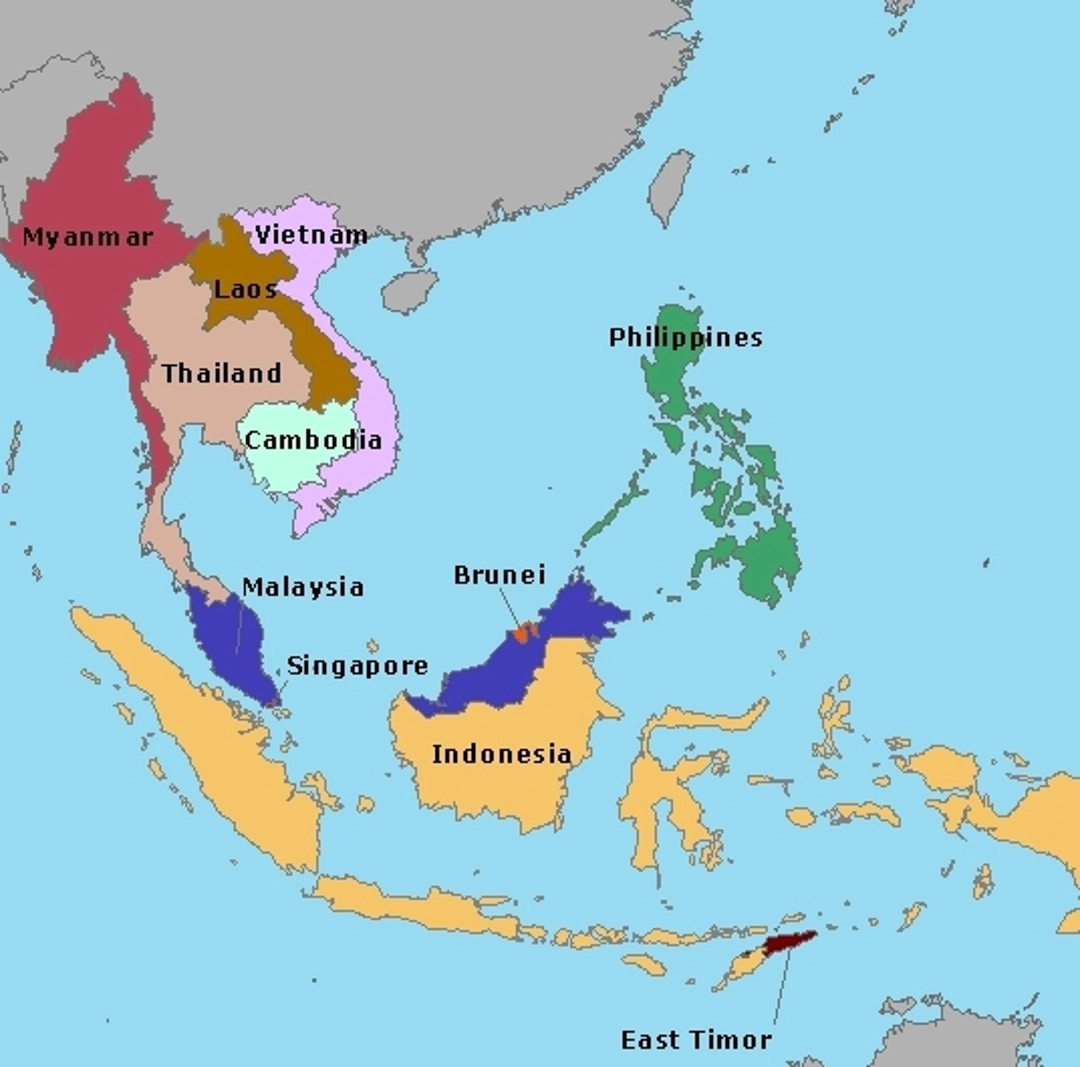
Nevertheless, Indonesia’s underlying advantages cannot be dismissed. Nearly 290 million people, a young population, enormous natural resources, a growing manufacturing sector, expanding infrastructure, rising household consumption, and a strategic position between the Indian and Pacific Oceans create the foundation for a major economic power.
This is why looking exclusively at Europe, Japan, Britain, and Canada gives people a distorted view of the world economy. Wealth is not disappearing. Production is not disappearing. Opportunity is not disappearing. It is moving.
India is expanding rapidly. Vietnam is becoming a manufacturing powerhouse. Singapore is attracting international capital. Mexico is benefiting from the reorganization of North American production. Indonesia is using its resources, demographics, and domestic market to move further up the economic ladder.
The global economy is undergoing a geographic transformation. The old centers of economic power are burdened by sovereign debt, aging populations, taxation, regulation, and governments desperately attempting to preserve systems created during another era. Much of emerging Asia is still building.
Indonesia has spent decades sitting in the shadow of China, Japan, and India when Western analysts discuss Asia. With an economy growing above 5% and nearly 290 million people moving through this development cycle, that will not remain the case forever.
The sleeping giant is beginning to wake up.