The American people are not merely dissatisfied with Washington. They have concluded that the government itself is corrupt. A new Gallup poll found that 89% of American adults believe corruption is widespread throughout the government, the highest reading in the 20-year history of the survey. This is no longer a fringe position dismissed as a conspiracy theory. Nearly nine out of every ten Americans now look at their government and see an institution serving someone other than the people.
The 89% reading rose by an astonishing 10 percentage points in a single year. Perceptions of widespread government corruption had remained between 72% and 79% from 2010 through 2025. The public was already deeply cynical, but something has clearly broken. When almost the entire population believes its government is corrupt, the political system has lost more than popularity. It has lost legitimacy.
Gallup found that 91% of Democrats, 90% of independents, and 83% of Republicans believe government corruption is widespread. Americans cannot agree on immigration, taxation, abortion, foreign policy, health care, or the definition of a woman, yet they have reached near-unanimous agreement that the people running the government cannot be trusted.
The partisan movement reveals how voters process corruption. In Joe Biden’s final year in office, only 57% of Democrats said corruption was widespread. That figure rose to 76% during the first year of Donald Trump’s second term and reached 91% in 2026. Democratic concern exploded by 34 percentage points once the opposing party controlled the White House. Republicans have been more consistent, with approximately eight in ten describing corruption as widespread during the past two years, compared with 87% in 2024.
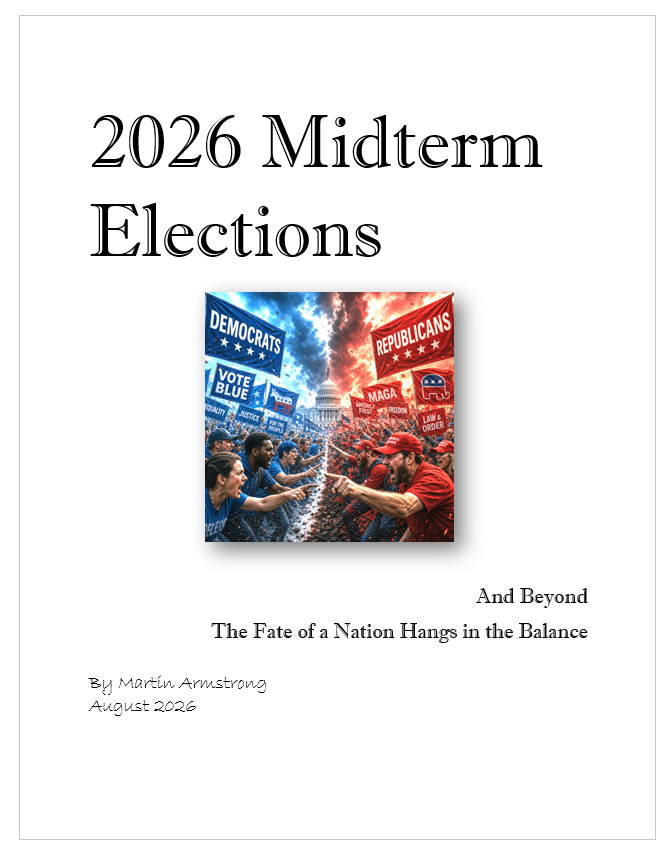
Both parties recognize corruption most clearly when the other side controls the government. Democrats ignored abuses under Biden and suddenly discovered systemic corruption under Trump. Republicans condemned the Deep State under Biden but became more willing to defend Washington when their party returned to power. This is precisely how the two-party system protects itself. Each side treats corruption as a partisan weapon rather than an institutional disease.

America now has the highest perceived level of government corruption among the 38 nations belonging to the Organisation for Economic Co-operation and Development. The median across those advanced economies was 59% in 2025, down from 69% in 2009. The United States stood at 79% last year, already 20 percentage points above the OECD median and higher than every other member country. The new American reading of 89% may widen that gap dramatically once complete international figures become available.
Since 2023, Gallup has asked the question in 132 countries, and only four recorded readings nominally above America’s current 89%: Lebanon at 92% in 2024, Peru at 92% in 2025, and Ghana and Nigeria at 90% in 2024. The self-proclaimed guardian of global democracy is now viewed by its own citizens as nearly as corrupt as governments struggling with chronic instability and institutional failure.
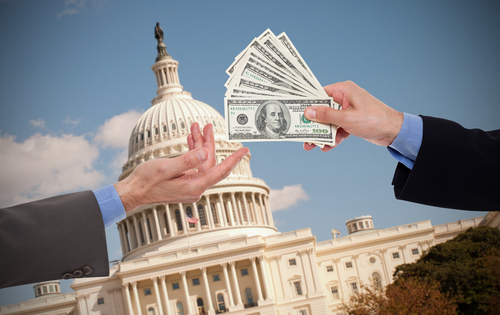
Corruption in the United States rarely resembles a politician accepting a suitcase filled with cash. Washington legalized much of its corruption and gave it respectable names such as lobbying, campaign contributions, consulting, public-private partnerships, speaking fees, book deals, foundations, and regulatory cooperation. The transaction is hidden beneath lawyers, nonprofit organizations, political action committees, government contracts, and a revolving door between regulatory agencies and the industries they supposedly regulate.
If a businessman hands a government official cash to obtain favorable treatment, everyone recognizes the bribe. If a corporation contributes millions of dollars to political organizations, hires former regulators, funds policy institutes, and helps write legislation benefiting its industry, Washington calls it participation in democracy. The outcome is often the same, but the paperwork makes it legal.
Members of Congress have access to information capable of moving markets while debating whether they should be permitted to trade individual stocks. Defense contractors finance politicians who approve military spending. Pharmaceutical companies influence agencies that approve and purchase their products. Banks help design regulations governing banks. Technology companies cooperate with government agencies while lobbying against restrictions on their power. Foreign governments and their representatives spend fortunes attempting to purchase influence over American policy.
This is why the public distinguishes between government and business. Gallup found that 71% of Americans believe corruption is widespread in business, an increase of eight points from last year. That is certainly high, but it remains 18 percentage points below the government figure, the largest gap recorded in the American survey. Between 2006 and 2025, perceptions of government corruption averaged 11 points above business corruption. Americans increasingly believe government has become the greater problem.
A private company must generally persuade someone to purchase its product. Government does not require consent. It taxes, regulates, fines, licenses, prosecutes, surveils, borrows, and spends through force of law. Corruption in business can destroy a company, but corruption in government can destroy the rule of law because the people benefiting from the abuse also control the institutions responsible for investigating it.
The national debt is another monument to this system. Washington spends trillions of dollars it does not possess, directs the money toward politically protected interests, and transfers the obligation to taxpayers who had no meaningful influence over the decision. Politicians purchase votes today with borrowed money and leave future generations with the interest bill. Both parties complain about debt while in opposition and expand it when in power because neither side is willing to dismantle the patronage network supporting Washington.
Americans have watched trillions disappear into wars with no clear objective, emergency programs with little oversight, failed infrastructure promises, corporate subsidies, foreign aid, government contractors, and agencies that can never pass a serious audit. The Pentagon has repeatedly failed comprehensive financial audits, yet Congress continues approving larger military budgets. No private corporation could admit that it cannot account properly for its assets and then demand even more money without consequences.
The public also witnessed how government behaved during COVID. Officials imposed lockdowns, closed businesses, censored dissent, issued contradictory directives, and protected pharmaceutical companies while insisting that every decision followed “the science.” Small businesses were destroyed while politically connected corporations expanded. Government officials violated restrictions they imposed upon everyone else, and few faced any accountability. That period taught millions of Americans that emergency power protects the institution before it protects the citizen.
The weaponization of law has deepened the collapse in trust. Each political faction now believes the other uses prosecutors, intelligence agencies, courts, tax authorities, and regulators as political instruments. Justice is no longer perceived as blind. The public increasingly assumes that the outcome depends upon the identity, wealth, connections, and political usefulness of the accused.
This is extremely dangerous for a republic. The rule of law survives because most people voluntarily accept the legitimacy of institutions even when they dislike an individual decision. Once the population believes that laws are selectively enforced and government acts primarily for itself, obedience becomes based upon fear rather than consent.
Elections cannot repair this when the bureaucracy, debt structure, lobbying apparatus, intelligence agencies, regulatory state, and government contractors remain largely untouched regardless of which party wins. Voters change the elected management, but the permanent machinery continues operating. Every president campaigns against Washington and eventually discovers that Washington is larger than the presidency.
The bureaucracy protects itself because its survival does not depend directly upon performance. A business that continually fails eventually loses customers and capital. A government agency that fails demands a larger budget, more employees, and broader authority. Failure becomes evidence that it was not given sufficient resources. Success is defined internally, and accountability disappears into committees, reports, and investigations that rarely punish anyone with power.
Americans finally see the system for what it is. The question is no longer whether government corruption is widespread. Nine out of ten have already answered that question. The issue is how long a republic can survive after its citizens conclude that the government no longer represents them.