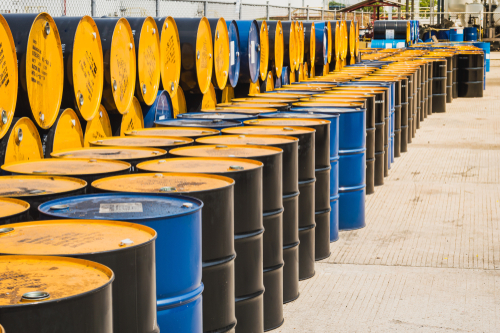
The political class watches the price of crude oil and gasoline because that is what appears in the headlines, but the real warning is diesel. The average retail price of diesel in the United States has reached approximately $5.45 per gallon, while the diesel crack spread—the premium of diesel futures over crude oil—has exceeded $100 per barrel for the first time. That spread has reached record highs repeatedly, revealing that this is no longer simply an oil problem. It is a refining and distribution crisis that will flow through the entire economy just as voters prepare for the November midterm elections.
Diesel is the lifeblood of the modern economy. Trucks deliver food to supermarkets, farmers operate tractors and combines, construction companies run heavy equipment, and railroads, ships, mines, factories, and emergency generators all depend upon distillate fuels. Gasoline affects the cost of driving to work, but diesel affects the price of almost everything waiting for you when you arrive. Every product must be grown, manufactured, mined, transported, or delivered. When diesel rises, the increase is embedded in every stage of the supply chain until it eventually reaches the consumer.
Crude oil can remain below previous records while diesel reaches crisis levels because crude is useless until a refinery transforms it into products the economy can consume. The United States has crude oil, but it cannot instantly create new refining capacity. Refineries require years of planning, billions in capital, environmental permits, specialized equipment, and a political environment in which investors believe they will be allowed to earn a return. Governments spent years discouraging investment in fossil-fuel infrastructure while promising that the energy transition would make such capacity obsolete. Now they are shocked that the system has no spare capacity when war disrupts global supplies.
The shortage is not coming from a single event. The war with Iran and insecurity around the Strait of Hormuz have disrupted Middle Eastern refining and shipping. Ukrainian drone attacks have damaged Russian refineries and forced Moscow to restrict fuel exports while importing products to address its domestic shortages. China has reduced exports, and American refineries are already operating near capacity. U.S. distillate inventories have fallen to their lowest seasonal level in decades while exports have increased to meet desperate foreign demand. This is a global competition for a shrinking pool of refined fuel, and no political speech can manufacture a barrel of diesel.
Farmers will be among the first to feel the damage. Agriculture consumes fuel directly through machinery and indirectly through fertilizer, irrigation, processing, refrigeration, and transportation. A farmer cannot simply stop operating a tractor because diesel has become expensive. Those costs must either be absorbed through lower margins or transferred into higher food prices. Many farmers are already confronting high interest rates, tariffs, drought conditions, and rising equipment costs. Diesel above $5 adds another expense at precisely the wrong time, and rural voters understand energy inflation far better than the economists sitting in Washington.
Truckers face the same problems. Large carriers may recover part of the increase through fuel surcharges, but smaller operators do not possess the same negotiating power. They must pay for fuel immediately while waiting weeks to receive payment for a shipment. Higher diesel prices therefore create a working-capital crisis in addition to an operating-cost crisis. Some independent truckers will leave the industry, reducing available capacity and pushing freight rates still higher. The politicians will then blame corporate greed for increasing prices without admitting that their foreign policy and energy policy created the conditions producing those increases.
This is how the Middle East war enters the 2026 elections. The government may claim that inflation is under control, but that claim becomes meaningless when diesel is approaching its previous record and the price of everything transported by diesel continues to rise. The voter does not care whether the increase is called headline inflation, supply-driven inflation, or a geopolitical risk premium. The voter knows only that wages purchase less than they did before.
Politicians always search for a way to suspend the laws of economics until after an election. Richard Nixon imposed wage and price controls in 1971 in an attempt to conceal inflation before the 1972 election. The controls distorted production and delayed rather than eliminated the price increases. Jimmy Carter confronted the political consequences of energy shortages and inflation at the end of the 1970s. Governments repeatedly blame oil companies, speculators, foreign producers, and consumers because admitting the truth would require them to accept responsibility for monetary expansion, regulation, underinvestment, sanctions, and war.
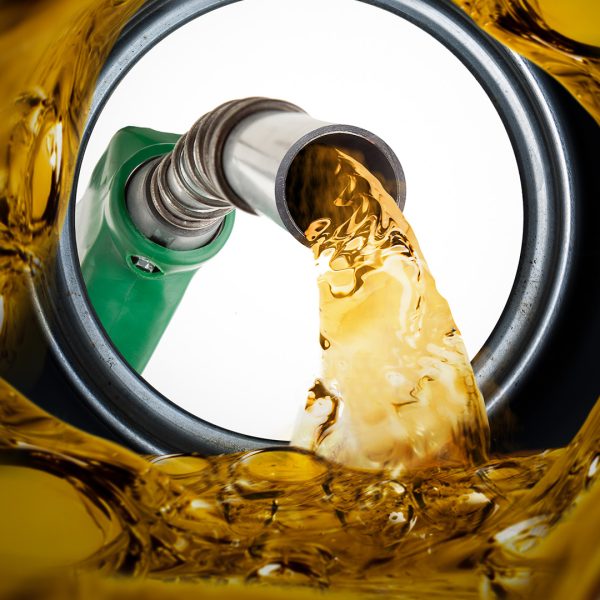
The diesel crisis is especially dangerous because it is converging with a sovereign-debt crisis. Higher transportation and food costs will keep inflation elevated, limiting the ability of the Federal Reserve to reduce interest rates. Higher rates increase the cost of servicing federal debt, which produces larger deficits and still more borrowing. The government will spend more to offset the very inflation its policies helped create, and that additional spending will intensify the long-term fiscal problem. This is not merely an energy cycle. It is the collision of war, inflation, and debt. Crude oil receives the attention because it is easier to understand. Diesel reveals what is actually happening beneath the surface. The record crack spread is warning that the world does not have sufficient refining flexibility to absorb simultaneous disruptions in the Middle East, Russia, and Asia.
By November, voters may not know what a crack spread is. They will certainly understand what it has done to their wallets. This is how the Iran war enters the 2026 midterm elections. Trump campaigned against the Neocon endless war machine, yet brought the nation into direct conflict in the Middle East.
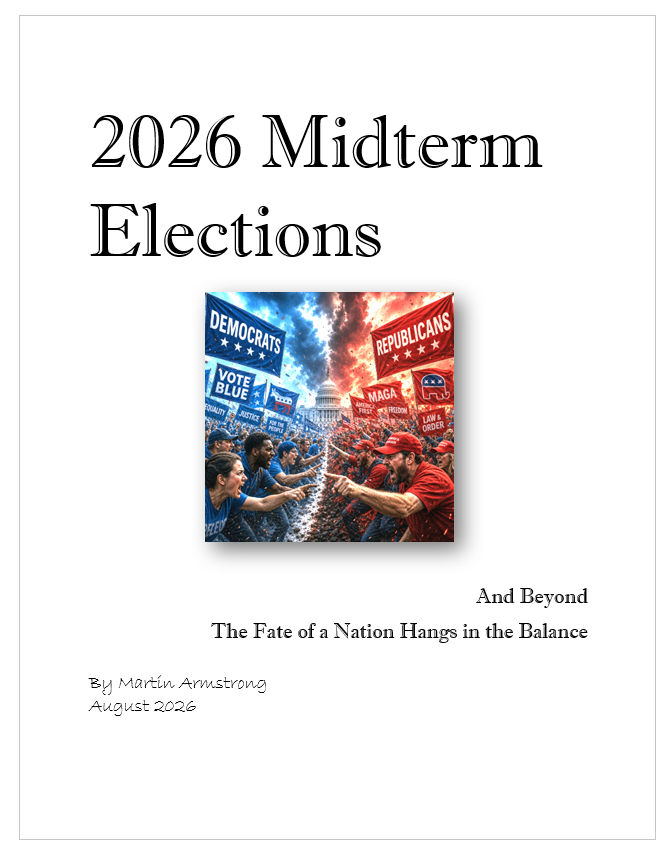
Our Midterm Election Report warned that the decisive mechanism would be the collapse in confidence triggered by external conflict. Historically, midterms become a referendum on the president: since World War II, the president’s party has lost House seats in 18 of 20 midterm elections and Senate seats in 15 of 20. Republicans are entering that historical cycle with an extremely narrow 217–214 House majority.
The computer forecast is not calling for a Democratic landslide. The most likely outcome remains that Democrats take the House while Republicans retain the Senate, although four political models show a solid Republican victory and one places that probability above 70%. That divergence reveals how unstable the political environment has become. Republicans may survive if energy prices retreat and the war moves toward a credible settlement. If diesel remains near record levels into the autumn, the Iran war will become a domestic economic referendum and the narrow House majority will be the first casualty.
The party in power will try to make November about personalities, immigration, ideology, or whatever scandal dominates the media. Elections, however, are ultimately determined by confidence. People will tolerate political incompetence while their standard of living improves. They become far less forgiving when prices rise and the government insists that everything is fine. By November, most voters will understand what the war has done to their wallets.