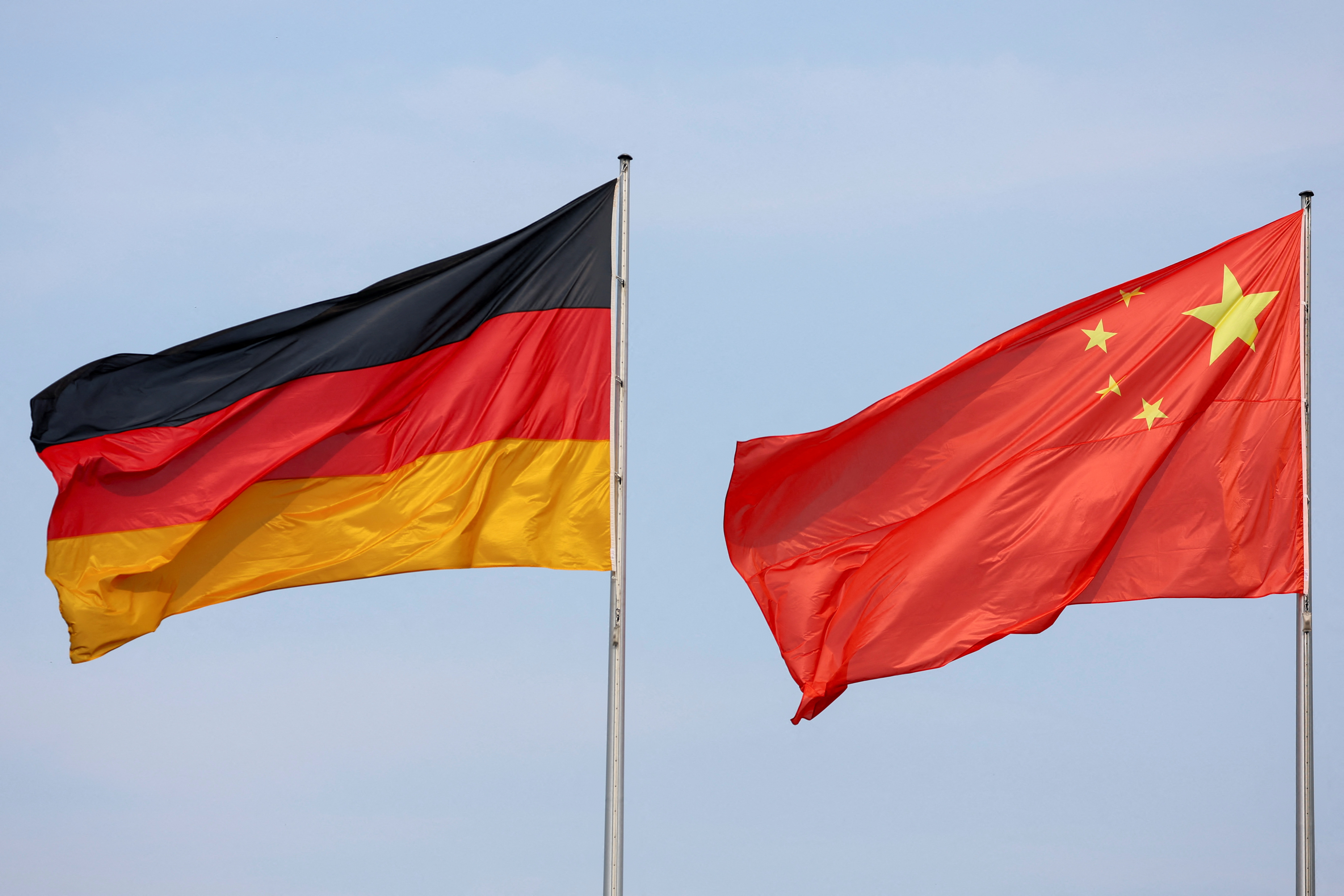
Germany spent decades building one of the most successful industrial economies in the world and then its politicians began dismantling the very foundations that made that possible. Reuters is now reporting that Germany’s trade deficit with China exploded to roughly €55 billion during the first half of 2026, up from €40 billion during the same period last year. German exports to China collapsed by more than 12% to less than €37 billion while imports from China surged 8.9% to €91.8 billion. This is not simply a trade imbalance. Germany is discovering that China increasingly does not need what Germany is selling.
China was Germany’s second-largest export market as recently as 2021 when German companies sold €104 billion worth of goods there. China has now fallen all the way to ninth place among German export destinations, behind economies as small as Austria and Switzerland. Think about that for a moment. German industry spent decades treating China as one of its primary engines of growth, and now Austria is buying more German goods than China.
The politicians will blame Trump, tariffs, China, Putin, COVID, climate change, or whatever excuse happens to be fashionable this week. They will never look in the mirror. Germany voluntarily destroyed its competitive energy structure, abandoned nuclear power, severed itself from cheap Russian energy and embraced an EU regulatory regime that makes producing almost anything more expensive. Meanwhile, China did what any rational industrial nation would do. It invested in manufacturing, infrastructure, technology, energy, supply chains, robotics, batteries, automobiles, and domestic production.
China learned from the West and then began replacing the West. Germany taught China how to manufacture many of the sophisticated products China once imported. German corporations poured capital and technology into China because labor was cheaper and the Chinese market was enormous. Beijing never intended to remain permanently dependent upon European engineering. China used foreign investment to climb the technological ladder and develop its own domestic supply chains. Corinne Abele of Germany Trade & Invest told Reuters that falling German exports reflect China’s increasing focus on domestic value chains. Commerzbank economist Vincent Stamer reached the more important conclusion: China’s declining reliance on Germany demonstrates that it is becoming increasingly independent of Western powers and catching up technologically.
This is precisely what Western politicians refuse to understand about China. They still speak about China as though it were the China of 1995, producing cheap toys, textiles, and plastic junk for Walmart. That China no longer exists and Beijing is determined to force the world to see it as an economic powerhouse. China produces electric vehicles, batteries, solar technology, industrial machinery, electronics, drones, ships, high-speed rail equipment, and increasingly sophisticated technology. Reuters recently described the current export wave as “China Shock 2.0,” with China gaining enormous market share in advanced manufacturing sectors such as EVs, batteries, and solar cells.
Germany is being squeezed from both directions because the entire German economic model was based on globalization remaining frozen in time. Germany imported cheap energy, manufactured high-value industrial products, and exported them to China and the United States. Berlin assumed those arrangements would continue forever.
The automobile industry demonstrates the problem better than anything else. Germany once possessed an almost mythical reputation for automotive engineering. Mercedes-Benz, BMW, Volkswagen, Audi and Porsche represented German industrial superiority. Then politicians forced the industry toward electric vehicles while China spent years building the battery supply chain, securing critical minerals and developing enormous manufacturing scale. Europe created the demand through regulation while China positioned itself to supply it.
Chinese EV manufacturers are now competing directly with European manufacturers on price, technology, software, batteries and increasingly quality. German manufacturers are consequently being squeezed inside China itself, a market they once expected would provide decades of growth. Reuters notes that the pressure from Chinese competition and American tariffs is already contributing to major job reductions at industrial giants including Volkswagen.
There is another dimension here that the politicians will not discuss. German corporations themselves increasingly manufacture inside China rather than export finished products from Germany. That means even when a German company sells something to a Chinese consumer, the economic benefit does not necessarily flow back through a German factory employing German workers. The multinational corporation may survive while the domestic industrial base contracts.
German companies are producing more inside China itself.
China has also overtaken the United States again as Germany’s largest overall trading partner. Total German-Chinese trade exceeded €128 billion during the first half of 2026, approximately €3 billion more than trade with the United States. Yet the composition of that trade is changing dramatically because Germany is buying far more from China than China is buying from Germany.
Germany is therefore becoming increasingly dependent upon Chinese production at precisely the same time China is becoming less dependent upon German production.
Germany imports the products. China acquires the manufacturing capacity. Germany regulates industry. China expands it. Germany worries about carbon emissions. China worries about market share. Germany’s politicians talk endlessly about strategic autonomy while implementing policies that make their own industries less competitive.
The numbers are now exposing the consequences. Germany’s Federal Statistical Office reported that imports from China were already up 6.2% during the first five months of 2026 to €72.4 billion. China remained Germany’s most important source of imports. Germany’s overall merchandise trade with China had already reached €252.4 billion in 2025, allowing China to reclaim its position as Germany’s largest trading partner.
This is bigger than Germany. Europe is losing its industrial position because Brussels believes prosperity can be legislated into existence. You cannot tax energy, regulate businesses into submission, impose endless environmental mandates, increase labor costs, suffocate entrepreneurs and then demand that European companies compete against China.
Capital does not care about political speeches. It moves to where it is treated best.
China certainly has enormous domestic problems, including its property crisis, weak consumer demand and indebted local governments. This should not be portrayed as China becoming economically invincible. Reuters reported second-quarter growth of only 4.3%, while retail sales actually contracted 0.6% in May before increasing just 1.3% in June. Beijing is responding to domestic weakness partly by pushing manufacturing outward through exports, which only increases the competitive pressure on Europe.
This is why the trade numbers matter. China does not have to possess a perfect economy to displace European manufacturing. It simply has to remain more competitive than Europe.