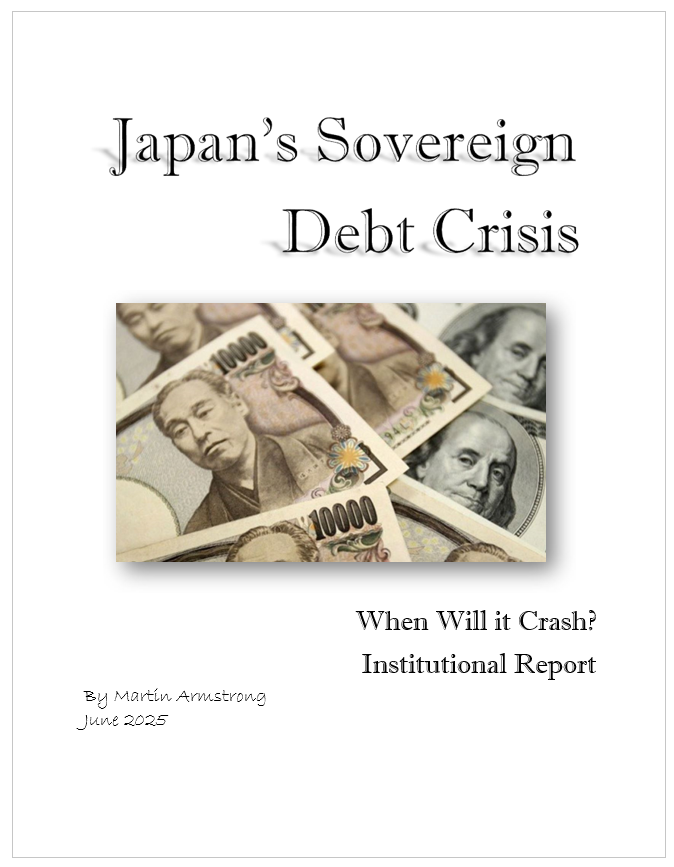
QUESTION: Mr. Armstrong, I understand you are deeply involved in analyzing the unfolding debt crisis in Japan, and the mainstream media rarely seems to grasp the situation the way you do. I would greatly appreciate any comments or insights you can share on what is happening here in Japan and where you believe this crisis is headed.
Aikra
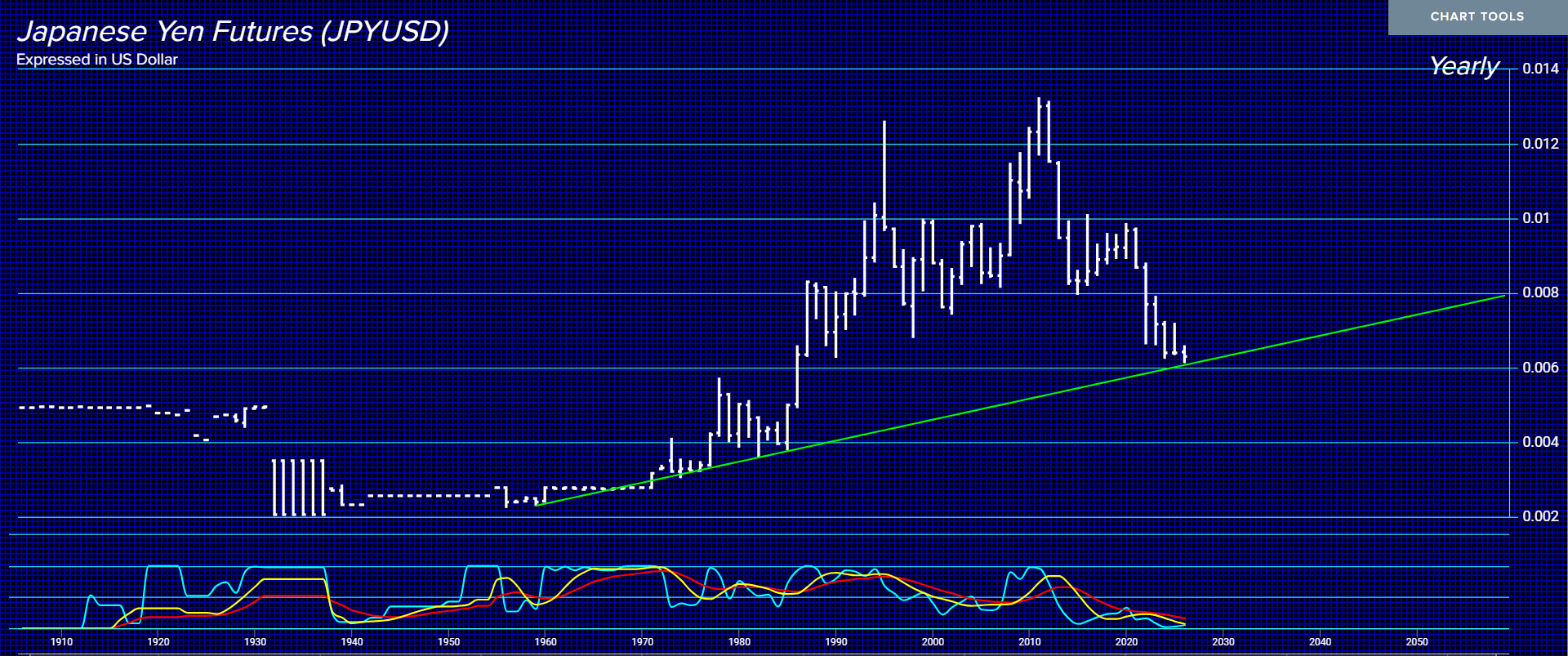
REPLY: I hope you are doing well. I apologize I could not handle all the corporate calls from Japan. I will send a quick Institution assessment shortly. The Japanese yen has come down to major long-term technical support challenging the 1987 Crash Levels.
Yes, I think even the Fed does not quite grasp the extent of the real problem. The media is claiming that the Fed is intervening to prevent Japan from selling US bonds. That just shows their ignorance.
The U.S. has recently taken action to support Japan, but the press claims this is out of self-interest rather than pure altruism. In late July 2026, the U.S. Treasury took the rare step of intervening in the currency market to help boost the value of the Japanese yen, marking a significant shift in policy. But WHY?
U.S. Treasury Secretary Scott Bessent’s intervention occurred in a very public way. During a live-streamed cabinet meeting, he was photographed holding a note that read, “To do: Buy JPY (yen), 5-10 billion.” Granted, the U.S. Treasury instructed the New York Federal Reserve to sell euros and buy yen, directly participating in the intervention. This was a joint effort with Japanese and South Korean authorities, who were also selling dollars to support their own currencies.
This is where the so-called analysts the press routinely quotes reveal just how little they understand.
They argue that the U.S. intervention was not primarily about helping Japan, but about protecting America’s own financial stability. According to their theory, Washington feared that a collapsing yen would force Japan to liquidate its massive holdings of U.S. Treasury securities to defend its currency.
That narrative falls apart once you understand who actually owns those Treasuries.
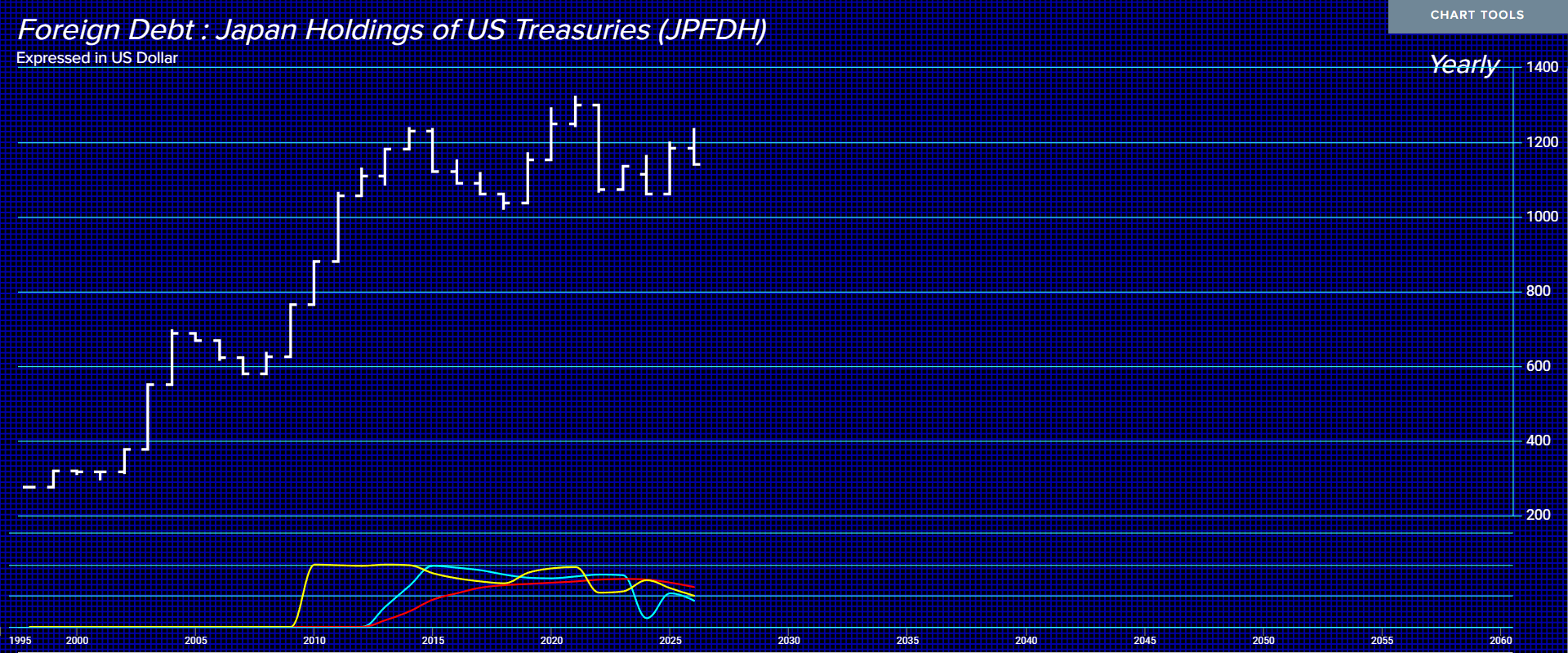
Japan is the largest foreign holder of U.S. government debt, with more than $1 trillion in Treasury securities. However, I have repeatedly pointed out that the majority of those holdings are not owned by the Japanese government. They are held by Japanese corporations and private institutions that use U.S. Treasuries as a hedge against the fiscal recklessness of their own government. Yet these analysts ignore that crucial distinction because they approach every event with the same conclusion—they are permanently bearish on the dollar.
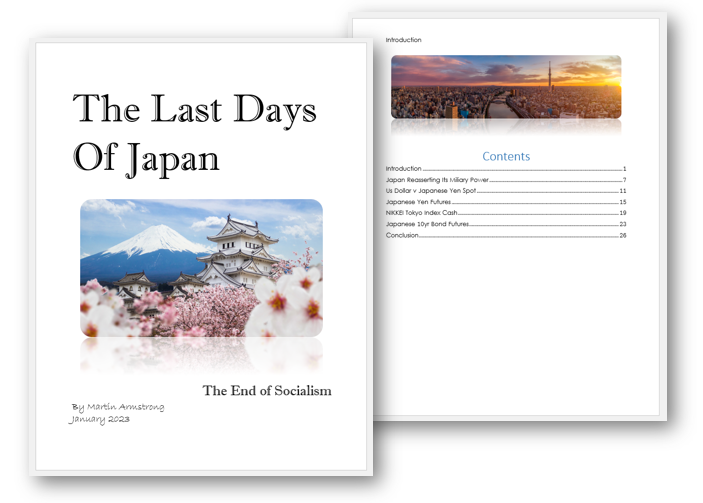
Rather than recognizing that Japan is confronting the highest debt-to-GDP ratio of any major economy, they portray every U.S. action as a desperate attempt to prop up the dollar. I stated clearly in the Japanese Institutional Report earlier this year:
“The sovereign debt crisis has begun, and once confidence starts to crack, governments everywhere will discover that there is no such thing as endless borrowing.”
The dollar bears now claim that U.S. intervention is merely a “financial containment” strategy designed to prevent a crisis in Japan from spilling over into the American financial system. Their argument is that if Japan were forced to dump its Treasury holdings to support the yen, U.S. bond prices would collapse, long-term interest rates would surge, and the Federal Reserve would lose control of the market. They weave this into a broader narrative of global war and a looming crisis of confidence in the dollar.
The problem is that this analysis begins with an assumption instead of the facts.
These same commentators have spent decades predicting the imminent collapse of the dollar. When the dollar failed to implode after President Nixon suspended gold convertibility on August 15, 1971, they invented the “petrodollar” theory, claiming the dollar survived only because oil was priced in dollars. Their forecasts have consistently been driven more by ideology than by data.
The wealth of any nation ultimately rests on the productivity of its people. By that measure, the United States remains substantially more productive than Europe. Capital follows opportunity, not political slogans.
Consequently, the dollar bears insist that the United States is supporting Japan only to prevent a Japanese financial crisis from damaging the American economy. In reality, they demonstrate little understanding of how international capital actually moves. If they had access to the Japanese data, they would immediately see that Japanese corporations and private investors—not the government—hold the larger share of U.S. Treasury securities precisely because they seek protection from the fiscal policies of Tokyo.
Our data shows that total Japanese holdings of U.S. Treasuries are approximately $1.14 to $1.24 trillion. Overall foreign ownership of U.S. federal debt is about $9.2 trillion. Of that amount, roughly 58.1% ($5.4 trillion) is held by foreign private investors—including corporations, pension funds, investment funds, and individuals—while only about 41.9% ($3.9 trillion) is held by foreign governments, central banks, and sovereign wealth funds.
Those facts completely undermine the simplistic narrative that Japan’s Treasury holdings are primarily an instrument of government policy. A substantial portion represents private capital seeking safety, and that distinction is fundamental to understanding both Japan’s debt crisis and the global demand for U.S. government securities.
While the Japanese government, primarily through the Bank of Japan, holds a substantial portfolio of U.S. Treasury securities as part of its foreign exchange reserves, the majority of Japan’s roughly $1.2 trillion in Treasury holdings is not owned by the government. Instead, it is held by Japanese banks, insurance companies, pension funds, and other corporate investors.
These private institutions purchase U.S. Treasuries not only because they offer significantly higher yields than Japanese government bonds, but also as a hedge against the fiscal policies of their own government—a strategy that has proven remarkably successful over the years.
What these analysts completely omit in their explanation of why Secretary Bessent would intervene is the longstanding trade dynamic. A sharply weaker yen gives Japan a significant competitive advantage by making its exports cheaper, widening the U.S. trade deficit, and allowing Japanese manufacturers to undercut American producers.
There is nothing new about this issue. I have dealt with more than $3 trillion under advisory contract from Japan over my career, and I have been dealing with the implications of yen-dollar policy and its impact on international trade for decades.
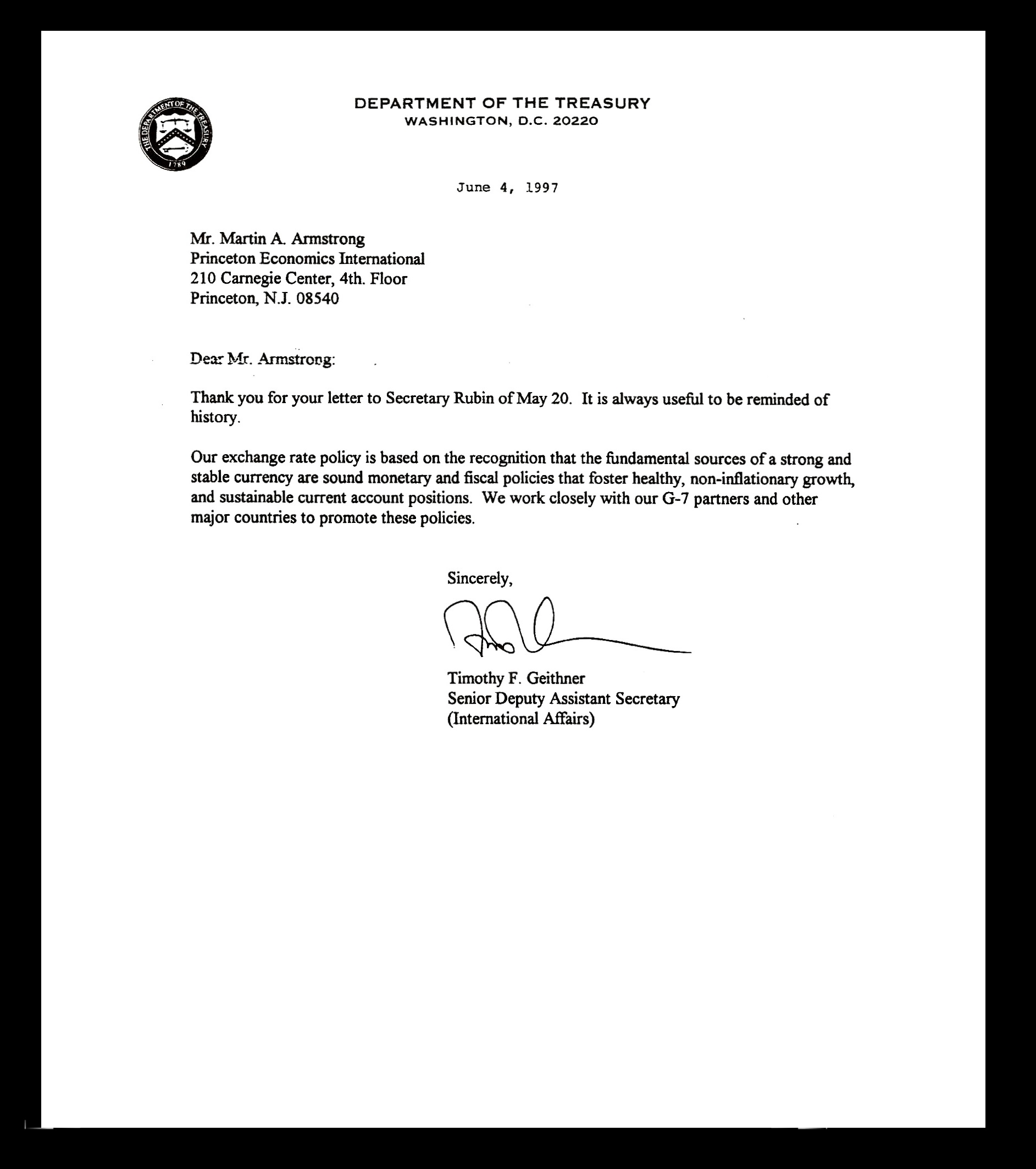
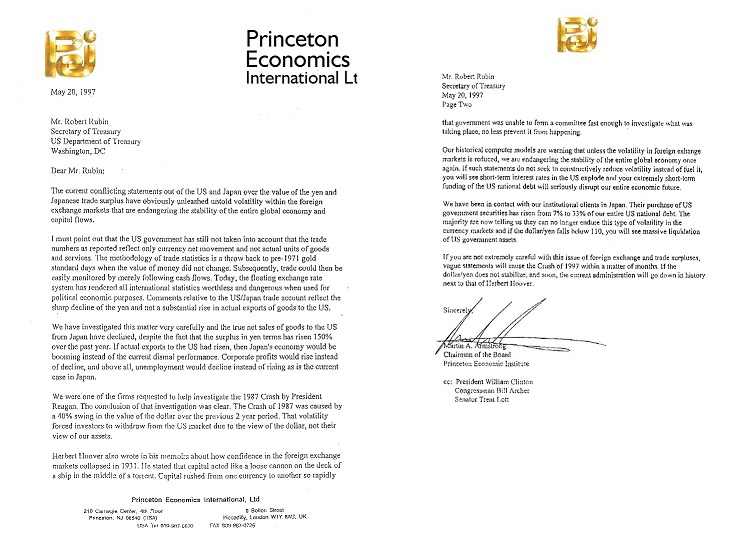
When Rubin, of Goldman Sachs, was Treasury Secretary, then too I would have expected a better understanding of the world economy. He was trying to talk the dollar down once agains for trade. I wrote in 1997 warning that scenario led to the 1987 Crash thanks to the G5 trying to push the dollar down by 40%. They responded.
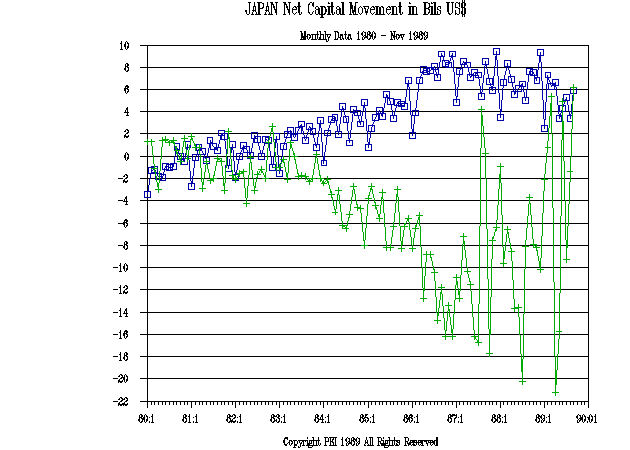
This is a chart of the capital flows the set off the 1987 Crash. Japan dumped Treasuries and Equities because the fear was the dollar would fall another 40% after the Louver Accord. A lower yen will benefit Japanese corporates and Bessent is worried once again about trade.
A number of people have also asked whether I advise Secretary Bessent. The answer is no, nor would there be any point in my attempting to do so.
To my knowledge, Bessent was on the opposite side of the Russian trade during the 1998 crisis, when many market participants blamed me for their losses. I believe there is a longstanding personal grudge stemming from that period, which is why I see no purpose in writing to him.
George Soros’ Quantum Fund reportedly lost approximately $2 billion on its Russian investments. Much of that loss was tied to its investment in the Russian telecommunications company Svyazinvest, which Soros later described as “the worst investment of my professional career.” The fund’s assets reportedly declined from roughly $22 billion in 1998 to about $13 billion in 1999.
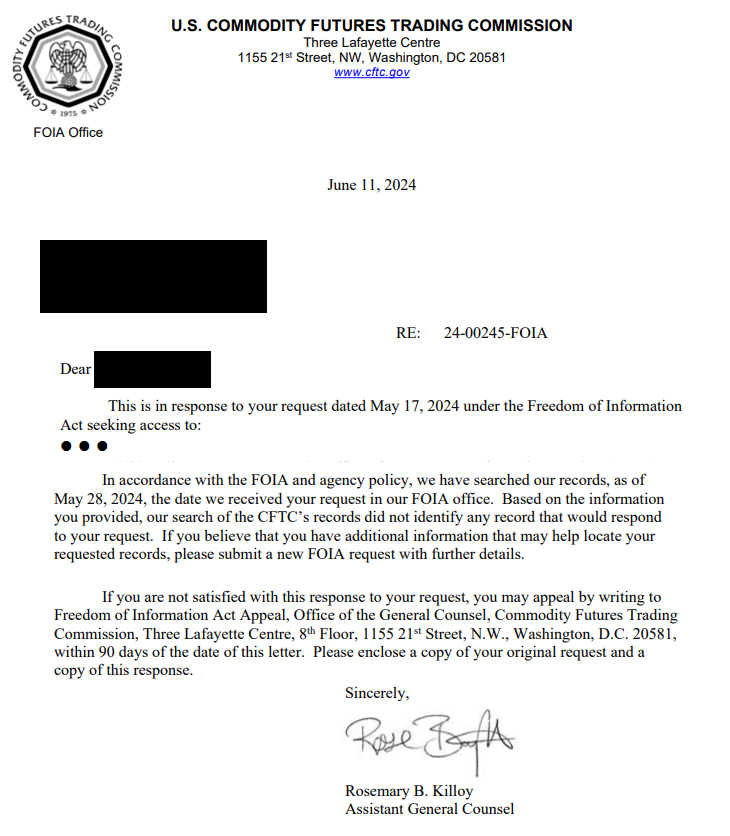
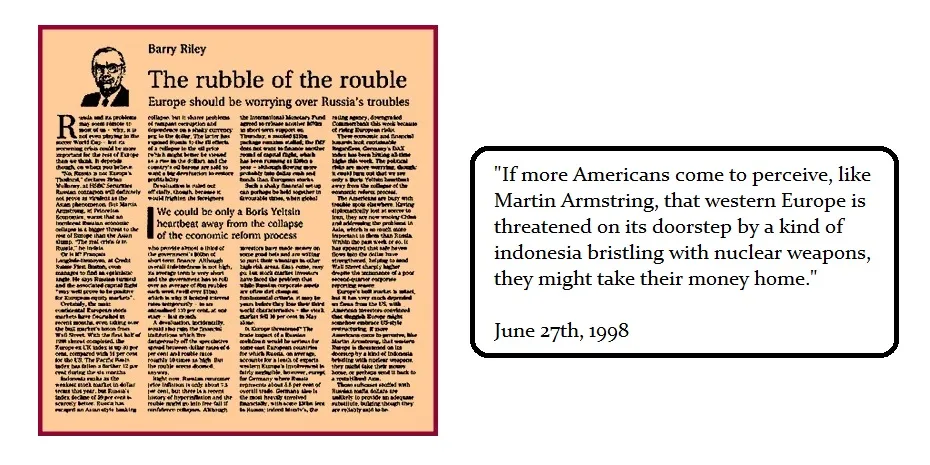
After the Financial Times published my forecast in June 1998 warning that Russia was on the verge of collapse, many people associated those losses blamed my analysis. I was later told that some individuals urged the CFTC to shut down my company in retaliation. Whether that effort was directly connected, I cannot independently verify, the CFTC refused to provide any records on me under a FOIA request. But that is what I was told at the time.
 This is why some states NEED war for a distraction from the fact that the entire socialistic system is starting to show its cracks. I have warned that Japan could be even the first to decline.