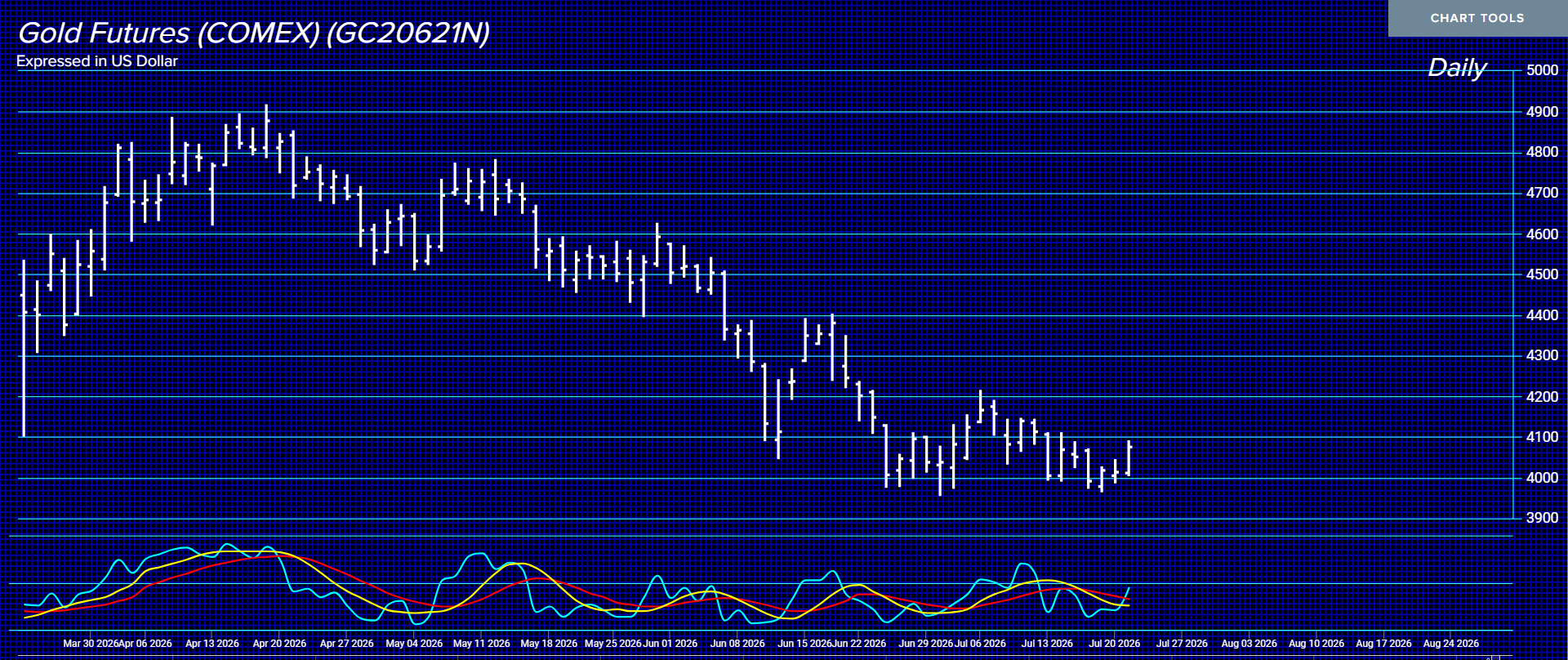
COMMENT: Mr. Armstrong, I’m a new subscriber and just wanted to say thank you. Your work has given me a real understanding of how time and price interact, and it’s remarkable how your forecasts avoid the bias that pervades everyone else’s predictions. Even with all the geopolitical noise, gold dropped into June just as you forecasted at the start of the year. It just proves that everything hinges on what people believe.
Thank you for the education.
Shane
REPLY: What I have always found is that TIME is more important than PRICE. You have a finite amount of time and that dictates the trend. PRICE is secondary. You can have a price objective, but if you run out of TIME, the game is over.
TIME and PRICE are two entirely separate forecasts that must align to confirm a major market turning point. PRICE alone is meaningless without the correct timing.
The Primacy of Time
TIME is the dominant and more important factor . It is the “fabric of the universe,” not just a component of market analysis. The central idea is that a market move reaching a specific price level is not significant unless it occurs at a predetermined point in time.
Price as a Secondary Objective
Price targets are determined by patterns and reversals, but they are always secondary and must be “earned” by the market. In the Dow, I had provided multiple price objectives (e.g., for the Dow: 18,500, 23,000, 40,000, 55,000, 65,000). The key is that reaching one objective before the TIME target signaled the next price level becomes possible.

Markets are seen as a series of connected events (a “wave of contagion”). By understanding the “hidden order” within this apparent chaos, one can define scenarios to navigate the market, rather than trying to predict it with one-dimensional certainty. Those who argue Random Walks are incapable to seeing both PATTERNS as well as TIME. As Einstein said, God does not play dice with the universe.