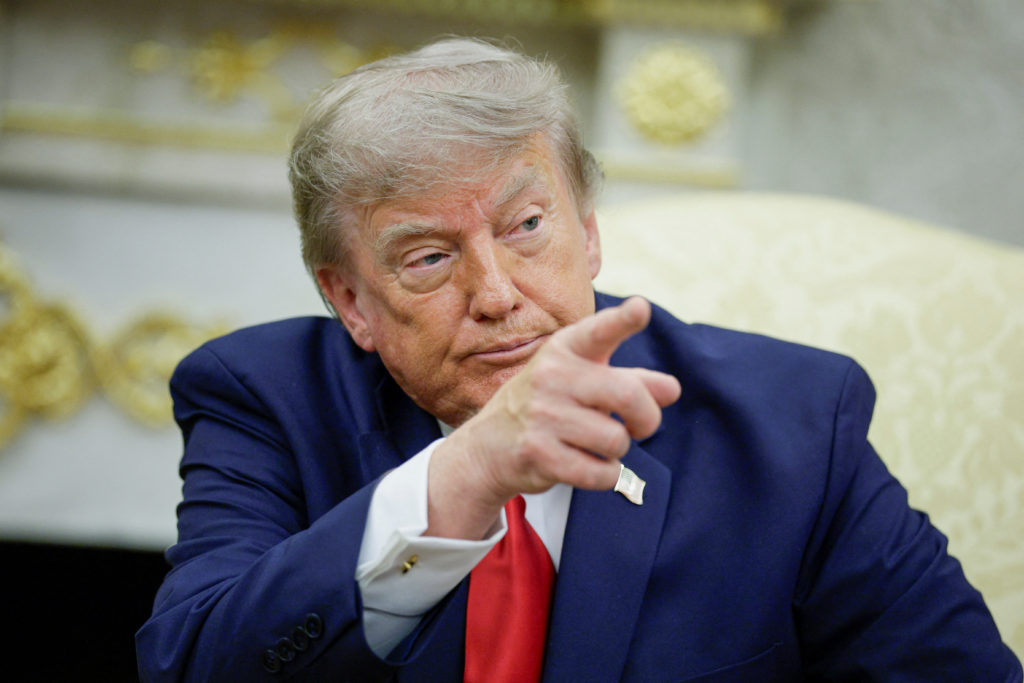
The White House has now released a series of declassified election-integrity documents that the administration says expose what it describes as the largest compromise of American voter data in history. The release followed President Trump’s heated nationally televised address Thursday night, where he argued that China systematically acquired sensitive voter information during the 2020 election cycle and that intelligence surrounding the operation was buried inside the bureaucracy rather than presented honestly to elected leadership.
For years, the focus has been on Russia while China quietly expanded its economic, technological, and intelligence footprint throughout the West. China does not think in election cycles. It thinks in decades as the ancient culture understands cycles. Every major strategic objective is pursued patiently through economic leverage, technology, data collection, academia, corporations, and political influence. Elections become merely another avenue for intelligence gathering and long-term strategic positioning.
According to the newly released material highlighted by the White House, Chinese actors allegedly obtained information on roughly 220 million American voter records. The administration claims the information included voter registration data, addresses, party affiliation, and other identifying information that could be used to map voting populations across the United States. President Trump described it as “the largest compromise of election data in history” and ordered further investigations into both the alleged intrusion and the government’s handling of the intelligence.
The administration further alleges that portions of this intelligence never reached the President in full during the 2020 election cycle and that internal disputes inside the intelligence community resulted in information being minimized or withheld. Those claims are now at the center of renewed investigations following the release of the declassified files.
Whether every allegation ultimately withstands scrutiny is now the question investigators must answer. It is important to distinguish between allegations contained in newly released documents and conclusions that have been independently established. Previous U.S. intelligence assessments issued after the 2020 election concluded they did not find evidence that China successfully altered votes or election infrastructure, although there has long been bipartisan concern over Chinese cyber activity and influence operations. Those earlier conclusions are directly challenged by the current administration’s interpretation of the newly declassified material.
That distinction should not cause anyone to dismiss the broader strategic issue. China has spent decades collecting enormous quantities of American information through cyber intrusions, intellectual property theft, social media platforms, telecommunications equipment, academic partnerships, and commercial acquisitions. Election databases would simply represent another valuable intelligence asset. Data itself has become one of the most valuable commodities in modern geopolitical warfare.
What concerns me is not merely who may have obtained voter information. It is how dependent Western governments have become upon digital infrastructure that was never designed with national security as the first priority. Every database becomes another target. Every connected system becomes another avenue for foreign intelligence services. We have built societies where governments, corporations, financial institutions, and election officials increasingly rely upon centralized digital records while assuming those systems remain secure. That assumption has repeatedly proven false.
The computer has consistently shown that confidence is always the foundation of government. Once public confidence in institutions begins to crack, the damage extends far beyond a single election. Markets depend upon confidence. Governments depend upon confidence. Currencies depend upon confidence. Election systems are no different. Regardless of where these investigations ultimately lead, confidence cannot be restored through secrecy. If foreign governments penetrated American election-related databases, the public deserves complete transparency. If they did not, the evidence should be equally transparent. Suppressing information only guarantees that confidence continues to erode.
China understands something many Western politicians still fail to grasp. Modern warfare is no longer confined to missiles and tanks. Information, data, artificial intelligence, cyber operations, financial leverage, and political influence have become the new battlefield. Nations that fail to recognize that reality will discover they have already lost long before the first conventional shot is fired.