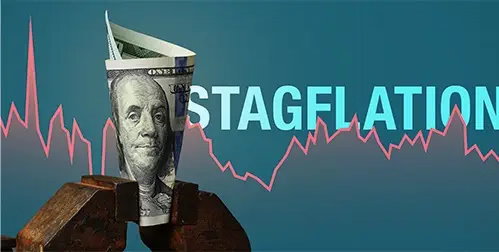
Consumer sentiment has fallen to the lowest level ever recorded since the University of Michigan began tracking the data in 1952. The index declined to 44.8 in May as Americans increasingly fear inflation, rising fuel costs, and economic instability tied directly to the expanding conflict with Iran. This is precisely how stagflation unfolds historically. War drives commodity prices higher, governments increase spending, central banks become trapped, and the population loses confidence in the future.
The political class always pretends inflation is some mysterious event. Anyone could have seen this coming. Inflation rises during periods of war and geopolitical instability because energy is the foundation of the global economy. Once oil rises sharply, transportation costs increase, manufacturing costs increase, fertilizer costs increase, food prices rise, and the entire economy begins repricing itself higher.
Americans are already seeing gasoline prices move sharply upward with analysts warning that $5 gasoline is becoming increasingly possible if instability surrounding the Strait of Hormuz continues. Roughly 20% of the world’s oil supply moves through that corridor. Reports estimate Americans have already spent tens of billions more on fuel costs since the conflict escalated. We entered into the Memorial Day Weekend with gas at a four-year high and the public is now worried that this price hike is anything but temporary. Remember that most of the public does not the know the details of the ongoing geopolitical and economic turmoil. All they know is what they see when they go to spend.
This is becoming dangerous psychologically because inflation expectations are now rising again. Once the population begins believing inflation will remain permanently elevated, confidence collapses. Workers demand higher wages simply to survive while businesses raise prices preemptively in anticipation of future cost increases. Governments then blame corporations while refusing to acknowledge that war itself is inflationary by nature.
The Economic Confidence Model has warned repeatedly that the period into 2027 would become increasingly unstable globally. Europe is already moving toward economic contraction as energy shortages and war spending weaken industrial competitiveness. Sovereign debt levels continue rising worldwide while governments simultaneously increase military expenditures. Historically, these conditions produce declining confidence in government itself.
The average person no longer believes policymakers have control of the situation. They see rising living costs, unaffordable housing, expanding geopolitical conflict, and governments continuously funding war while domestic economic conditions deteriorate. Financial markets may remain elevated because capital continues concentrating into large institutions and government-supported sectors, but the underlying population is increasingly under pressure.
CONFIDENCE collapses before economies do. Once public trust begins breaking down, political instability follows shortly afterward. That is why these numbers are far more important than most analysts currently understand. Consumer sentiment is not merely a survey. It measures confidence in the future itself, and people no longer believe the future improves from here. They see endless war, endless debt, collapsing affordability, and politicians completely detached from reality.