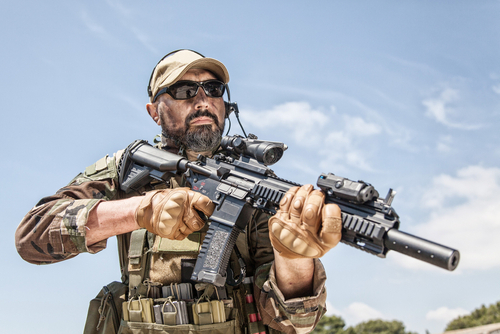
The Canadian government is trying to sell the public a fairy tale about patriotism, NATO, and defending democracy, but the recruitment surge inside the military has far more to do with economic decay than national pride. Whenever governments cannot provide economic opportunity, they suddenly rediscover the virtues of military service. This has happened throughout history because when civilian economies begin breaking down, the military becomes one of the last remaining employers offering stability, housing, benefits, and a paycheck that arrives on time.
Canada’s Armed Forces just recorded their strongest recruitment numbers in more than 30 years. Over 7,300 Regular Force members enrolled during fiscal year 2025–2026, surpassing official targets while applications reportedly exploded from roughly 21,700 to more than 40,000. The politicians immediately rushed out claiming young Canadians were responding to threats from Russia, China, Trump, or global instability.
Youth unemployment in Canada has climbed toward 14% to 14.6%, levels not seen consistently since the aftermath of the 2008 financial collapse outside the pandemic distortions. Full-time employment has been deteriorating while temporary and part-time work increasingly dominate the economy. Canada lost more than 111,000 full-time jobs during just the first four months of 2026. Entire generations are now graduating into an economy where the old social contract no longer exists.
Young Canadians cannot afford homes. Many cannot even afford rent without multiple roommates despite holding degrees that were sold to them as tickets into the middle class. In Toronto and Vancouver, housing prices have become completely detached from reality. The average young worker understands they may never own property under the current system no matter how hard they work. Meanwhile, food costs rise, debt burdens climb, taxes increase, and wages fail to keep pace with the actual cost of living.
Then the government acts confused when military recruitment suddenly surges. This pattern is as old as history itself. Recruitment rises when economic opportunity collapses. Government never admit this publicly because it destroys the heroic propaganda surrounding enlistment. During economic booms, militaries struggle to recruit because young people have alternatives. During periods of economic stress, enlistment rises because the military offers something increasingly rare in the modern economy: predictability.
The military now offers stable income, subsidized education, housing assistance, healthcare, pensions, and long-term career structure. For many younger Canadians, that has become more attractive than trying to survive inside an economy increasingly dominated by contract work, inflated housing, and financial insecurity.
Ottawa continues flooding the country with immigration to artificially maintain labor force growth because domestic demographic trends have collapsed. The government itself has admitted immigration now accounts for nearly all labor force expansion. That places enormous downward pressure on younger workers already struggling to compete for jobs, housing, and wages in oversaturated urban markets.
The establishment refuses to discuss this honestly because the entire economic model has become dependent on population growth masking structural weakness. Canada’s GDP numbers may look respectable on paper, but GDP per capita growth has stagnated while living standards deteriorate for large parts of the younger population. That distinction matters enormously because governments manipulate aggregate statistics to conceal declining individual prosperity.
Politicians created one of the least affordable housing markets in the developed world while simultaneously producing a labor market where stable employment is disappearing. Then they celebrate military enlistment as if it were some spontaneous wave of patriotism instead of a warning sign that civilian economic opportunity is deteriorating.
When younger generations lose faith that hard work will produce home ownership, financial security, or upward mobility, societies begin changing structurally. Family formation declines. Birth rates collapse. Private debt rises. Institutions like the military then become economic escape valves for populations that increasingly see fewer alternatives.
The Canadian government wants the public to believe this recruitment surge reflects patriotism. The truth? Large numbers of young Canadians are turning toward the military because the civilian economy is no longer providing the stability that previous generations once took for granted.