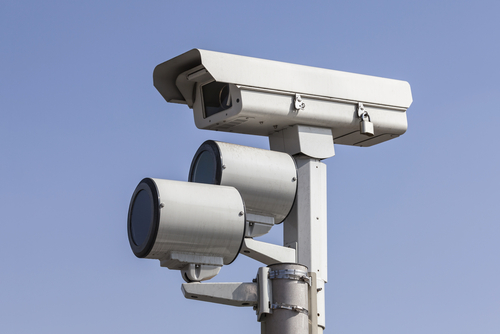
A grandmother, Angela Lipps, was arrested at gunpoint in her own home after facial recognition software flagged her as a suspect in a bank fraud case in North Dakota, a state she had never even visited. Authorities relied on AI-generated matches from surveillance footage and compared those results to her driver’s license and social media photos. That was enough to issue a warrant.
She was jailed for months, extradited over 1,000 miles, and held without meaningful review until her attorney presented simple bank records proving she was in Tennessee at the time of the alleged crime.
The case collapsed almost immediately, but by then she had lost her home, her car, and even her dog. This is what happens when governments begin to trust machines more than basic investigation.
AI is not intelligence. It is pattern recognition. It compares images, identifies similarities, and produces probabilities. It does not understand context, intent, or truth. Yet those probabilities are now being treated as evidence. That is where the system breaks down. Once a machine flags someone, the burden shifts onto the individual to prove innocence rather than on the state to prove guilt.
We have already seen this before. There have been multiple cases across the United States where facial recognition systems misidentified individuals, leading to wrongful arrests. In each case, the same pattern emerges. The software produces a match and investigators build a case around it instead of questioning it. Basic verification steps are skipped because the assumption is that the system is correct.
The problem is that people assume AI is the end-all, be-all of supreme knowledge. Every output is treated as fact. That is how you end up with someone sitting in jail for months for a crime they did not commit.
This ties directly into what we are seeing more broadly with artificial intelligence. Even inside the tech industry, there are growing concerns about how these systems are being deployed. The recent resignation of a senior figure at OpenAI raised alarms about the pace at which AI is advancing compared to the safeguards in place. Concerns were expressed about the risks of misuse, lack of oversight, and the potential for these systems to be weaponized in ways that were never intended. When those closest to the system begin warning about its misuse, it should not be ignored.
Governments are already expanding surveillance, tracking financial transactions, and building digital identity frameworks. AI becomes the engine that ties all of this together. It allows systems to flag individuals automatically, at scale, without human judgment.
Once that infrastructure is in place, the implications are enormous. You can be flagged, investigated, or even detained based on data patterns that may be incorrect. And by the time the mistake is discovered, the damage is already done.
What happened in Tennessee is a warning of what happens when accountability is removed from the process. It took minutes to prove she was innocent. It took months for the system to admit it was wrong. This is the risk of replacing judgment with algorithms.