QUESTION: What a way to start the new year with fireworks. And they waited for the markets to be closed to do it. How considerate of them.
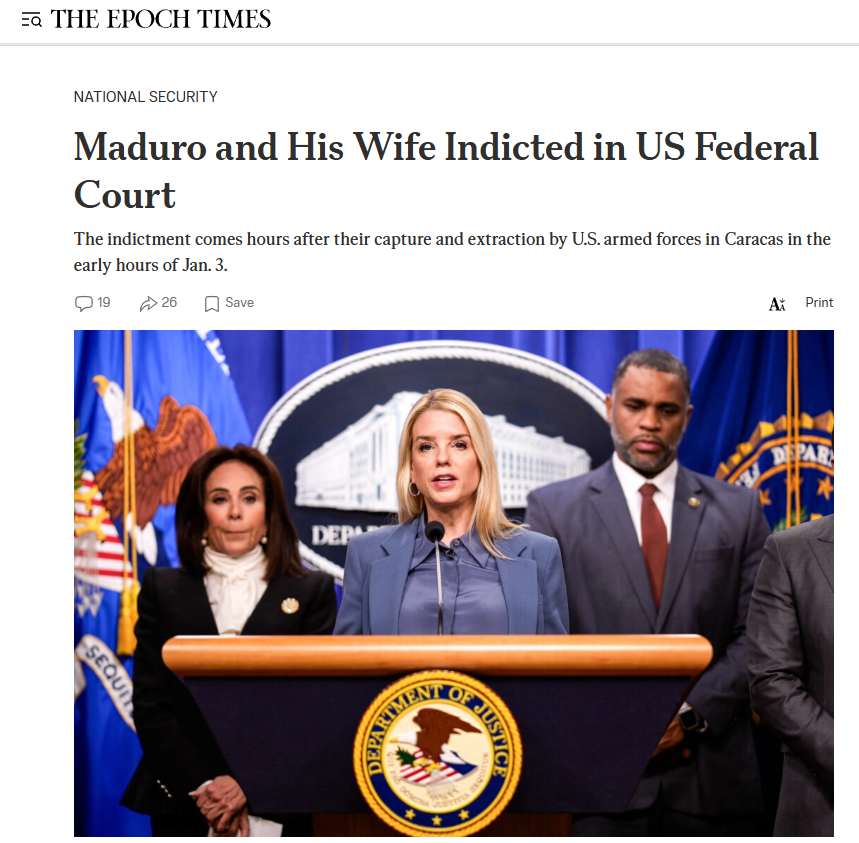
“The United States of America has successfully carried out a large scale strike against Venezuela and its leader, President Nicolas Maduro, who has been, along with his wife, captured and flown out of the Country. This operation was done in conjunction with U.S. Law Enforcement.”
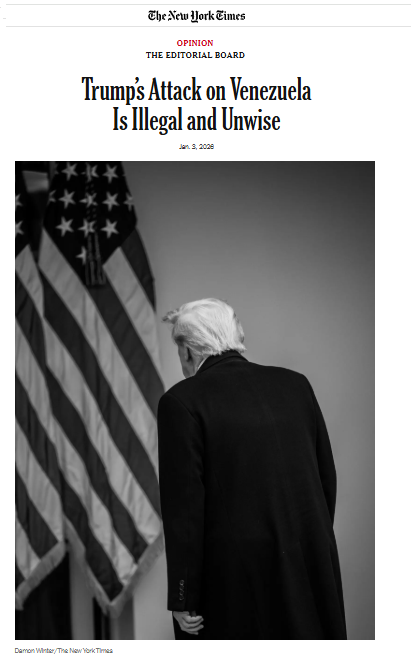
The New York Times instantly wrote:
“Mr. Trump has not yet offered a coherent explanation for his actions in Venezuela. He is pushing our country toward an international crisis without valid reasons. If Mr. Trump wants to argue otherwise, the Constitution spells out what he must do: Go to Congress. Without congressional approval, his actions violate United States law.”
What I find most curious is how biased the press is against Trump. Theodore Roosevelt and Woodrow Wilson sent U.S. Marines and sailors into Central America at least 15 times between 1902 and 1920. The 1989 U.S. invasion of Panama, code-named Operation Just Cause, which resulted in the capture of Panama’s de facto leader, General Manuel Noriega took place the same way without asking permission from Congress. That applies to a declaration of war.
President George H.W. Bush did not seek or receive a formal declaration of war or specific authorization from Congress before launching the invasion to “seize the head of Panama” (capture Noriega). He acted based on his authority as Commander-in-Chief.
Mr. Bush is followed almost exactly the Roosevelt-Wilson policies that locked the U.S. into its worst era of U.S.-Latin American relations. He copied the earlier Presidents’ use of unilateral force to overthrow the government of a sovereign country, their declarations that they were doing this in the name of democracy and their installation of a regime that owed its power to U.S. force.
The Declare War Clause (Article I, Section 8) of the Constitution explicitly grants Congress, not the President, the power “to declare War.” It is unlikely that the Founders intended to require a congressional declaration for the capture of a head of state as in the Panama invasion. The War Powers Resolution (1973) while not part of the Constitution itself, this law (passed over a presidential veto) was designed to enforce Congress’s constitutional role. It requires Consultation with Congress “in every possible instance” before introducing forces into hostilities. Reporting to Congress within 48 hours. Withdrawal of forces within 60-90 days unless Congress authorizes further action.
Critics argue that President Bush failed in the “consultation” requirement, only informing key leaders mere hours before the invasion began, which they see as a violation of the spirit and letter of the law meant to uphold Congressional authority. Proponents of this view argued that for major military actions, modern presidents have typically sought and received some form of congressional authorization (e.g., Gulf of Tonkin Resolution, 1991 Gulf War Authorization, 2001 AUMF). The absence of such authorization for Panama is seen as a constitutional breach.
The Opposing Argument: It Was a Lawful Exercise of Presidential Power
This was the position of the Bush Administration and its supporters. Commander-in-Chief Clause (Article II, Section 2) gives the President as the “Commander in Chief of the Army and Navy” this power that includes protecting U.S. citizens and interests abroad. They cited direct threats to the 35,000 Americans in Panama, the killing of a U.S. Marine, and harassment of another officer and his wife as imminent dangers requiring a swift military response.
The U.S. had treaty obligations to defend the Panama Canal. The administration framed Noriega’s regime as a threat to the canal’s neutrality and to U.S. strategic interests, justifying the use of force as an act of national self-defense, which falls within the President’s inherent authority. There is a long history of presidents using military force without a congressional declaration of war (e.g., Jefferson against the Barbary pirates, numerous Cold War interventions). They argue this establishes a constitutional precedent for the executive to act in defense of U.S. interests, especially in limited, short-term engagements.
The Bush administration maintained it complied with the law by reporting to Congress promptly (within 48 hours). They considered the prior “consultation” with a handful of congressional leaders as meeting the requirement, though many in Congress disputed the adequacy of that consultation.
The courts have historically been reluctant to adjudicate “political questions” involving war powers, and no lawsuit on the Panama invasion reached a definitive Supreme Court ruling. Therefore, there is no legal precedent from the judiciary. While some in Congress were furious, the operation was swift, successful, and popular with the American public. Congress held hearings but took no action to challenge or restrain the President, such as cutting off funding. This political ratification after the fact is often seen as a de facto acceptance of the action.
In theory, Congress’s ultimate constitutional check is the power of the purse and impeachment. By not using these tools, Congress effectively allowed the President’s interpretation of his powers to stand in this instance. From a strict constitutional theory perspective (emphasizing Congress’s sole power to initiate war), the capture of Noriega via a full-scale invasion can be argued as a violation. From a historical and practical executive power perspective (emphasizing the President’s role in responding to threats), it is argued as a lawful action.
The invasion of Panama remains a key case study in the unresolved tension between Article I and Article II war powers. It demonstrates how presidential initiative, combined with congressional inaction and public support, can effectively expand the boundaries of executive authority without a clear constitutional settlement.
Trump has the protecting American lives because of the flood of drugs that have been orchestrated from Venezuela and the Democrats lamenting about killing people on drug boats rather than the concern about Americans dying from the drugs.
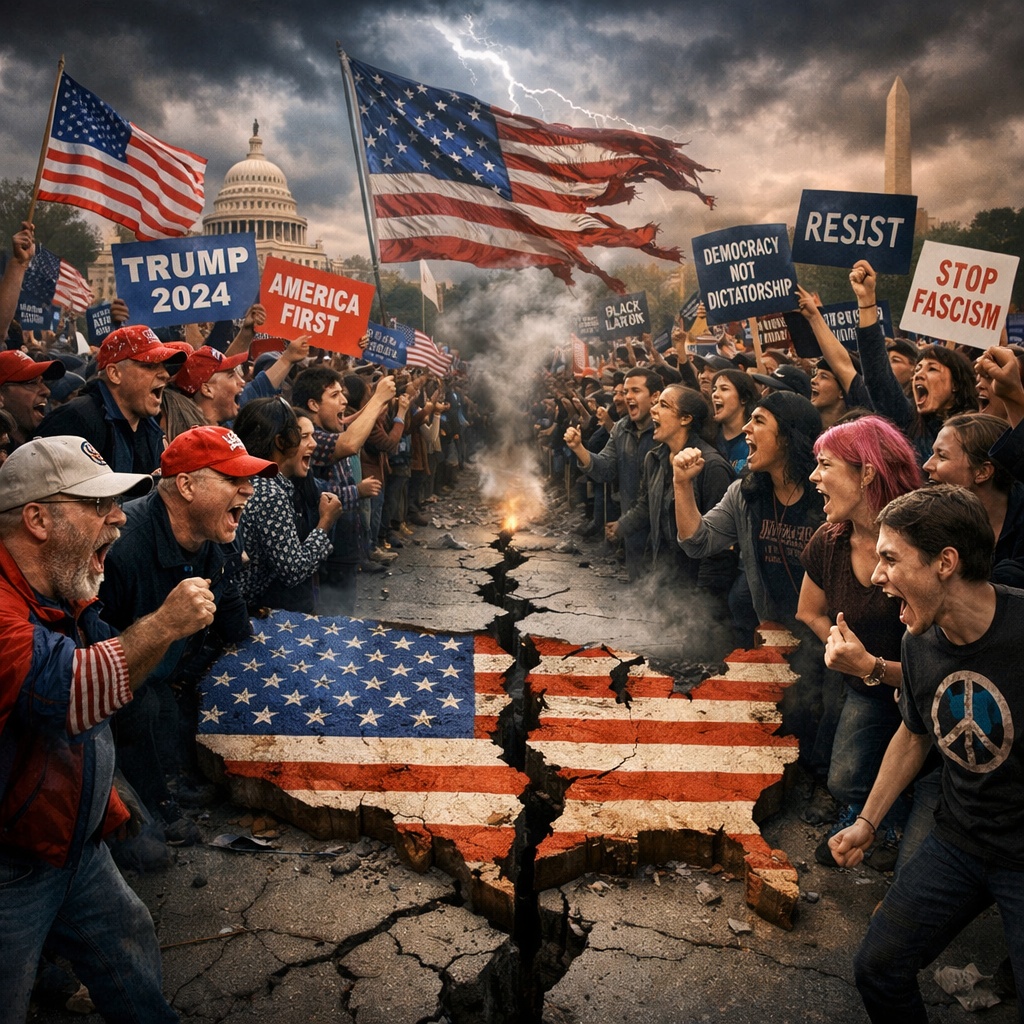
This is all illustrative of the deep seated polarization in politics. The United States is now so divided, it is like Iran vs Israel. There is no possible way to unite the nation. This is why the United States will eventually divide. Each side sees only their view and there can never be any compromise.