Postumus
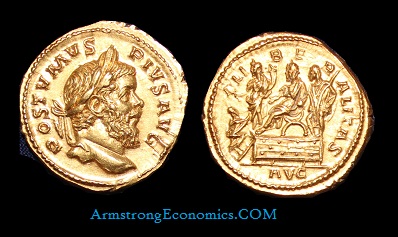
260-268 AD
Marcus Cassianius Latinius Postumus was a soldier who rose to the rank of commander in the Rhine legions under the emperor Valerian I (253-260AD). It appears that perhaps when Valerian I was captured during the spring of 260AD by the Persians, the first emperor ever to be captured in battle. This undermined the CONFIDENCE in the government, which then passed to Valerian’s son, Gallienus (253-268AD).
Later in 260AD, Postumus, then governor of Germania Inferior, defeated a large band of Frankish and Alemanni raiders who had broken through the Rhine frontier and were returning laden with plunder from Gaul. Postumus‘ forces intercepted them and recaptured this vast treasure. A dispute then emerged given the dire financial tensions in the aftermath of Valerian’s capture. Postumus’ victorious troops expected to keep it as their rightful reward (praemia militiae), a standard practice to maintain morale.
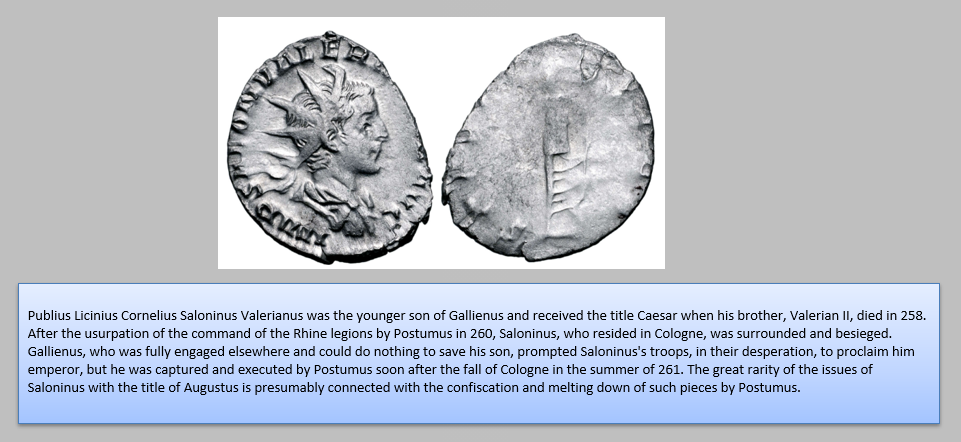
However, Saloninus, the young son of Emperor Gallienus who was stationed in Cologne as a figurehead, and his guardian Silvanus, insisted that the treasure be sent to them. Their argument was likely that it was state property that should be returned to the imperial treasury (and redistributed by the central authority). Postumus’ army saw this demand as a profound injustice—a denial of their hard-won reward by distant officials who hadn’t fought and Saloninus was just a young boy not really in charge. The troops, fearing the loss of their prize, immediately declared Postumus emperor and marched on Colonia Claudia Ara Agrippinensium (Cologne).
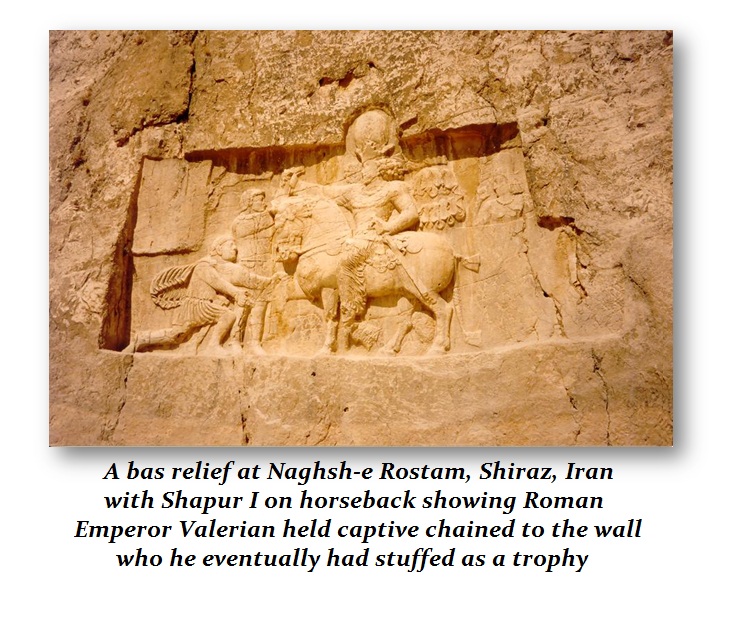
This was the moment when Postumus made his move, and the troops did not support Gallienus as Valerian’s successor, no less than Saloninus. Confidence in the government simply collapses following the Persians’ capture of Valerian I. In Egypt, bankers were unsure if Roman coins were still valid. This was the first Roman Emperor to be captured and turned into a slave, and Gallienus could do nothing to rescue him.
Hence, the collapse in confidence led to hoarding, as other barbarians were now emboldened to invade. The currency moved through a hyper-inflationary phase, which unfolds when confidence in the government implodes. The coinage of Rome fell dramatically in weight due to the gold issues, and silver virtually disappeared. The silver antoninianus was reduced to a crude bronze coin merely coated with a silver wash.
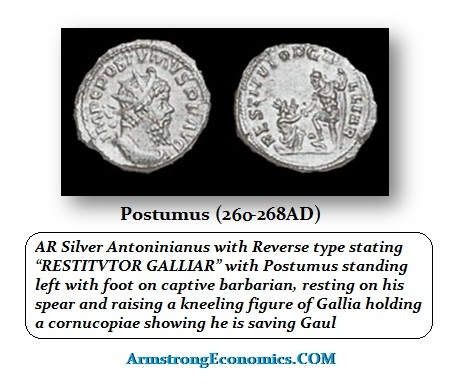
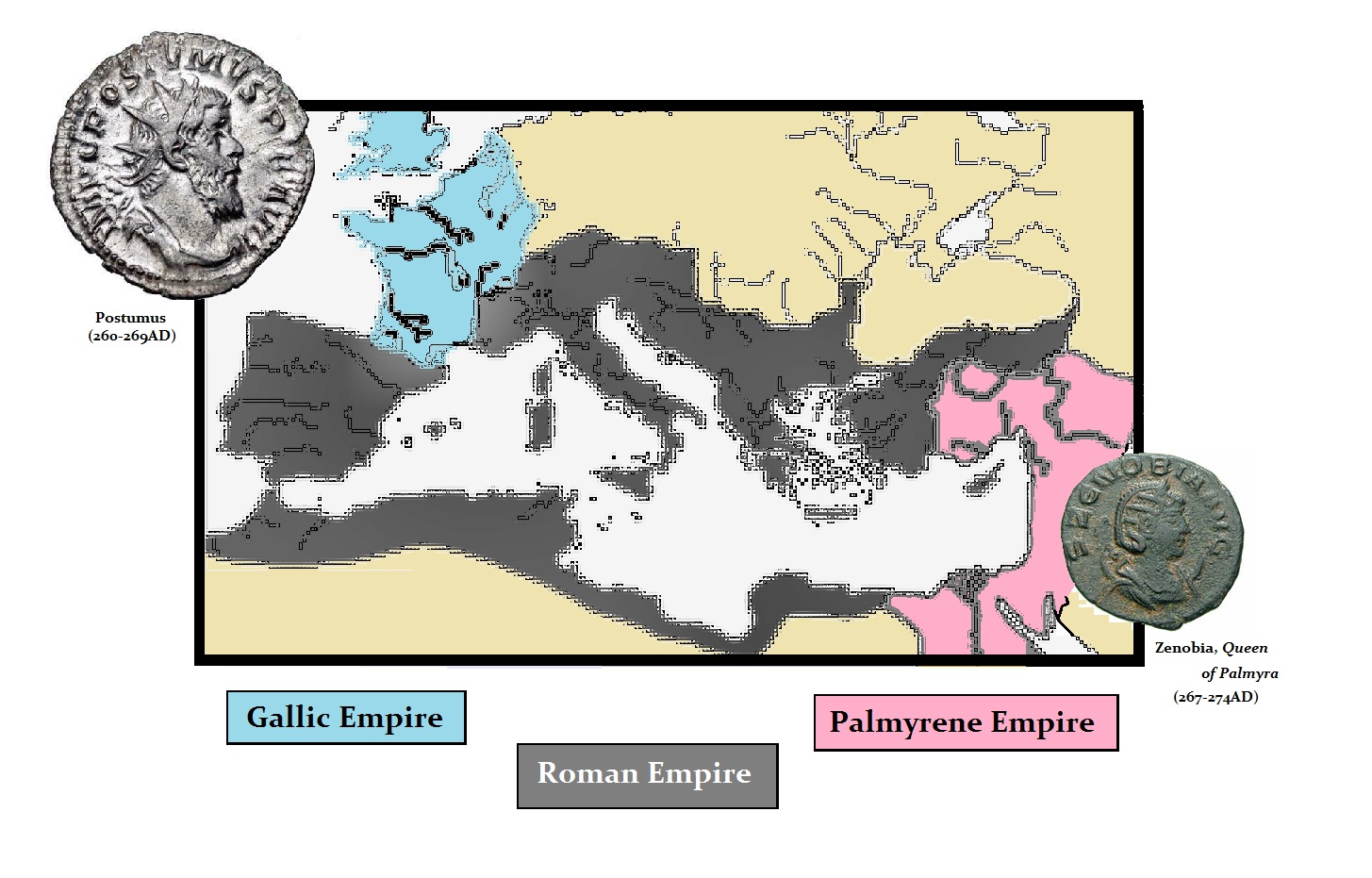
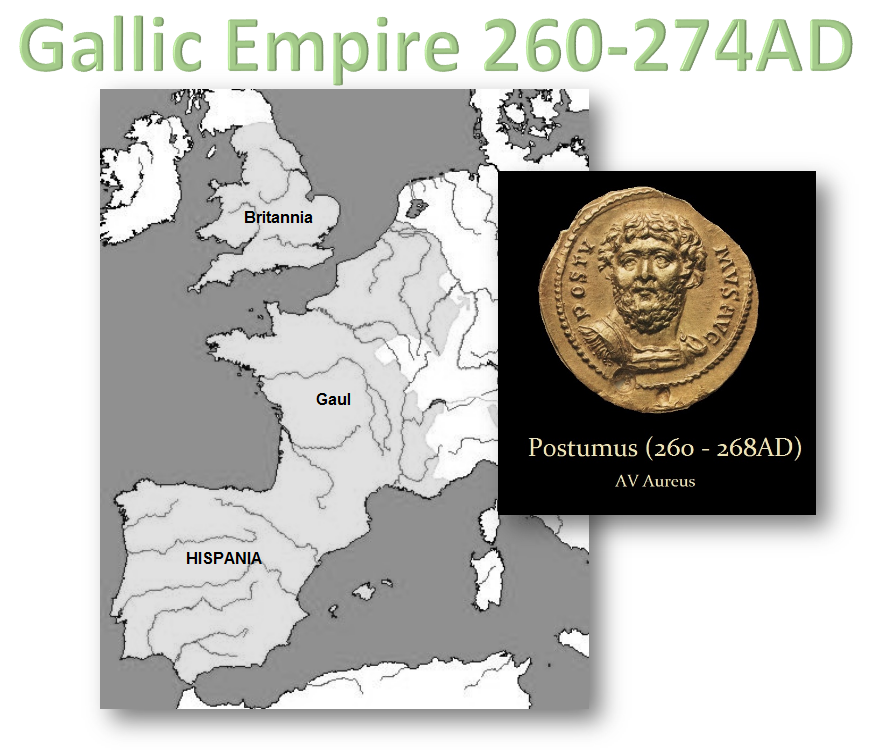
In 260AD, Postumus led a rebellion against Emperor Gallienus,, heir and son of Valerian I. Postumus captured Gaul, Spain, and Britain, beginning what historians would later call the first Gallic Empire, which would last for almost a decade. Here is a silver antoninianus. The reverse side states, “RESTITVTOR GALLIAR,” with Postumus standing left with his foot on the captive barbarian, resting on his spear, and raising a kneeling figure of Gallia holding a cornucopia. This portrays him as the great restorer of order and savior of Gaul. This goes directly to the emerging political instability. His rebellion was by no means an attempt to seize the empire, but rather to break away from Rome and establish the Gallic Empire.
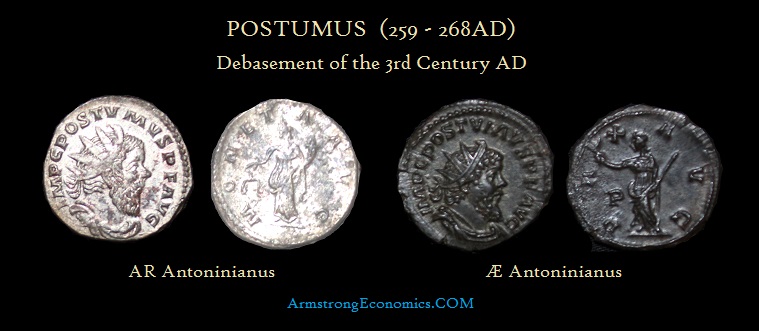
Postumus made a valiant attempt at reforming the coinage within his new realm. At first, his coinage was struck in a full silver-white metal. He reintroduced the bronze double sestertius and struck dupondius, as well as a few denarii. However, as time passed, the financial decay that was taking place all around the Roman Empire was impossible to prevent, even in his new Gallic Empire. Postumus’ silver coinage gradually declined, and it, too, was reduced to a copper alloy with a silver wash.
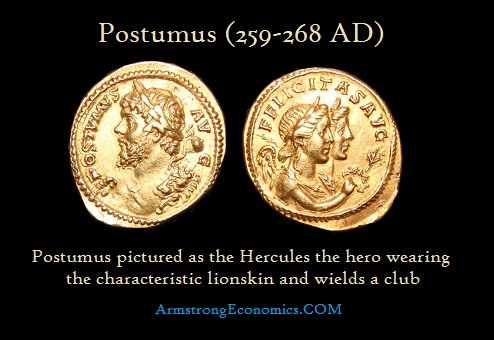
Postumus was also one of the first emperors to portray himself with Hercules, unlike Commodus who may have believed himself to be Hercules. Nonetheless, Hercules was very much the Greek god who was similar to that of Christ insofar as he was the protector of the average man and the son of a great god in human form. Thus, the illustration above shows Postumus side by side with Hercules, drawing the image of Postumus as the protector of the Gallic people from the corrupt and decaying Roman Empire.
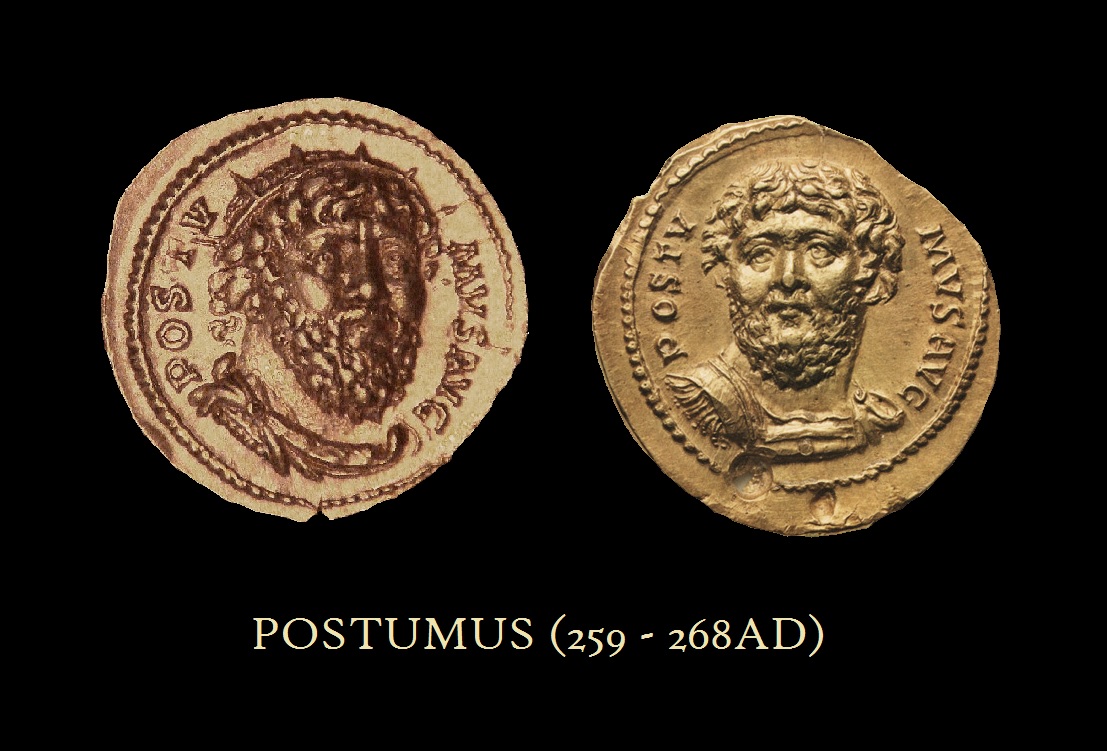
Interestingly, we also find incredible artistic talent among the ranks of the Gallic Empire. We have amazing frontal portraits of Postumus, which were unsurpassed in quality design and execution.
Postumus also successfully drove back the German tribes from the Rhine frontier. However, he was also able to hold off Gallienus, who repeatedly attempted to recover the lost Roman provinces.
In 268 AD, Laelianus led a rebellion against Postumus from within the Gallic Empire. However, Laelianus was quickly defeated and destroyed. Unfortunately, Postumus broke with an old Roman tradition, refusing to allow his troops to sack the usurper’s city of Moguntiacum (Mainz). This decision proved to be disastrous and ultimately led to his own assassination.
Titles and Powers, 259-268 AD
Yr Tribunician Power Consulship
259 TR.P. COS
260 TR.P.II. COS. II
261 TR.P.III. COS. III
262 TR.P.IIII. COS. III
263 TR.P.V. COS. III
264 TR.P.VI. COS. III
265 TR.P.VII. COS. III
266 TR.P.VIII. COS. III
267 TR.P.VIIII. COS. IIII
268 TR.P.X. COS. V
Monetary System
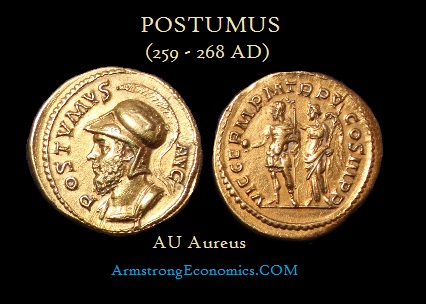
Mints: Lugdunum; Cologne; Milan
Obverse Legends:
POSTVMVS AVG
POSTVMVS PIVS AVG
IMP POSTVMVS AVG
IMP C M CASS LAT POSTVMVS P F AVG
IMP C POSTVMVS PIVS F AVG
DENOMINATIONS
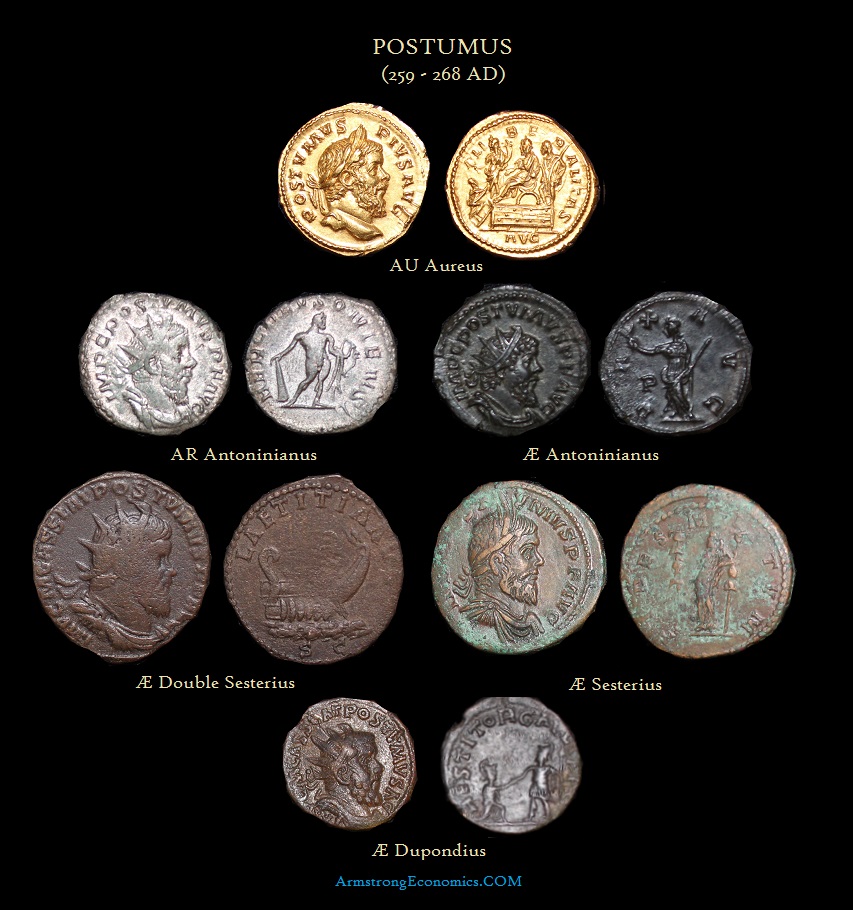
AU Aureus (6.94 grams)
AU Quninarius (3.04 grams)
AR Antoninianus (3.50 grams)
Æ Antoninianus (2.66 grams)
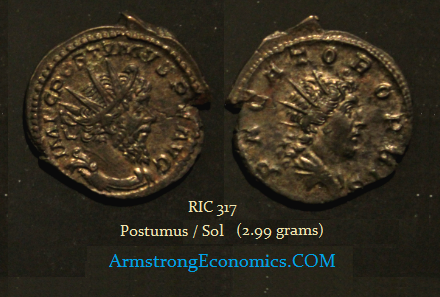
Æ Antoninianus (Radiate head rt/Sol)(2.66 grams)
AR Denarius (1.50 grams)
Æ Denarius (1.50grams)
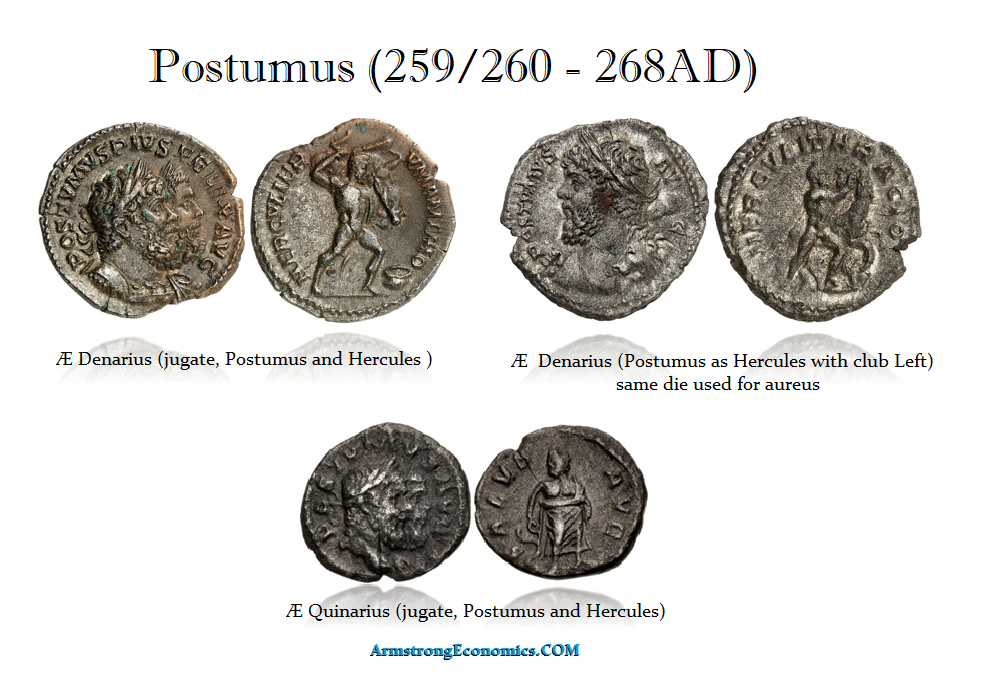
ÆDenarius (Jugate Bust Hercules right; Exceptionally Rare)
Æ Denarius (Postumus as Hercules with club Left) (Aureus dies)
AR Quinarius (1.08grams)
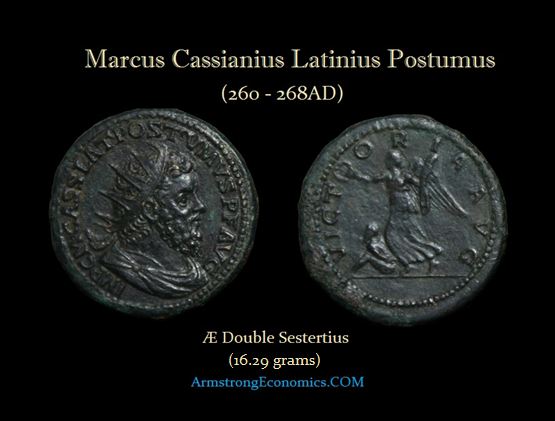
Æ DOUBLE Sesterius (20.3 grams)
Æ Sestertius (14.1 grams
Æ Dupondius (6.61 grams)
Æ As
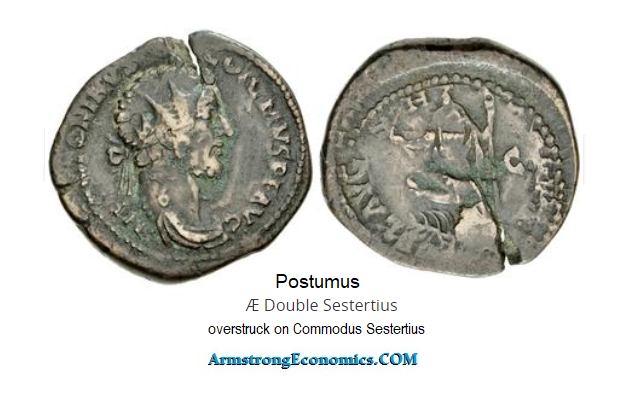

Æ DOUBLE Sesterius (overstruck on a Sestertius of Commodus 21.51 grams)
NOTE: This demonstrated that the Double Sestertius reflected the value of the old Sestertii in circulation.
Contemporary Imitations
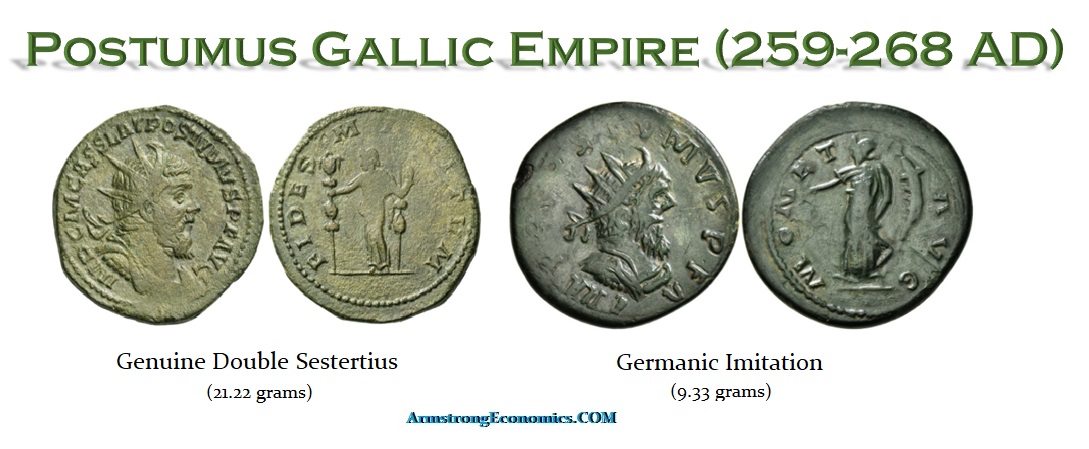
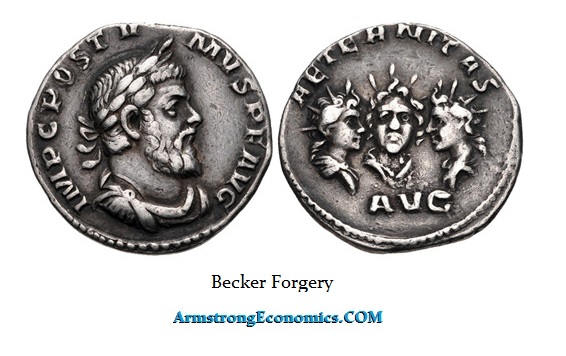
BECKER FORGERY
Monetary History of the World
© Martin A. Armstrong