
Join Us at the World Economic Conference in Orlando, Florida! Nov. 17-19, 2023
Join Us at the 2023 World Economic Conference in Orlando, Florida!
? Dates: November 17, 18, and 19 ? Location: Orlando, Florida, USA (or tune in from home with our virtual ticket options)
Are you ready to unlock the future of economics and finance? Prepare for an unforgettable World Economic Conference experience in sunny Orlando, Florida! This premier event is your gateway to insights, networking, and valuable resources that will supercharge your understanding of the global economy.
?️ What’s Included for In-Person Attendees:
- Event Admission: Enjoy reserved seating assigned based on the order of ticket sales, ensuring you have a prime view of every presentation.
- Presentation Slides: Gain access to the presentation slides from all speakers, allowing you to delve deeper into the topics discussed.
- Video Recording: Can’t make it to a session? No worries! You’ll receive access to video recordings of all conference presentations, so you can catch up at your convenience.
- WEC Event App: Connect with the conference on a whole new level. Access presentation slides, bonus reports, recordings, and more via the official WEC Event App.
- Bonus Conference Materials: Get a package of bonus conference-related materials, including exclusive bonus reports and videos (as provided by Martin Armstrong).
- Morning Information Sessions: Don’t miss out on important morning information sessions, screened on-site in the meeting room on Saturday and Sunday.
- Networking Opportunities: Exclusive access to the Event App Networking Feature allows you to connect with fellow attendees, both in-person and virtual, fostering valuable professional relationships.
- Culinary Delights: Savor delicious breakfast and lunch on Saturday and Sunday, prepared to keep you energized throughout the day.
- Cocktail Reception: Kick off the conference in style at our Friday evening cocktail reception. Meet and mingle with fellow attendees while enjoying refreshing drinks.
- Swag Bag: As a token of our appreciation, each in-person attendee will receive a swag bag filled with goodies, including an Armstrong Economics notebook, pen, and an event collector’s mug!
Unable to travel? We also have two different ticket options for those wishing to attend virtually!
Don’t miss this opportunity to be part of a global gathering of economic and financial minds. Secure your spot at the World Economic Conference in Orlando, Florida, and gain the knowledge, connections, and resources you need to thrive in the world of finance and economics.
Space is limited, so act now and reserve your seat! Visit our Events page to register and join us in sunny Orlando this November.
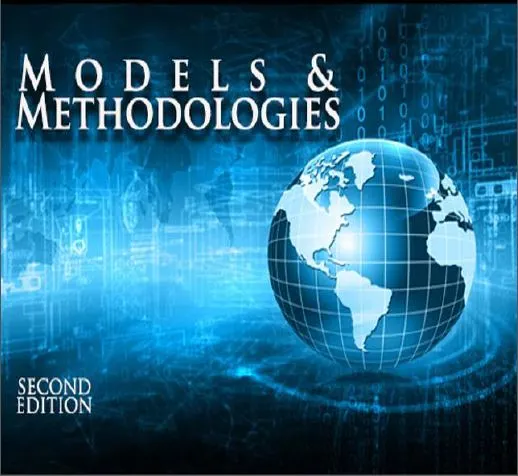


NEW BOOK Now Available : "Mark Antony & Cleopatra"
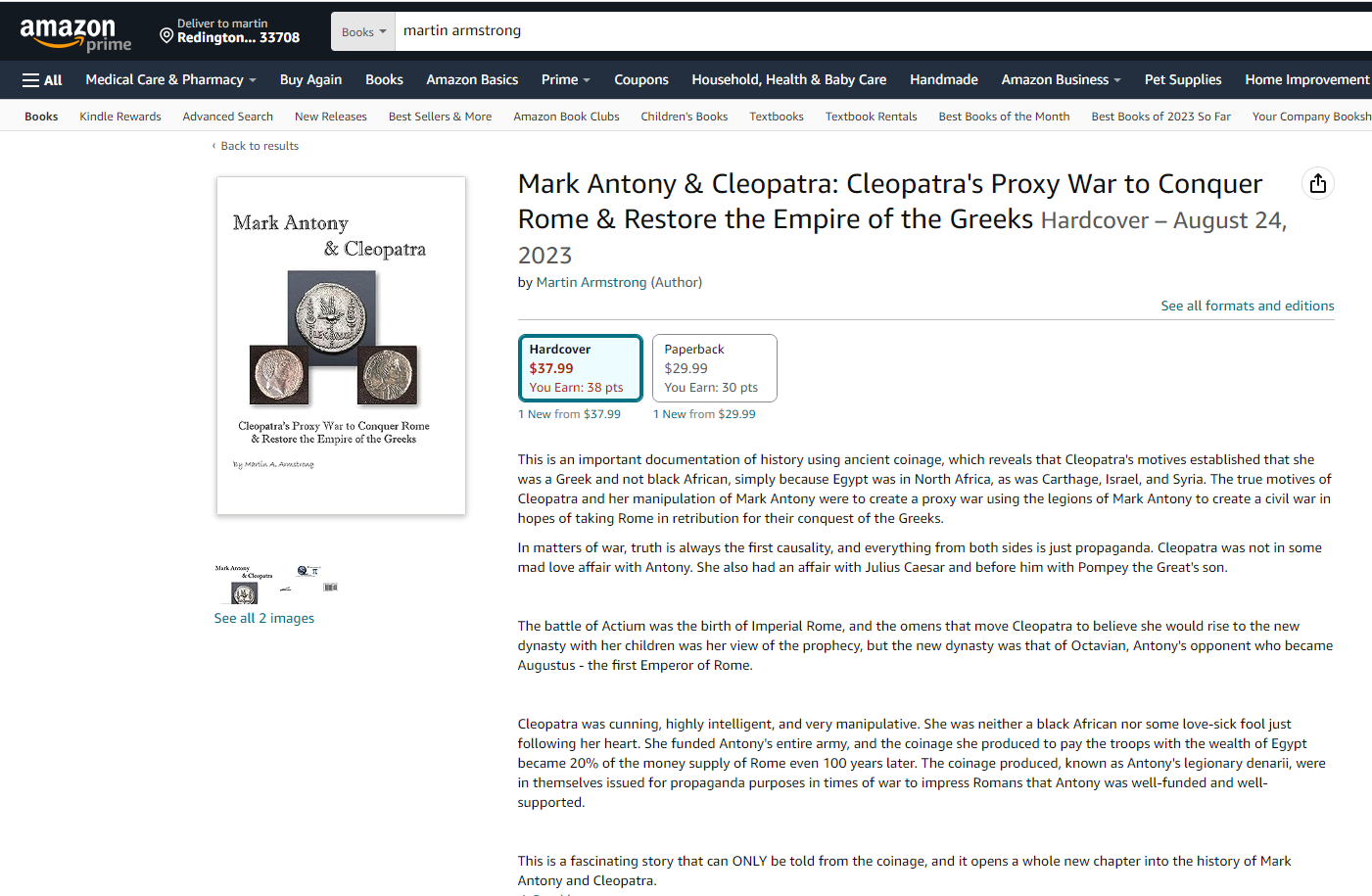
"THE PLOT TO SEIZE RUSSIA - THE UNTOLD HISTORY"
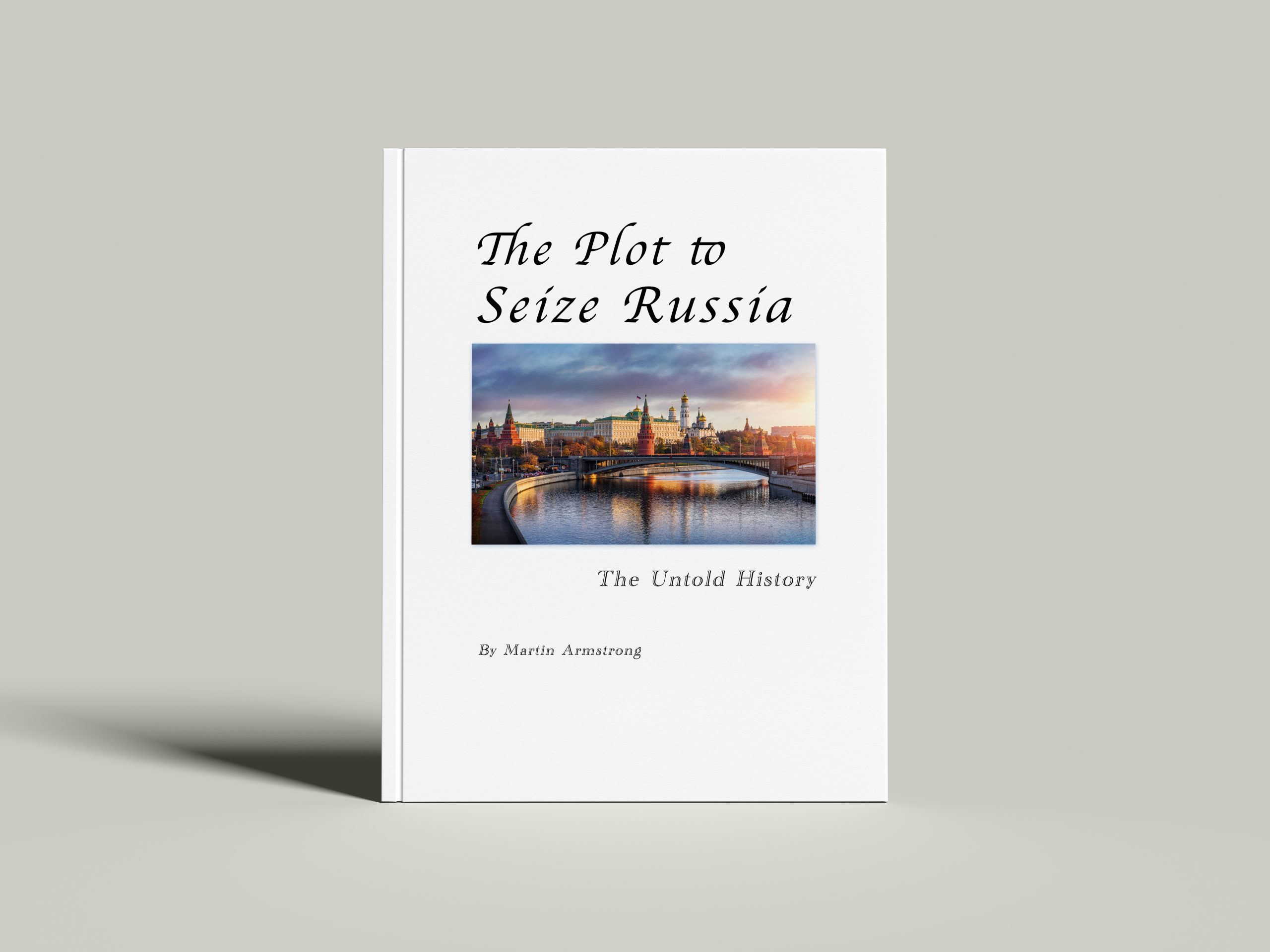
The second edition of “The Plot to Seize Russia – The Untold History” is now available for purchase in paperback and hardcover on Amazon and Barnes and Noble. The ebook will be available shortly.
Book description:
“Take care of Russia,” Boris Yeltsin said as he departed his presidency in August 1999. These words were directed at current Russian president, Vladimir Putin. Yeltsin specifically picked Putin as his predecessor to prevent the takeover of Russia.
So, who was Yeltsin warning against? Newly declassified documents from the Clinton Administration prove that there was a plot to rig the Russian election of 2000. These never-before-seen documents confirm numerous attempts to implement pro-Western policies using the Russian oligarchy headed by Boris Berezovsky.
On the other side were the communists who desired a return to the glory days of the Soviet Union. As one of the largest international hedge fund managers, author Martin Armstrong found himself in the middle of perhaps the greatest espionage, or attempt at a regime change for Russia, in modern history.
The Plot to Seize Russia pulls back the curtain to expose the most extraordinary attempt to seize power in modern history, but with the pen rather than armies. These declassified documents reveal a plot that has altered our thinking about the relations between the United States and Russia. The thirst for power comes seething through every line of these papers that alter our perception of reality, change the course of history, and now threaten us with World War III.
Inflation Is Rising on Top of Inflation
The September Consumer Price Index has come in at 3.7%, up from 3.4% in August, with prices rising another 0.6% in a single month. The Bureau of Labor Statistics reported the largest monthly increase in five months, driven primarily by energy. Gasoline jumped 9.1% in September alone, accounting for more than half of the monthly increase, while the overall energy index rose 5.2%. The politicians and economists continue talking about inflation as though these monthly reports represent the entire cost-of-living problem. They seem incapable of understanding that Americans are paying these increases ON TOP of the massive inflation that has already accumulated since 2020.
The breakdown of September inflation illustrates just how unevenly these increases are hitting consumers. Energy prices are now 20.4% higher than a year ago, gasoline has surged 34.2%, and fuel oil has exploded 74.2%. Airline fares have risen 22.4%, while education is up 3.8% and shelter another 3.2%. These are not insignificant expenses that households can simply eliminate. People must drive to work, heat their homes, pay their mortgages or rent, and purchase the necessities of life. The government can exclude food and energy to produce its preferred core inflation figure of 2.6%, but nobody gets to exclude those expenses from their household budget.
The cost of living was already elevated before this latest surge. The inflation accumulated during the pandemic never disappeared. Prices did not return to 2020 levels simply because the annual inflation rate temporarily declined. When a household is already paying roughly 30% more for many everyday expenses than it did before the pandemic, another 3.7% increase means the purchasing power of its income deteriorates further. This is why the public becomes increasingly angry when politicians announce that inflation is improving. They are discussing the RATE of increase while the public is struggling with the actual PRICE of everything.
Energy is now feeding another wave of inflation throughout the economy. The disruption caused by the conflict involving Iran has pushed fuel costs higher, and that expense does not remain confined to the gasoline pump. Diesel moves the trucks that deliver food, supplies the agricultural industry, and supports construction and manufacturing. When transportation becomes more expensive, those costs eventually work their way into everything from groceries to building materials. The Fed cannot manufacture oil, reopen shipping routes, or resolve geopolitical conflicts by raising interest rates another 25 basis points.
Meanwhile, the labor market is showing signs of weakness. September payroll growth was only 29,000, and unemployment stood at 4.2%. The economy is producing insufficient employment growth to give workers confidence that they can simply demand higher wages to offset these rising costs. This is the squeeze that conventional economic theory continually fails to address. Consumers face higher prices while employment conditions weaken, and raising interest rates to combat inflation can make financing even more expensive for businesses already struggling with energy and operating costs.
Washington is also the largest borrower in the economy, yet nobody seriously expects Congress to stop spending. The federal government continues accumulating debt, paying more to service that debt, and competing with the private sector for capital. The Federal Reserve can influence short-term rates, but it cannot control government deficits, international capital flows, energy supplies, or the willingness of businesses and consumers to spend. The academics continue pretending that inflation is something they can fine-tune through monetary policy while ignoring the fiscal and geopolitical forces driving the economy.
The September report is particularly troubling because inflation is accelerating at a time when the Fed has already reversed its previous easing policy. The bond market is watching these numbers because investors must consider whether the yield on government debt adequately compensates them for inflation. Washington wants lower borrowing costs, but global capital has no obligation to finance the government at artificially low rates simply because politicians have accumulated debts they cannot afford to service.
Americans are being told to accept permanently higher prices while government continues spending as though money has no cost. Inflation destroys purchasing power gradually, and the damage compounds year after year. The September CPI report is another reminder that bringing inflation down to 2% would not undo the enormous increase in living costs already imposed upon households. The government can celebrate a lower inflation rate whenever it arrives, but the American consumer will still be paying the accumulated bill.
Zelensky – No Peace
COMMENT : I honestly have to commend you for reporting the actual truth. You are the only one reporting the reality of Ukraine. It does appear that Trump is starting to listen to you, hopefully. Everything you have said—from Iran to Zelensky being the problem rather than Putin—runs counter to all the European press. The fake news is becoming so obvious. I now understand your forecast for 2032. We have to go through this chaos to achieve political reform.
Thank you, God bless.
Terry
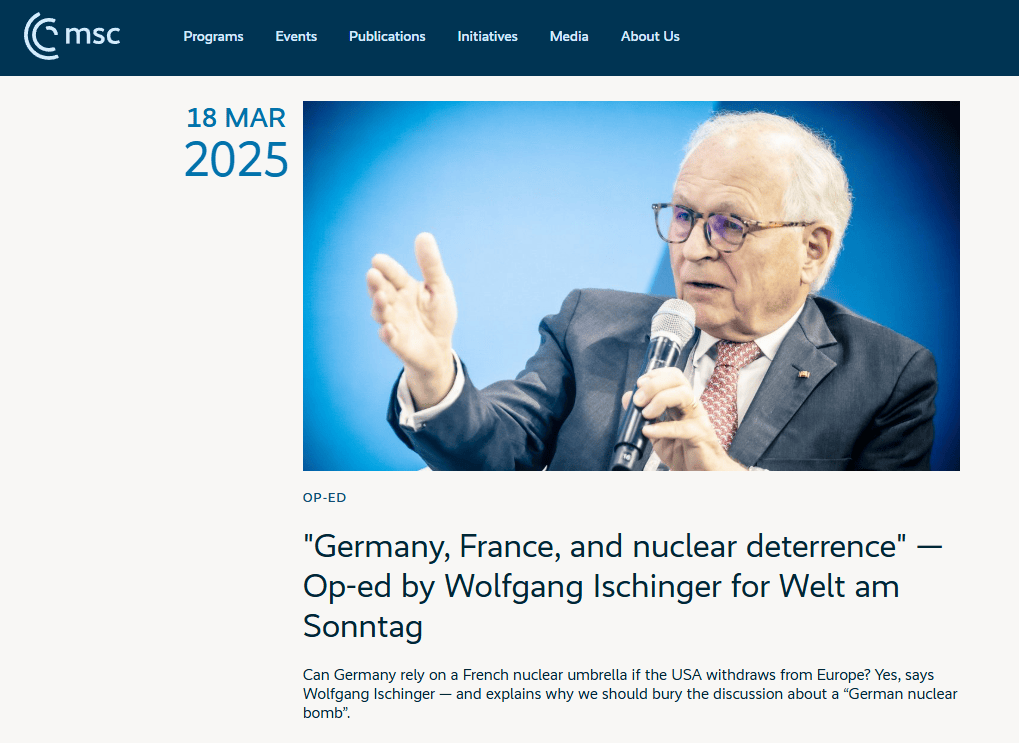
REPLY: I am not 100% sure whether Trump is listening or whether he even knows where this advice is coming from. The computer simply does NOT show peace ahead. You have the most conflicted heads of state across so many countries—and the EU itself—such that peace is just not in their self-interest. Kaja Kallas has labeled Russia a fundamental threat and accused Moscow of “nuclear saber-rattling” over its deployment of the nuclear-capable Oreshnik missile. She has stated that Europe should debate its own nuclear deterrence, calling it “the only thing that really works as deterrence.” Let’s get real. Russia has more nukes than anybody, but that has provided no deterrence whatsoever. What I have constantly heard was that Putin would NEVER push the button, so NATO can just walk in, conquer Russia, destroy their government, and it will be a cakewalk.
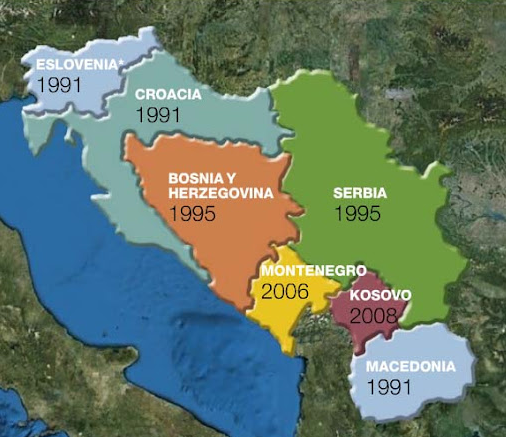
I have warned that European leaders are completely out of its mind. They are NOT interest in peace for all they had to do was honor the peace agreement that they signed – the Minsk Agreement. The way to siolve this war is the same as Yugoslavia. Allow each region the separate according to culture and ethnicity. The Donbas was to be allowed to vote and separate.
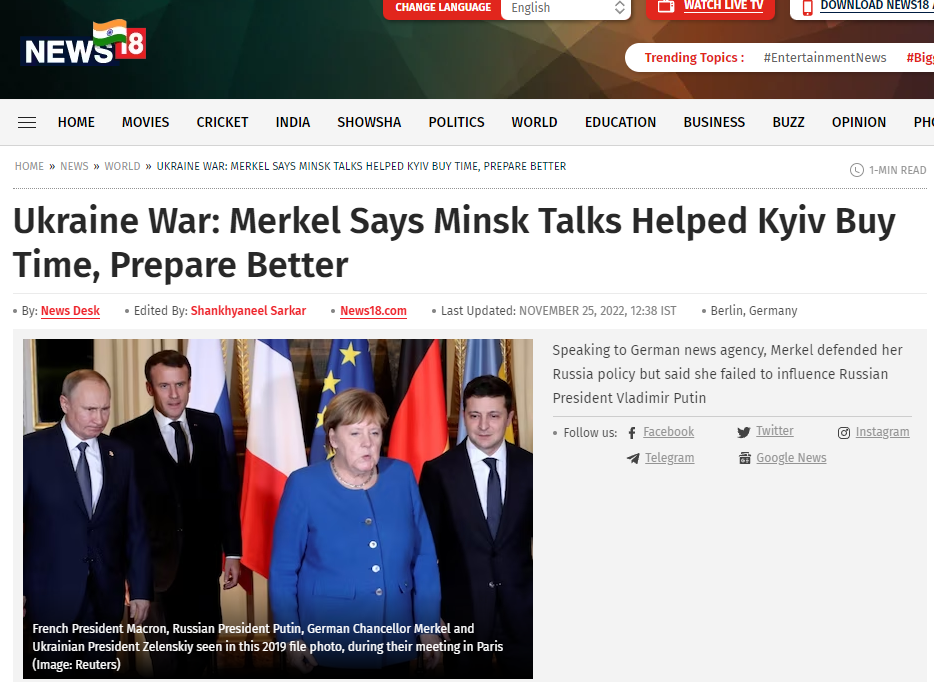
Europe wanted this war. Merkle made that very clear. They signed the peace agreement and NEVER intended to honor it. These European leaders will get their wish. But this is NOT going to save the European Union government in Brussels.
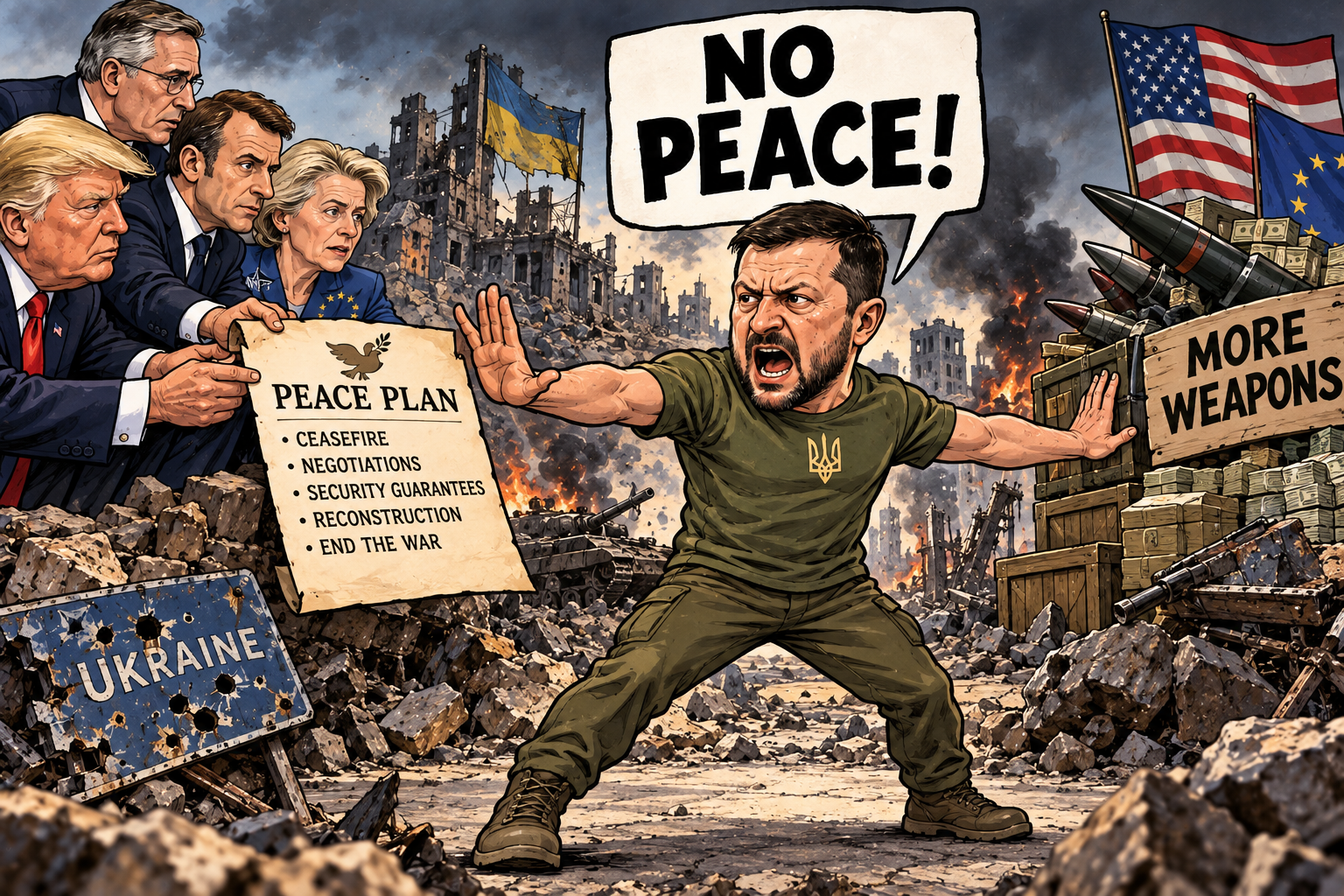
I have made it clear that all my sources and the computer have laid it out – Zelensky is the problem. He takes his orders from the EU, NATO and UK. As long as he remains in office, he continues to take money putting into offshore accounts and there may in fact be kickbacks to European leaders who put their own people a risk and refuse to accept any peace deal. Something is just not right.
Technical Analysis Session WEC 2026
QUESTION: Marty,
I was watching the video of your 1996 World Economic Conference, particularly the technical analysis session, and it brought back some remarkable memories. At the time, everyone was calling for a bear market in gold, yet you focused on $368 as the critical number. Gold closed 1996 at approximately $369.
You insisted that there was no major bear market developing and identified $250 as the key support level. Gold eventually reached that level in 1999, and I bought at the low. Quite frankly, you paid for my house!
You also projected that gold would eventually reach $1,200, which it did in 2009. Looking back, that conference was 30 years ago, and the accuracy of those long-term forecasts remains extraordinary.
I will certainly be attending the conference this year, and I am bringing my son. I want him to experience firsthand what I have witnessed over the decades.
I am amazed that you still have the energy and determination to keep going. I only wish governments would listen to you instead of continuing this endless political and economic nonsense. You are indeed the forecaster.
I also hear that you are interviewing several big-name actors to portray you in the upcoming Hollywood film. Will there be an opportunity for your readers to invest in the production?
Pete
REPLY: Thank you for your kind words. I have always maintained that I am just a trader. I am not an academic sitting in an ivory tower trying to force the world to conform to some theoretical model. I learned long ago to listen to the markets because the markets are NEVER wrong. It is our interpretation of them that can be wrong especially when you rely on fundamental reasoning when markets can move on rumor or innuendo.
The rudimentary problem throughout history has been the arrogance of those who believe they can manipulate society, control human behavior, and dictate how markets should function. This mentality became deeply entrenched with Marx and Keynes, whose theories encouraged governments to believe that they could manage the economy through political intervention.
Look at sanctions. Politicians continue to insist that economic sanctions will force governments to surrender to their demands. Yet history repeatedly demonstrates how ineffective they can be at achieving their stated political objectives.
The United States began imposing sanctions on Cuba in 1960. More than six decades later, the sanctions remain in place, and the political system they were intended to change has survived. All they did was punish the people. Had the people prospered, then they would have demanded political change.
Yet governments continue returning to the same policy, expecting a different result. That is the definition of insanity.
This is the problem with political ideology. When a policy fails, politicians rarely question the underlying theory. Instead, they insist that the solution is to impose even more restrictions, more regulations, and more government intervention.
Markets reflect the collective decisions of millions of people. Governments attempt to override those decisions through political decree. That is why I have always trusted the markets rather than the theories of academics or the promises of politicians.
The objective is not to impose our personal opinions upon the future. It is to understand what the markets are telling us about the future.
That is the distinction between forecasting and ideology.
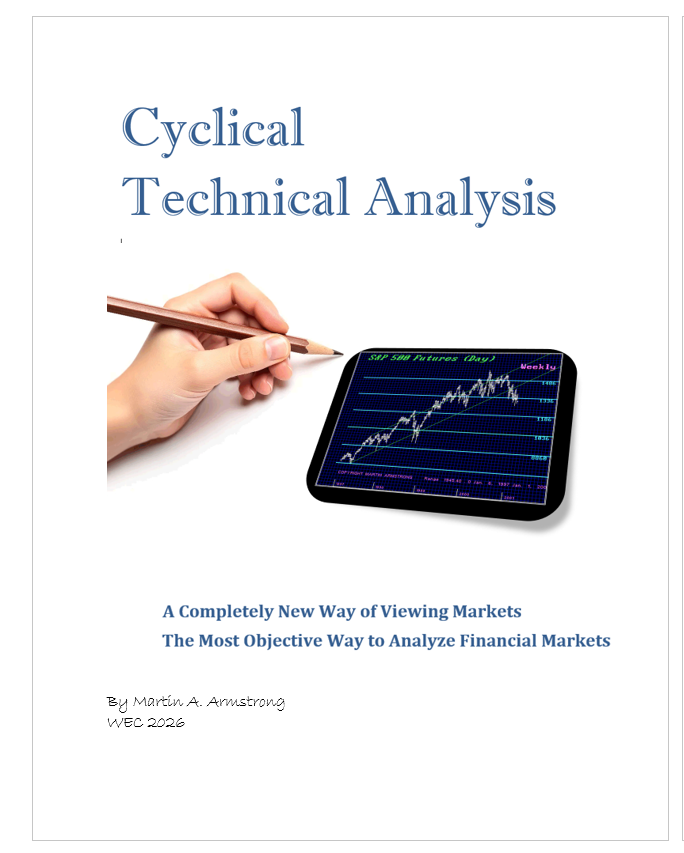
Yes, I will be conducting a Cyclical Technical Analysis session at this year’s conference. What I have developed over the decades is not conventional technical analysis. Most technical analysts focus almost exclusively on price, looking for patterns and indicators while largely ignoring the most critical dimension of all—TIME.
Markets function through the interaction of TIME and PRICE. They have their own language, and they speak loudly and clearly if you learn how to listen. The problem is that most people approach markets with preconceived opinions rather than allowing the markets to reveal what is unfolding.
This will probably be the last time I personally conduct such a session. I may not have turned gray, but that appears to run in my family. President Ronald Reagan was another example of someone who retained his natural hair color into old age. Reagan had Irish, Scottish, and English ancestry. Hair pigmentation is strongly influenced by genetics, and some people begin turning gray in their twenties while others retain their natural color well into their seventies and eighties. There is no single Scottish or Irish gene that prevents graying.
Nevertheless, I have reached the point in life where I recognize that time is finite, even if my hair refuses to acknowledge it.
What has always fascinated me is the arrogance of those who believe they can control the world economy. I have been accused of having too much influence over markets simply because my forecasts have often been contrary to government policy. They cannot comprehend that a forecast can emerge from quantitative analysis rather than personal influence.
The CFTC even accused me of manipulating the world economy, as if identifying a trend somehow creates that trend. That reflects the fundamental problem with their thinking. They assume that because they seek to influence and manipulate markets, everyone else must be doing precisely the same thing.
They cannot distinguish between forecasting an event and causing it.
Instead of listening to what I have been saying and attempting to understand how markets actually function, they continually try to control them. When their interventions fail, rather than question their own assumptions, they look for someone to blame.
Apparently, it is easier to blame the messenger than admit that the underlying theory was wrong.
I have long argued that this is also why certain people would prefer that the mainstream media never report my forecasts. In my view, they fear that the public might begin questioning the official narrative when market movements contradict government expectations. Whether that resistance is deliberate or simply institutional arrogance, the result is much the same.
The entire problem comes down to their inability to understand that you cannot reduce the world economy to a single cause and effect.
The global economy is an extraordinarily complex system involving capital flows, confidence, politics, taxation, interest rates, war, technological change, and human behavior. These forces interact continuously. Nothing exists in isolation.
Yet academics and policymakers repeatedly search for a single explanation. Raise interest rates and inflation must decline. Impose sanctions and a government must surrender. Increase taxes and revenue must rise. Their models assume that human behavior will remain constant, regardless of how governments change the incentives.
That is simply not how the world functions.
Look at Larry Summers and his arguments questioning the ability to forecast markets. The prevailing academic attitude seems to be that consistent forecasting is impossible. Yet when someone makes a successful forecast, the explanation suddenly becomes that the forecaster must have influenced the outcome.
Think about that contradiction.
If you are wrong, forecasting does not work. If you are right, you must have manipulated the market.
Under that reasoning, there is no possibility that the model itself might be wrong or that someone outside academia might have discovered something the establishment has overlooked.
This is the intellectual trap of modern economic theory. Rather than examining the evidence objectively, people defend their theories as if they were religious doctrines.
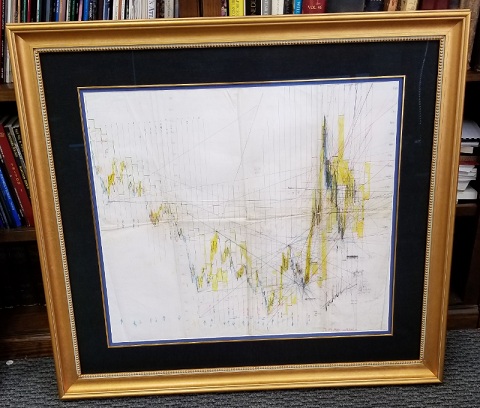
I have spent my life trying to demonstrate that markets are not random collections of disconnected events. There is an underlying structure to their movements, and that structure involves the interaction of time, price, capital flows, and human confidence. This is one of my hard draw charts from the ’80s I framed up for the office.
You cannot understand that structure by attempting to force the markets to obey your personal beliefs.
You must first abandon the assumption that you already know how everything works.
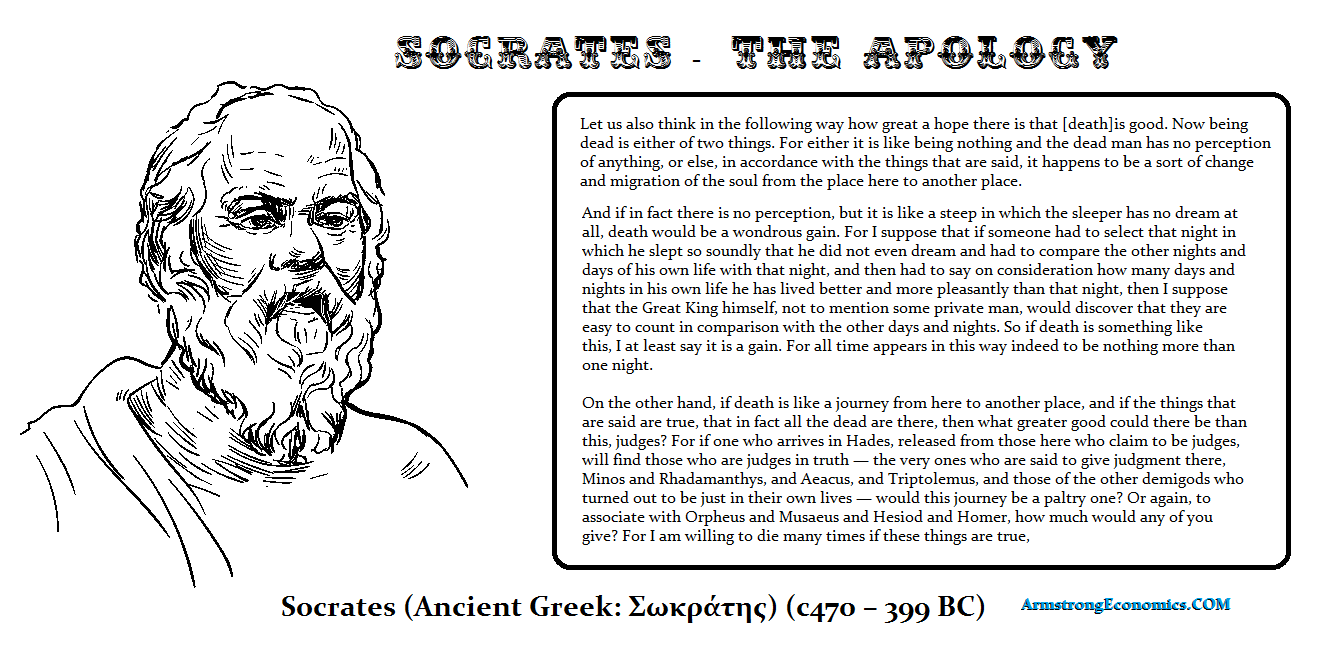
Unfortunately, I suspect they will never listen until Scotty finally beams me up. I names my computer after Socrates. The man they sentenced to death for knowing too much. His apology is what gave me strength. It is either a migration of the soul to see all your old friends, or it is a midsummer night’s sleep, so peaceful, not to be disturbed by a dream.
There is an old tendency in society to dismiss ideas while their proponents are alive, only to reconsider them after they are gone. Perhaps that will be my fate as well.
That is why I continue to write, speak, and conduct these conferences. My objective is not to win an argument with academics or government officials. It is to pass on what I have learned before my own expiration date finally comes due.
The markets will continue long after all of us are gone. The question is whether future generations will learn to listen to them rather than repeat the mistakes of those who believed they could control them.
Tickets are on Sale for the 2026 World Economic Conference
PS:
Yes, there is a list of 3 very major actors. I will have to meet with one in a few weeks. Once they have signed the contracts with the actor, then I can announce who will play me. I have been willing to do this only BECAUSE they understand what I have been doing and that this offers a better way to run governments and get them out of our face. Once they have the name everyone will know, then you get a mainstream class-A movie. I have suggested that some client would like to participate. I have no idea what that will be. I know people invest for movies. I think they are looking at a $25 million budget. I am not involved in that aspect and I am not sure they will accept funds from clients since this one of the largest film companies. I will let everyone know when they actually have the contracts in place.
Yes, there is a shortlist of three very prominent actors under consideration to portray me in the film. I am scheduled to meet with one of them in a few weeks. Once the contracts have been finalized and signed, I will be able to announce who will be playing me.
I have agreed to participate in this project ONLY BECAUSE the filmmakers understand what I have been trying to accomplish throughout my career. This is not simply a story about forecasting markets or my personal experiences. It is about demonstrating that there is a better way to understand how economies function and, ultimately, a better way to govern without constantly interfering in people’s lives.
That is what makes this project important to me. If the film can communicate these ideas to a much broader audience, perhaps it can accomplish something that decades of reports, conferences, and warnings have not.
Once they secure an internationally recognized actor, the project will have the name recognition necessary to become a mainstream, A-list Hollywood production, rather than a small independent film that reaches only a limited audience.
I have mentioned to the producers that some of my clients might be interested in participating financially. However, I have no idea whether that will be possible or how such an arrangement would be structured.
I understand that the preliminary production budget being discussed is approximately $25 million. Investing in films is certainly nothing unusual, but I am not involved in the financing or production arrangements. Since this project involves one of the major film companies, I cannot say whether they would even consider accepting investments from individual clients. I understand many want to see this objective mainstream for society and perhaps that helps with 2032.
That decision rests entirely with the producers and the film company.
For now, everything depends on finalizing the contracts, particularly with the actor who will portray me. Until those agreements are signed, I do not want to make announcements that could be premature.
Once the contracts are in place and everything is official, I will certainly let everyone know who will be playing me.
Market Talk – October 14, 2026

AMERICAS:
US Markets:
- DJIA declined by 48.62 points (0.09%) to 51,621.48
- S&P 500 declined by 86.51 points (1.11%) to 7,718.94
- NASDAQ declined by 511.51 points (1.88%) to 26,692.868
- Russell 2000 declined by 53.84 points (1.93%) to 2,729.531
Canada:
- TSX Composite declined by 399.52 points (1.11%) to 35,584.46
- TSX 60 declined by 17.59 points (0.83%) to 2,108.35
Brazil:
- Bovespa declined by 381.54 points (0.18%) to 206,505.98
Russia vs. Ukraine – The Real Objective
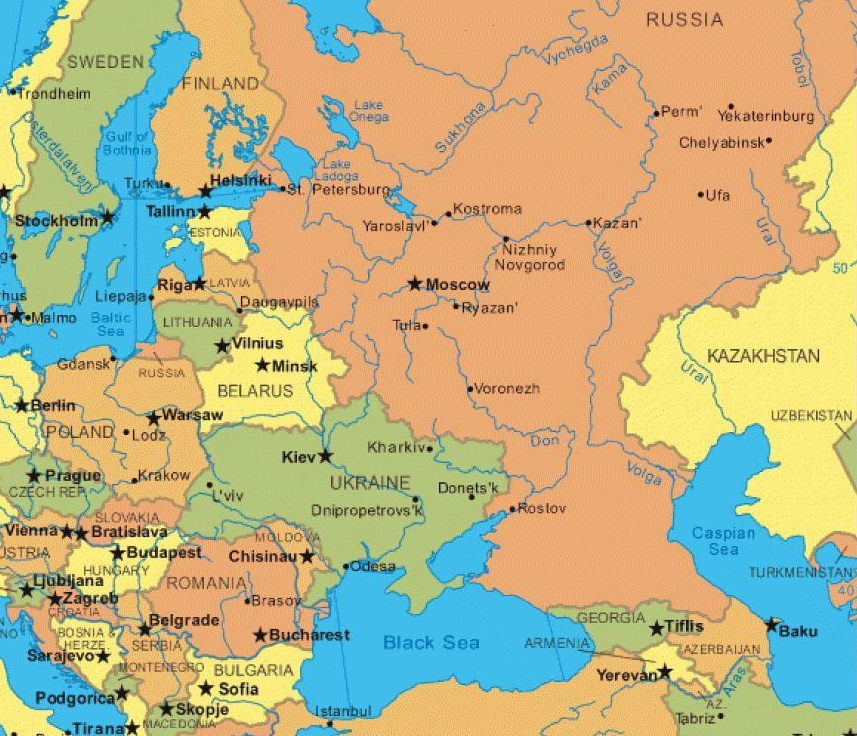
QUESTION: Why are you pro-Russia vs. Ukraine? Aren’t you on the your side?
Gerald
ANSWER: I have been screaming and yelling at the top of my lungs to the point that I have even been losing my voice. Having a computer that has forecast every geopolitical event might at last start getting through. You will see that Trump will never be given credit for preventing a war, but he seems to be honestly trying. I was asked to write the peace plan and to get it to Putin, which showed me that they were at least serious. I believe Trump has told Xi that the US will not join NATO to invade Russia. I also believe you are now seeing a complete U-turn from NATO, suddenly saying Russia is NOT planning to invade. Make no mistake, Zelensky will keep claiming Russia will attack any day to get more money, and he has been desperately trying to get NATO to invade Russia.
Trump has adopted my warning that Iran would not surrender before the elections. I have disagreed with sending Kushner and and his sidekick. That is all about conflicts or interest and they will probably be torn apart by the Democrats. I believe Trump now also agrees that Zelensky is a threat to the entire world and should be removed from office. I am NOT allowed to have any stock investments when I advise on every continent. I cannot have any conflict of interest whatsoever. I do not need the money. I do not sell advertising and don’t send you countless emails to sell you something. I am just waiting for Scotty to beam me up—and you can’t take it with you. I was NEVER interested in billions, because all that is good for is bribing other people to do shit.
Sorry, I was more interested in accomplishment. I was a programmer. I was also a trader who everyone knew stood against the market manipulators, who are only interested in how many zeros they can add to their cash, pretending that makes them more important than someone else. They surrender their dignity, honor, and reputation all for adding zeros that does not change your lifestyle. Money does something to some people like the new move on Zuckerberg. He will never get his dignity or reputation back.
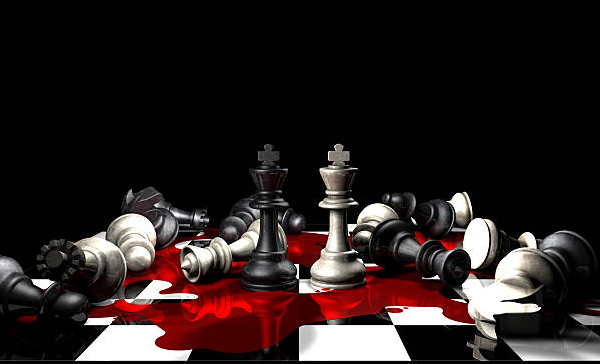
My family has fought in every war since the Revolution. A lost a lot of friend in Vietnam. War is only justify when actually attacked. We are not pieces on a chess board for their amusement while the military industrial complex baths in tubs full of cash.
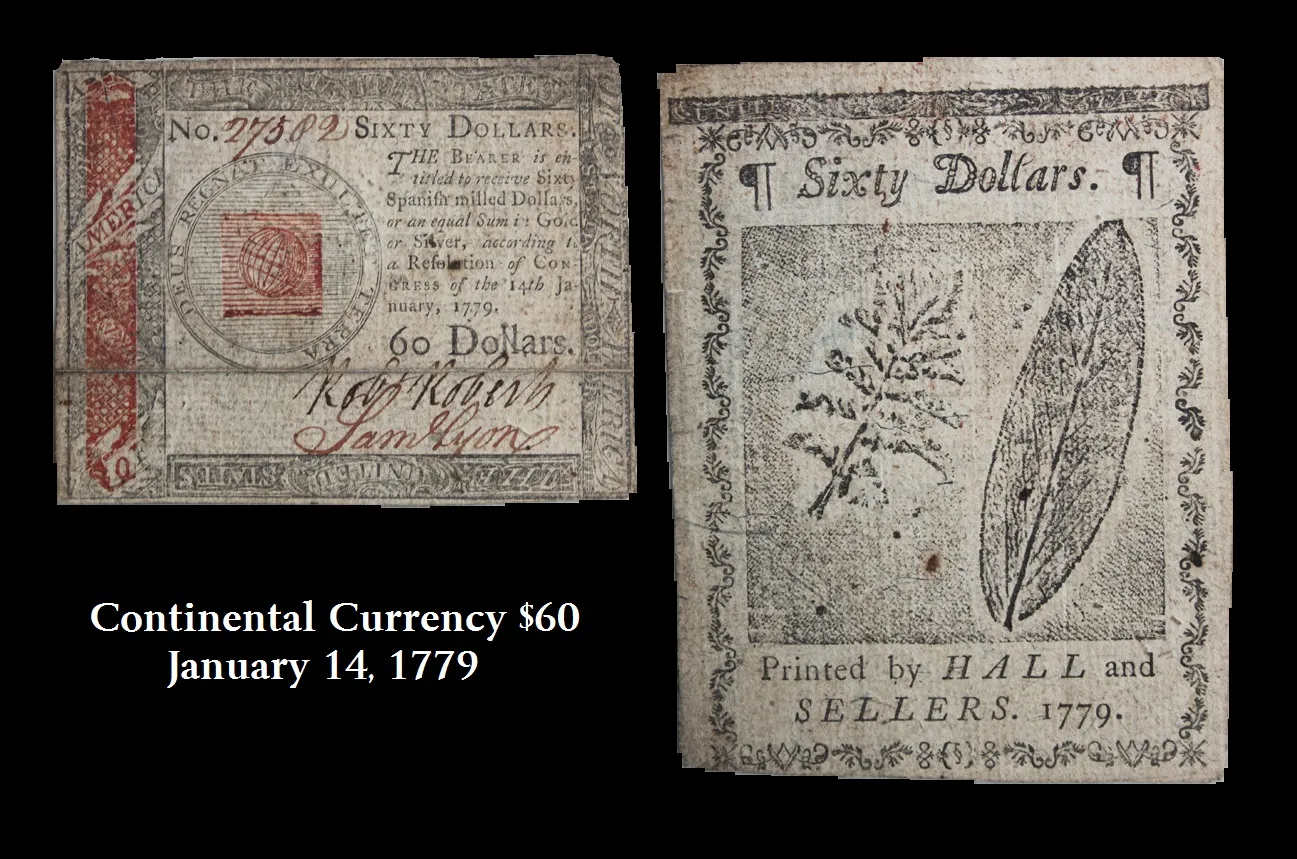
If you step back from the propaganda, besides the fact that the West deliberately started this war, this is all part of a plan to get out of the sovereign debt crisis—since governments always default after war. Even the US defaulted on the debts of the Continental Congress, despite the Constitution proclaiming they would honor the debts of the previous government. This is one historical fact as a benefit of war: a version of the Debt Jubilee.
-
Russia: 139.5 million to 143.4 million
-
Ukraine: 37.3 million to 39.5 million
Ukraine was never expected to win this war. It was only intended to first weaken Russia for the final kill—to rob it of its assets. Ukraine is at best about 35% of its pre-war population compared to Russia. Many Ukrainians have fled. About 4.4 million Ukrainians have received temporary protection status in the European Union, while the number who fled to Russia is generally estimated to be around 2 million from the Donbas. More than 10% of Ukraine’s population has fled Ukraine and do NOT support Zelensky impersonating some elected president.
The country hosting the largest number, with approximately 1.29 million people—about 29.2% of the EU total—is Germany. Poland ranks second, hosting approximately 939,000 people, about 21.2%. This has contributed to the economic decline in Germany, Poland, and the EU as a whole. They never expected Ukraine to win this war against Russia. That is pure propaganda. Why do you think Boris Johnson rushed to Ukraine to make sure Zelensky never accepts peace?
This is not about picking a side between Russia and Ukraine. This is a world poker game, and you are their fool if you believe the press and ignore the facts. This is like Mexico waging war against the United States. Come on. They are counting on Russia not pushing the button—and it will go down with a loud thunk.
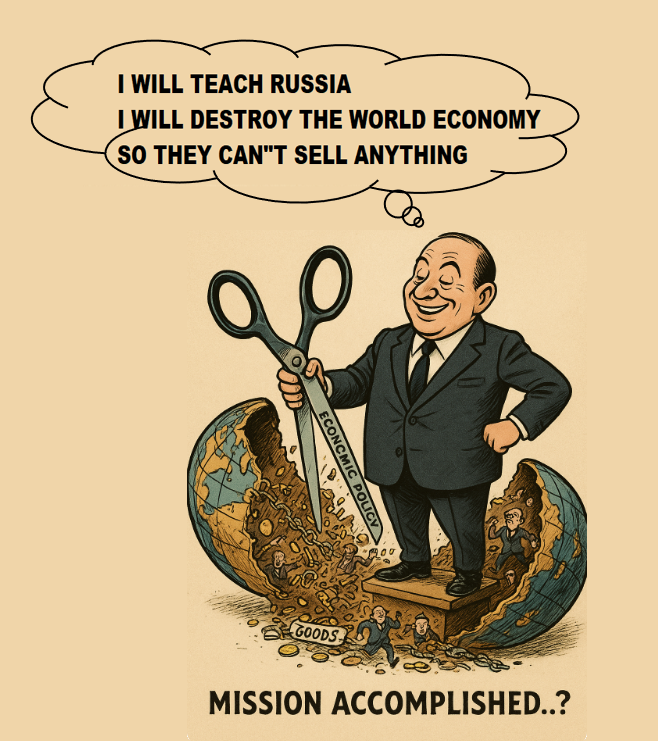
Europe is simply engaging in ethnic hatred and have demonized all the Russian people. What started this was exactly that. The Ukrainians were killing Russians on the streets of Odessa. Finland has shown its hatred demanding to end allowing any Russia to enter Europe. They would probably arrest Putin if he came to a peace negotiation. These people have PERMANENTLY destroyed the world economy. There is no way to ever restore global peace ever again.
Just follow the money. The EU is keeping the Russian assets even if there is peace. They are robbing Russian assets permanently, warning the world that you had better not hold any sovereign deposits in the EU, including Britain or Switzerland, for there is no rule of law.

They intend to start this war, and they have no problem killing millions of their own, because that gets them out of their pension crisis. Pension funds have been used as slush funds stuffed with government debt rather than private-sector investments that grow the economy, instead of lining the pockets of our illustrious politicians. They do not know how to run for office without promising free gifts to people in exchange for their votes.

They are pushing ahead at light-speed to create a new currency in Europe—a CBDC—so they will at last have absolute control over every aspect of finance, reducing the population to mere economic slaves and resurrecting serfdom.
The European sovereign debt situation is severe, with rising debt levels and yield pressures. This is also why long-term interest rates are rising. This is a full-blown crisis far beyond 2010. It is more accurately described as a “simmering pressure” concentrated in a few core economies that will drag down the rest.
According to Eurostat data from the first quarter of 2026, the euro area’s overall government debt-to-GDP ratio has climbed to 88.9%, up from 87.2% a year earlier, and well above the 60% Maastricht Treaty threshold—proving they cannot live within their fictional dreams.
Several major economies carry particularly heavy burdens:
Greece: 143.5%
Italy: 138.9%
France: 117.6%
Belgium: 109.1%
Spain: 101.6%

The most acute pressure currently comes from France. Its 10-year government bond yield briefly approached 5% (the highest since 2002), and the spread over German bunds widened to around 140-160 basis points. Fears of “contagion” have pushed up yields in Italy, Spain, and Belgium as well. Yet rather than addressing the underlying problem, policymakers are beating the war drums, because there is no viable path to honoring these debts. There has never been any real intention of paying off national debts. The pattern has been to borrow recklessly and assume the crisis can always be deferred, kicking the can down the road. Europe is running out of road.
If you are so pro-Ukraine, I’m sure Blackrock will be glad to sell you a bridge to nowhere for a non-refundable donation. Their $800 billion fund is expected to get their fingers in the stolen assets from Russia. War – Money – Ethics do not seem to mix very well.
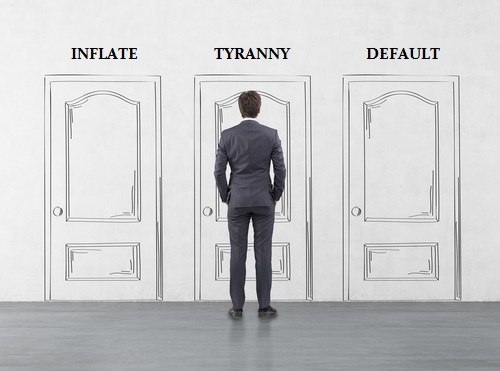
This is just the tip of the iceberg. There is so much more behind door #3. They are still working behind door #2—shutting down free speech, etc. All governments act in their own self-interest. Like any animal, even a possum will play dead and it will show its teeth when cornered and there is no other choice. I have seen it.
Is NATO Pushing Propaganda to Keep the Money Flowing?
QUESTION: Mr. Armstrong, I think you have forgotten more than these people here in Warsaw ever knew. NATO says it is ready to fight tonight, claiming it has 3.65 million active troops against Russia’s 1.32 million. I asked a question, and they ignored it. Isn’t 50% of that including the USA and Turkey? I’m sure you know the real facts given your contacts. Would you care to comment?
FJ
ANSWER: You are absolutely correct. NATO is by no means as strong as they claim. The United States maintains roughly 1.3 million active-duty personnel. This means the U.S. alone accounts for about 36% of NATO’s entire active military manpower. Then add Turkey’s 395,800 active troops. All of this is also based on conventional ignoring nuclear.
So when you see them claiming 3.65 million active troops, it is the sum of all 32 members, with the U.S. providing the single largest block by a wide margin.
Poland: 263,600
France: 202,000
Germany: 183,200
Italy: 191,600
Without the United States and Turkey, Europe is close to 50% of active troops compared to Russia.
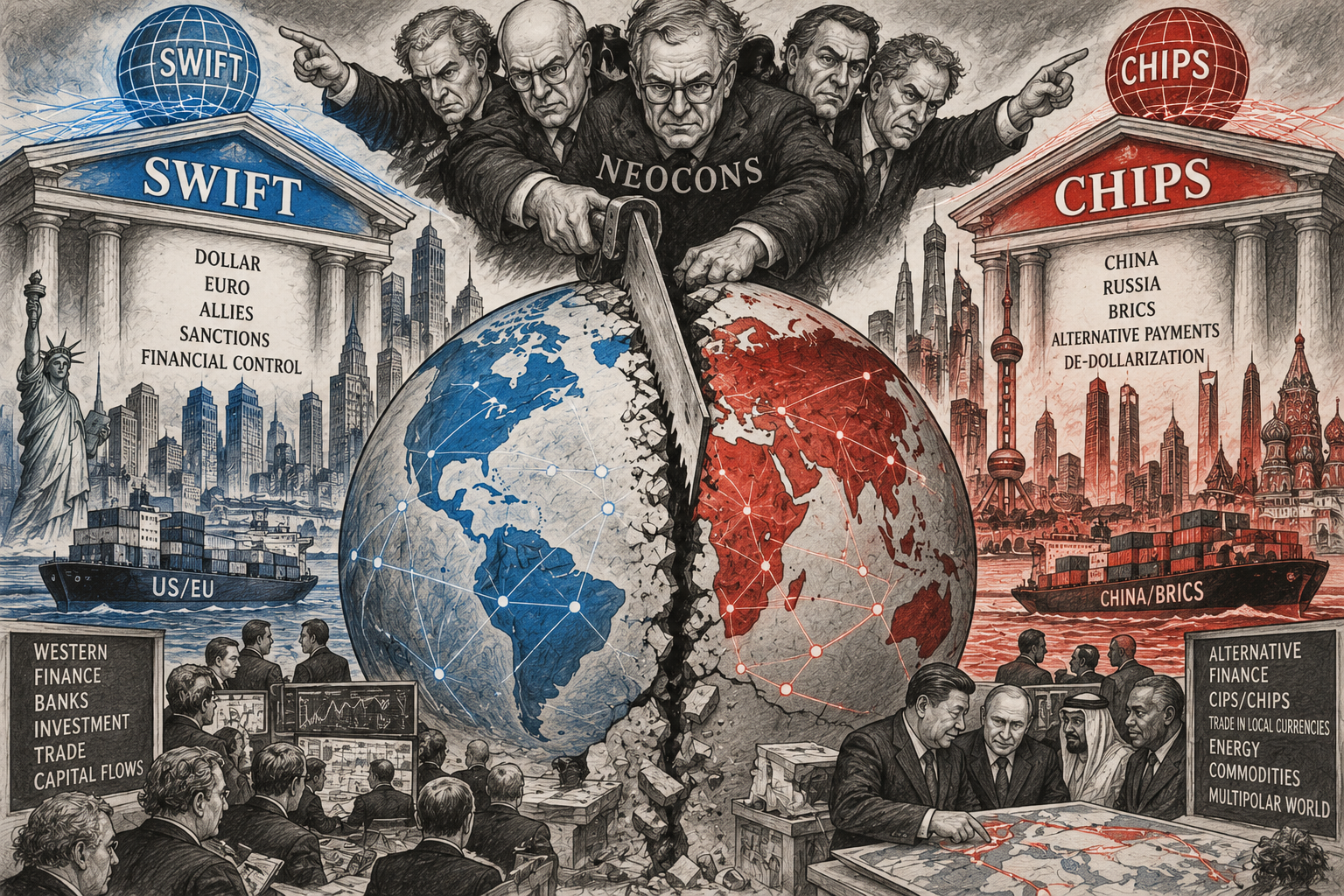
These warmongering Neocons only look at what they want to believe. They never take into account that they have (1) destroyed the world economy dividing it between SWIFT vs. CHIPS, but that means there is no way this will every reverse. They demonize Russia so much, stole their money, and made it clear they will NEVER be accepted back in trade ever again, so why would you think that nukes are off the table? They have set the very reason why nuclear war can no longer be off the table. There is nothing to go back to, so why should Russia care if Europe still exists? They seem to be advocating their own demise. They have made it absolutely clear they are NOT interested in any peaceful co-existence with Russia ever again. They are now permanent enemies. That is why Rome destroyed Carthage.
The counting of the US and Turkey trrops among their ranks is bravado. NATO is not compulsory, it is voluntary. That means that they do NOT have absolute control over 3.65 million troops. The bias is exposed when you look closer. They count the entire West, but only Russia in isolation. China and North Korea will join defending Russia and if the US did enter, so would Iran. If we look at the largest army in the world, China maintains around 2.03 million troops across multiple 2026 sources. North Korea possesses one of the most militarized forces globally, with estimates ranging from 1.28 million to 1.32 million active personnel. This represents a very high percentage of its total population—roughly 5%—making it one of the most heavily militarized states in the world .
So, let’s take the 3.65 million claim of NATO and compare to the combined opposition, not just Russia since they combine the West, and what we end up with 4.6 million. Any historian knows that there have been countless battles won even when seriously outnumbered.
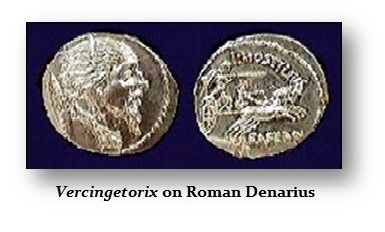
Julius Caesar won the Battle of Alesia (52 BC) with an army of roughly 50,000–60,000 men facing the Gallic force of about 80,000 inside the fortress of Alesia. He was then attacked from the outside by a massive relief army estimated at 250,000 warriors. Caesar was effectively outnumbered 6:1 when combining the besieged garrison and the relief force.
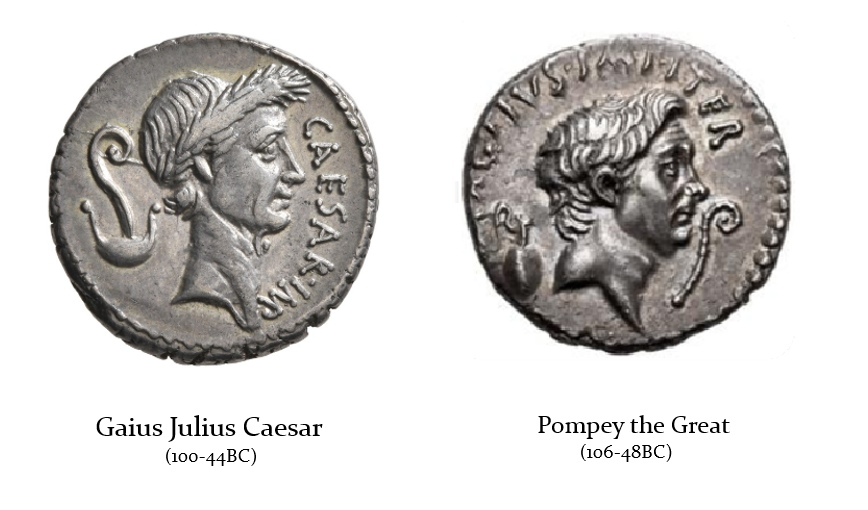
Then at the Battle of Pharsalus (48 BC) against Pompey, Caesar was significantly outnumbered. His forces totaled around 22,000–30,000 infantry, while Pompey commanded roughly 45,000–47,000. Pompey also had a massive cavalry advantage (roughly 7,000 vs. Caesar’s 1,000). Caesar concealed a fourth line of elite legionaries behind his cavalry. When Pompey’s cavalry attempted to outflank him, the hidden infantry attacked with their javelins like pikemen, routing the enemy cavalry and winning the battle.
So NATO can pound its chest all it wants to put on a show to make sure Europe hands them more money. But any military historian knows that is a dog and pony show. It has no basis in reality or history.
Russians Not Welcome In Europe?

Finland wants the European Union to stop issuing tourist visas to Russians until Moscow ends its war against Ukraine. Finland’s Foreign Ministry says Schengen countries issued close to 500,000 tourist visas to Russians in 2025. Foreign Minister Elina Valtonen declares that “Russian citizens should not be issued tourist visas,” adding, “The same must finally happen at the EU level.” Her argument is that Russians should not enjoy European freedoms while their country attacks Ukrainian homes. But who, exactly, is being held accountable here? The person applying for a holiday visa did not necessarily order the invasion, support it, or possess any means of stopping it.
I question the logic of making someone’s freedom to travel conditional upon a decision made in the Kremlin. What is an ordinary Russian supposed to do to satisfy that condition? Walk into Putin’s office and demand that he withdraw the army? Europe describes Russia as an authoritarian state and then treats its citizens as though they personally control its foreign policy. You cannot have it both ways. If political power is concentrated and opposition is repressed, the responsibility of the individual must be judged by what that individual has actually done.
The people with money have more options. Russian businessmen Mikhail Fridman and Petr Aven, for example, hold multiple nationalities and have challenged sanctions through European courts. That does not mean wealthy Russians are untouched by sanctions; many have faced asset freezes and travel restrictions. It means a billionaire’s position is very different from that of someone with one passport, a salary, and no team of international lawyers. A blanket nationality restriction is easiest to apply to the person least equipped to contest it.
As for espionage, does anyone seriously believe Russian intelligence depends entirely on Russians arriving with tourist visas and their real identities neatly printed in their passports? Documented cases show intelligence officers operating under commercial and diplomatic cover, as well as covert agents using false identities. Travel restrictions can complicate some operations, but they cannot replace counterintelligence. The Kremlin can recruit people already abroad or use intermediaries. Keeping out an ordinary visitor does not establish that a professional operative has been stopped.
There is also a consequence Europe seems unwilling to consider. Closing ordinary contact can strengthen the Kremlin’s claim that the West despises Russians themselves. A person who might otherwise discover that Europeans distinguish between a government and its citizens instead encounters a policy telling him that his passport is sufficient reason for exclusion. That outcome would serve propaganda far better than diplomacy. If the objective is to weaken hostility between societies, treating an entire nationality as suspect deserves considerably more scrutiny.
In truth, Russians already feel the hostilities from Europe. The arrogance is believing that another restriction on ordinary people constitutes a meaningful blow against rulers who remain in office. Finland is promoting the hatred of Russian people. The distinction between the Kremlin and the Russian citizen disappears.
Once an entire nationality is treated as suspect, people find it easier to dismiss the suffering of its ordinary citizens and harder to imagine any future reconciliation. Demonizing the population makes it politically easier to maintain confrontation. The rulers remain insulated while ordinary people learn to distrust one another. Europe should ask whether closing those human connections weakens the Kremlin or merely gives it another reason to tell Russians that the West hates them.
Europe Is Regulating Its Auto Industry Into Retreat
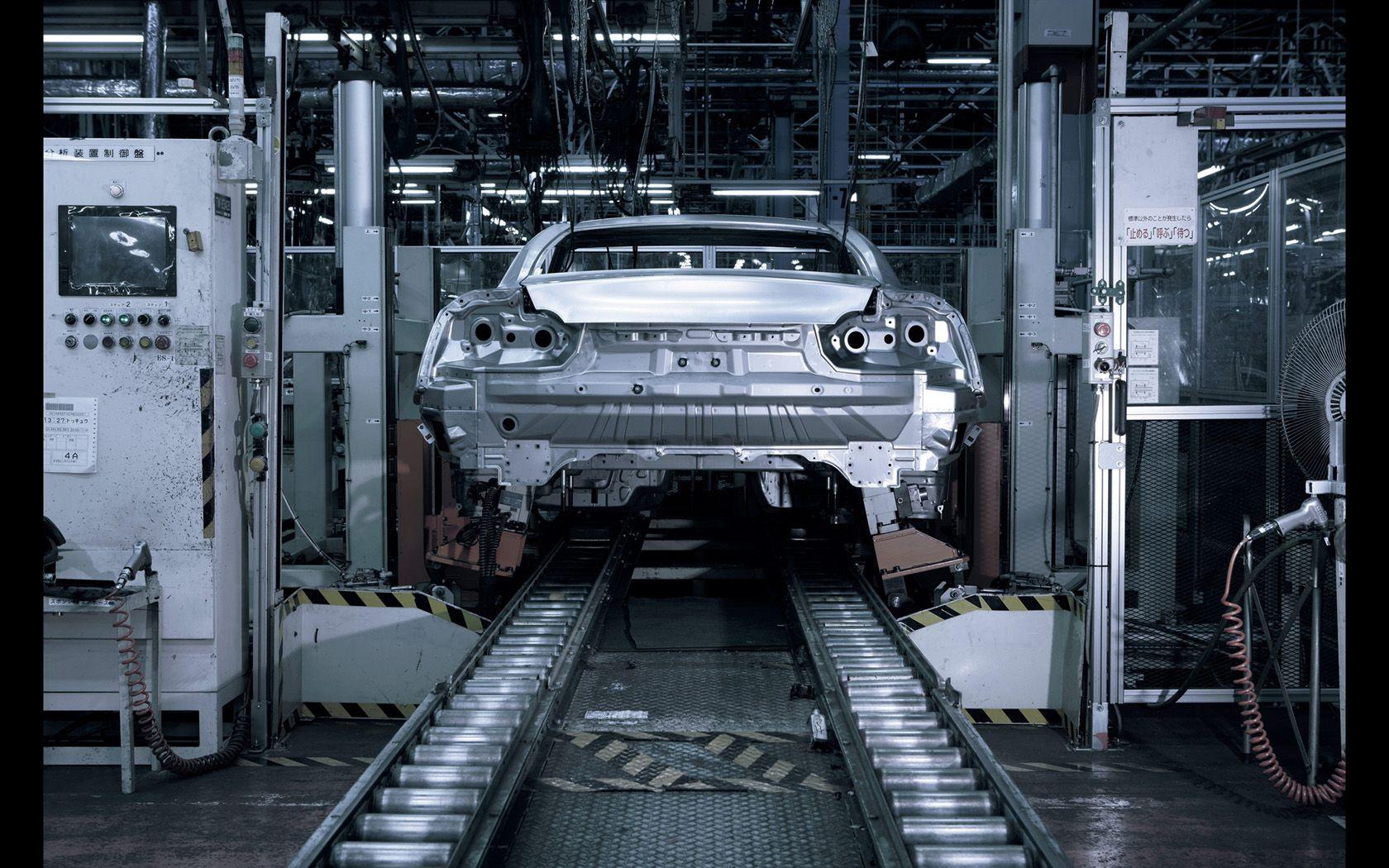
Brussels apparently believes it can dictate what an industry produces without accepting responsibility when the economics cease to work. Renault is now warning that European production could fall by approximately 300,000 vehicles unless there is greater flexibility around the 2030 emissions requirements. Volkswagen describes the mass market business as under “enormous pressure.” BMW’s global deliveries fell 6.4% in the third quarter, with China down by a quarter. Competition is fierce, customers have choices, and these companies cannot finance a transformation indefinitely by producing vehicles at inadequate margins.
Look at how the target changed. The agreement reached in 2018 called for a 37.5% reduction in new-car CO₂ emissions by 2030 relative to the 2021 target. The subsequently adopted requirement became 55%, an increase of 17.5 percentage points. These are fleet average standards for new cars, but meeting them still depends on what customers actually purchase. A regulation can compel a manufacturer to change its product mix. It cannot compel a family to have the money, charging access, or confidence needed to buy the car.
Volkswagen, Stellantis, and Renault account for more than 60% of European car production. Their mass market operations rely on high volumes and thin margins. That means even a relatively small deterioration in costs or sales can produce a substantial financial problem. The consequences then move through suppliers, machinery makers, transport firms, and communities built around manufacturing. Nobody should imagine that removing 300,000 vehicles from production would affect only Renault’s accounts.
Europe’s own Council describes the wider automotive industry as supporting 12.7 million jobs and contributing more than 7% of EU GDP. Yet its explanation of the emissions rules promises stronger competitiveness and more jobs in new technologies. Fine. Show the workers where those jobs are, what they pay, and when they become available.
Now the Commission proposes easing the 2030 van target from 50% to 40% and the 2035 tailpipe-reduction requirement from 100% to 90%, subject to compensating measures. The passenger car target for 2030 remains 55%. These are proposals, but they expose the problem with planning an industrial transformation around political deadlines. Companies commit capital, develop products, and reorganize factories while officials argue over which requirements should survive. Who pays when the assumptions change? The business, its employees, and eventually the taxpayer asked to support another rescue.
This obsession with the 2030 target is sheer stupidity when Europe is already struggling with expensive energy, mounting debt, war, and competition from manufacturers who can produce cars for less. Where do they imagine the money for this transformation will come from? They are demanding enormous investment while making it harder for the companies expected to provide it to earn a profit. Keep squeezing those margins and production moves, suppliers close, and the industrial skills accumulated over generations disappear with the jobs. Brussels can congratulate itself for reducing emissions within Europe while Europeans buy vehicles manufactured elsewhere. What has that accomplished for the worker whose factory is gone? A deadline means nothing if reaching it helps destroy the industry that supports your economy. Yet they cling to 2030 as though preserving a political promise matters more than preserving the livelihoods of the people paying for it.
The Sheer Ignorance Of What’s At Stake Globally
This is a textbook case of how someone can reach the top of one field and still be utterly clueless about everything else. Lt. Gen. Keith Kellogg served as National Security Advisor to former Vice President Mike Pence and later as Special Envoy for Ukraine and Russia. He is Co-Chair at the Center for American Security, America First Policy Institute, USA, which is a Neocon think tank. The man’s ignorance is staggering. He has made no effort to examine the facts—or, more likely, he knows them and deliberately refuses to discuss how Victoria Nuland helped select the interim government that started this civil war and attacked the Donbas on Neocon orders.
He advocates that Zelensky should tell President Trump to go to hell and destroy every refinery in Russia. To illustrate his sheer stupidity: forget the food crisis he would cause in Russia, knowing that would lead to nuclear war—he completely ignores that Africa and the Middle East account for over 80% of Russia’s wheat exports, making those regions the most directly tied to Russian grain. Iran is 100% dependent on Russian grain. That would be a surefire way to make the Middle East explode into a full-blown war, which would then merge with the Russia-versus-EU war, and China and North Korea would join.
It is these Neocons, who simply hate the Russian people, who are cascading the world into World War III over a war they instigated using Ukraine. He would fulfill our model by pushing diesel to the extreme, projecting $8, which would hit the U.S. economy, reduce trucking, and result in a U.S. food shortage. This is what I mean. Expertise in one field does not qualify you to argue about things that will impact the rest of the entire world with zero comprehension of where that leads.
A full-scale war with Russia would very likely cause a severe global diesel crisis, and in many regions, a collapse in supply is a real possibility. The system is already under extreme strain, and a broader conflict would push it past its breaking point. Our computer projects $10+ a gallon by 2032.

The Current Diesel Market Is Already Fragile
The global diesel market is not starting from a position of strength; it is already in a state of acute shortage driven by two simultaneous wars. A wider conflict with Russia would remove one of the world’s largest suppliers from a market that is already reeling. Russia is the world’s second-largest diesel exporter, accounting for roughly 9.5% of global export volumes, whereas the United States exports 1,264,000 bpd, or 15.4%. Russia’s exports are a vital source of supply for Turkey, Brazil, and parts of Africa and the Middle East.
Russia’s diesel exports have already plummeted due to Ukrainian drone strikes on its refineries. In June 2026, exports fell below 1 million tons, compared to around 2.5 million tons a year earlier—a drop of over 60%. Its monthly exportable surplus has fallen from about 3 million tons to as low as 325,000 tons. Global inventories were already drained before any wider war. In the U.S., diesel stocks hit their lowest level for September 2026 since 1982, and European stocks in the ARA hub were 16% below the five-year average.
There has been a shortage without a wider war. The combined effect of the Iran war (disrupting Gulf refining and shipping) and the Ukraine war (disabling Russian refineries) has already created a global diesel shortage expected to last into 2027 even if peace were achieved now. With that unlikely, the shortages will expand into 2028.
A direct war with Russia, as advocated by the EU, would be catastrophic because it would compound the existing crisis in several ways—not to mention seriously wiping out the European economy. Russia’s exports would likely cease entirely, either through a formal blockade or the destruction of its remaining energy infrastructure. The market would lose a supplier already responsible for nearly a tenth of global trade.
The current war has shown that refineries are Zelensky’s primary targets after he blew up the Nord Stream Pipeline. A wider conflict would likely see attacks on refining and export infrastructure far beyond Russia, including in the Middle East and potentially on shipping routes, further crippling the world’s ability to turn crude oil into diesel.
War is incredibly fuel-intensive. NATO’s Secretary General has warned that a full-scale conflict would require “hundreds of thousands of cubic meters of fuel daily” for tanks and fighter jets, putting immense additional strain on already depleted supplies. Military needs would be prioritized over civilian and agricultural use. That is where Zelensky proves he is an idiot. Take out Russia’s fuel, and NATO will find war even more expensive to wage.
A “collapse” would not look very orderly. Not only will the food supply decline, but in Asia, ships will not be able to fish. This risks global starvation, and now everyone has a stake. The first impacts would be felt in regions already most vulnerable.
Poorer, fuel-importing nations in Africa, Asia, and Latin America are the most exposed. They are “price takers” with limited financial reserves to buffer price shocks or secure alternative supplies. Some are already rationing fuel or declaring energy emergencies.
Diesel is the backbone of global logistics. A collapse would halt trucks, trains, ships, and agricultural machinery. This would immediately impact food distribution, leading to shortages and skyrocketing prices, with a particularly severe effect on countries dependent on food imports.
Diesel shortages are inflationary and act as a drag on the entire economy. The U.S. Federal Reserve, for example, cannot fix a physical fuel shortage with interest rate policy; it can only try to suppress demand elsewhere, risking a recession. This will fulfill our model calling for stagflation into 2028 on a global scale—all because of Zelensky.
In short, the global diesel system is already in a state of emergency. A war with Russia would not create a new vulnerability so much as it would shatter a system that is already cracking under the pressure of two existing conflicts. If U.S. heating oil closes above 4.78 at year-end, this is going to get worse before it gets better. General Keith Kellogg’s comments demonstrate how these Neocons are oblivious to the world around them. They always think they can destroy Russia and somehow never suffer any repercussions.
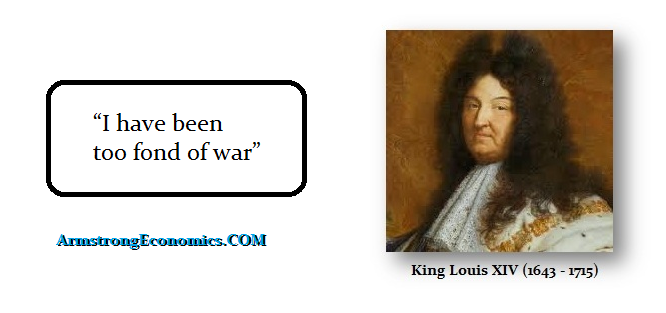
People like Kellogg should never be allowed to advise anyone. They are too prone to warmongering and have no regard for the world economy. There are always more civilians who die in wars than soldiers, and they ignore that. Humanity will never live in peace because people like this crave a taste of power and seek such positions to carry out their personal hatreds and love of war. Louis XIV only lamented that he had been a warmonger on his deathbed.
Why Would Russia Want to Invade Europe?
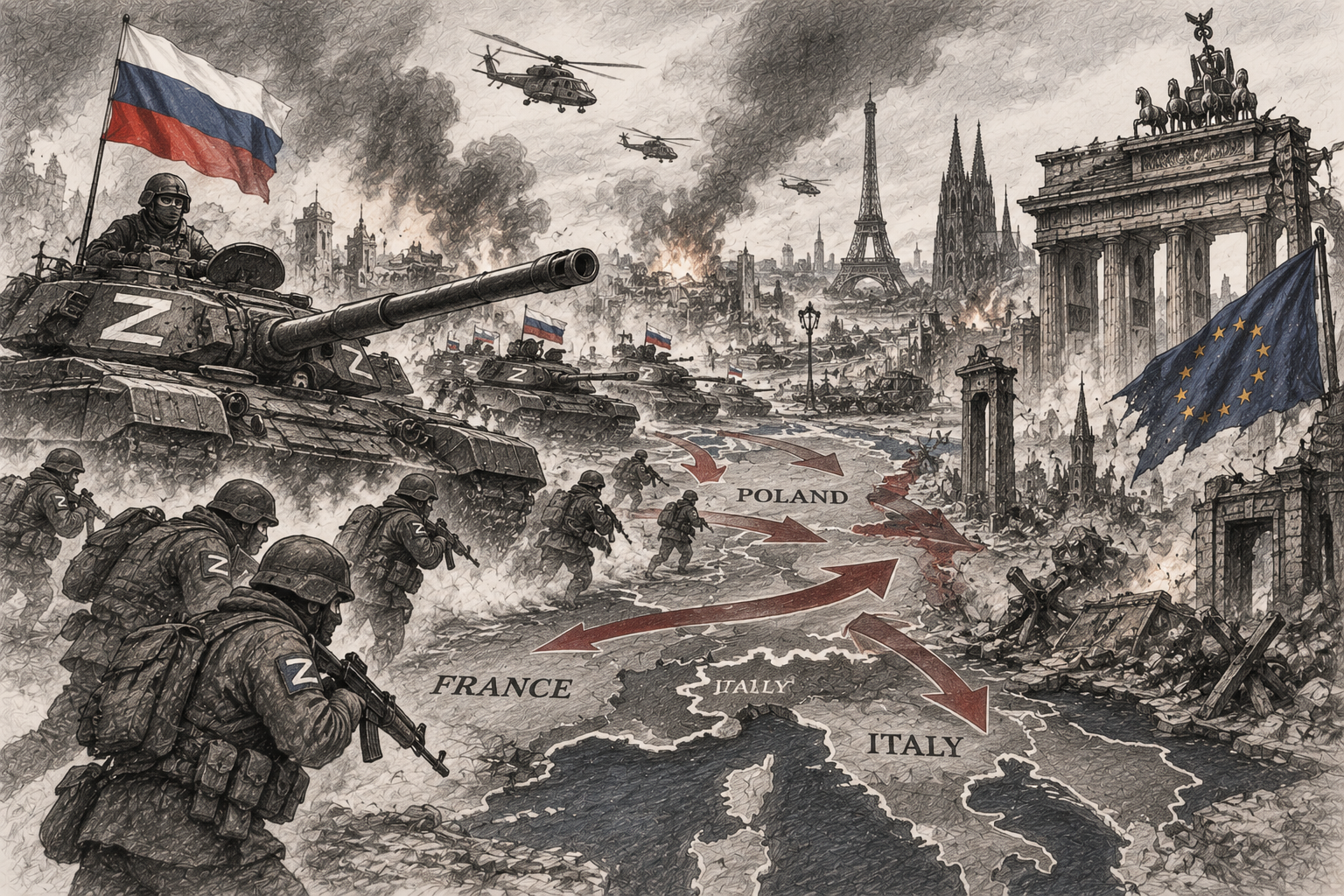
COMMENT: Marty, I spoke with a diehard warmonger here in Germany. I asked why Russia would want to invade Europe. They actually could not articulate a reason. They resorted to revenge. When I asked what that meant, revenge implies Europe did something first. Then it was silence. There is no single coherent explanation. You are absolutely correct. A significant part of the narrative is fueled by internal European dynamics and the need to justify major policy shifts. Nobody can answer the question you have presented.
WK
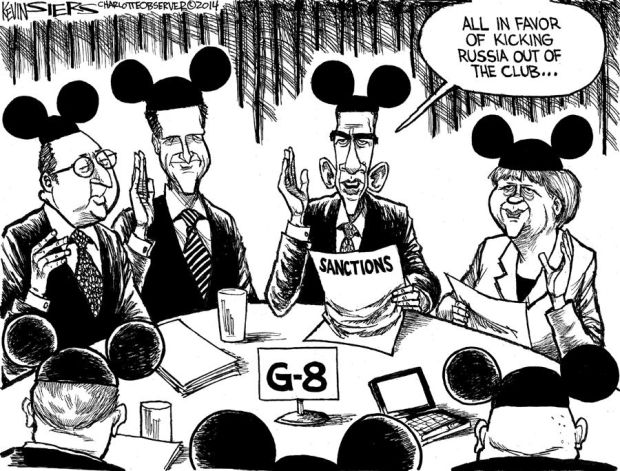
REPLY: The Cold War was all about Communism versus Capitalism. Khrushchev’s “We Will Bury You” enraged all the neocons. The whole idea of the Cold War was that Communism wanted to conquer Capitalism. That was why the U.S. entered Vietnam. They assumed Russia was behind it and were wrong, as McNamara admitted before he died.
There is no reason for Russia to invade Europe. They are no longer communist. There is no such philosophical war. The claims that Russia wants to invade boil down to the fact that European leaders are escalating militarily, through rearmament, funding, and potential troop deployments all without a realistic plan for achieving victory or a coherent exit strategy. They dismiss the idea of nuclear war, yet believe they can destroy Russia and break it up, as Kallas proposes. This is all being driven by political posturing, because the EU is collapsing and they need an external enemy, and Russia is the best enemy money can buy. There is ZERO sound strategic calculation.
Kremlin spokesman Dmitry Peskov stated that the EU is “obsessed” with militarization and is building its defense policy on “confrontation with Russia,” which he called “a dead end” that “leads to nothing good.” Foreign Ministry spokeswoman Maria Zakharova called Zelensky’s ideas about a new European military bloc “insane.” NATO needs war for if there is peace they lose their jobs. So they have to beat the war drums or they are unemployed.
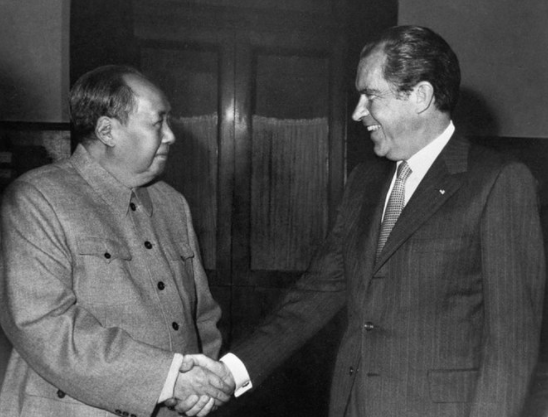
Richard Nixon opened the door with China to separate China and Russia. The neocons and Zelensky have done everything to undo Richard Nixon’s legacy that he set out to accomplish. The war in Ukraine has undoubtedly accelerated the economic and strategic convergence between Russia and China. Zelensky has been the tip of the spear in truly destroying Western civilization by “permanently dividing” the world economy, with the help of the neocons.
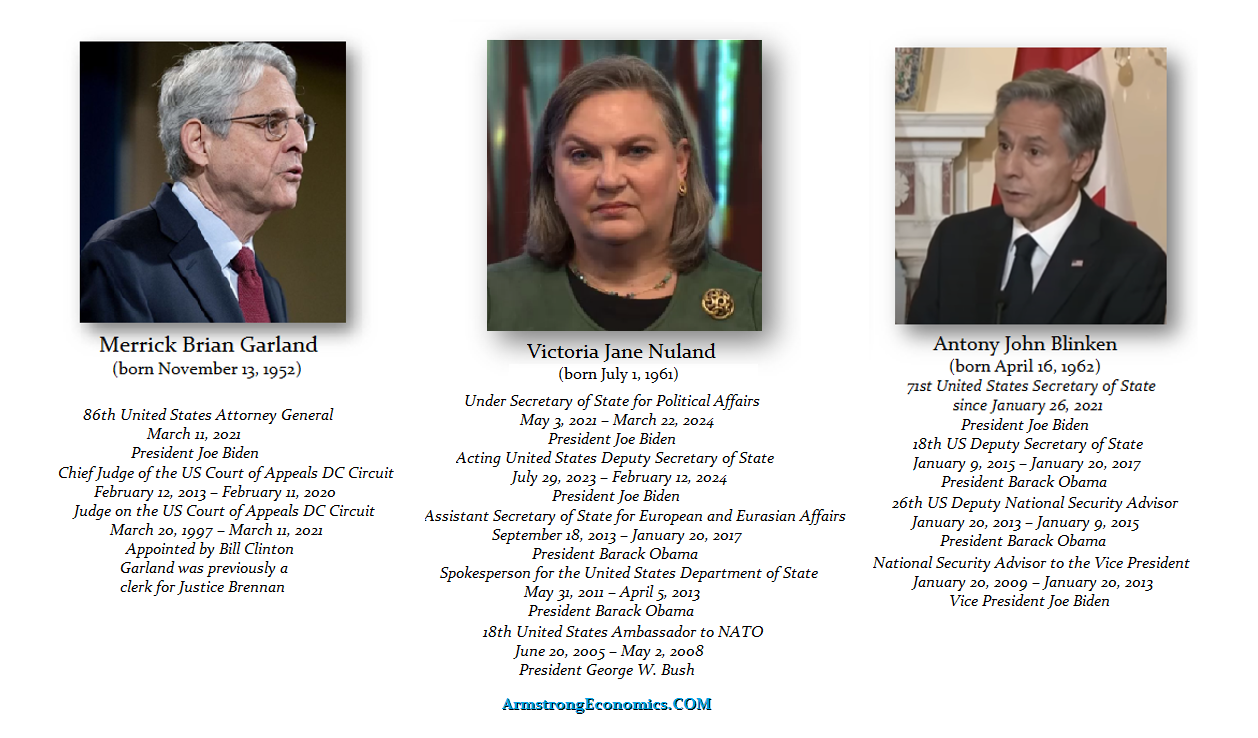
This is a significant geopolitical reality. Zelensky is accelerating a pre-existing fracture that was set in place by the neocons who controlled the Biden administration—Blinken, Nuland, and Garland. Zelensky has already driven this fissure into a much deeper structural crisis.
War is not historically driven purely by personal hatred, with absolutely zero economic motive. There is essentially also, behind the curtain, some economic benefit. Here, despite all the rhetoric, the economic incentive for war lies with the EU, not Russia. The EU stands to gain $75 trillion in natural resources by conquering Russia, but there is no economic incentive for Russia to invade Europe.
While many conflicts are sparked or fueled by personal vendettas, hatred, or wounded pride, they almost always unfold within an economic context. Leaders may feel personal hatred, but wars require armies, supplies, and resources—things that inevitably tie back to economic interests.
Russia will defend itself, and China, along with North Korea, will join, and you may even see Iran join this party. NATO is planning on getting Canada to come to Europe’s defense, and they are counting on Trump being impeached and are looking forward to the Democrats seizing control, who are pro-war with Russia. There is always an economic incentive, and that lies in the hands of Europe.